The news in Polish
Na Podkarpaciu stwierdzono1 ognisko2 odry. Choruje już kilkanaście osób, część trafiła do szpitala z powikłaniami3, na przykład zapaleniem4 płuc. Lekarze mówią, że odra jest bardzo zaraźliwa5. W Polsce spada poziom szczepień, dlatego specjaliści6 zachęcają wszystkie osoby bez szczepienia do szybkiej wizyty u lekarza.
- stwierdzić
dojść do wniosku na podstawie faktów, oficjalnie ogłosić, że coś jest prawdą ↩︎ - ognisko (n.)
miejsce, w którym zaczyna się i rozwija jakiś proces, np. choroba; punkt skupienia czegoś ↩︎ - powikłanie (n.)
dodatkowe, zwykle niekorzystne skutki choroby lub leczenia, które pojawiają się oprócz głównych objawów ↩︎ - zapalenie (n.)
stan chorobowy części ciała, kiedy jest ona zaczerwieniona, obrzęknięta i często boli ↩︎ - zaraźliwy
łatwo przenoszący się z jednej osoby na drugą, mówiąc o chorobie ↩︎ - specjalista (m.)
osoby, które mają dużą wiedzę i doświadczenie w jakiejś konkretnej dziedzinie ↩︎
Translation
Text comprehension
Question 1: Why did some people with measles in Podkarpacie have to go to the hospital?
Question 2: What do specialists encourage people without a measles vaccination to do?
Vocabulary
| Polish | English |
|---|---|
| stwierdzić | |
| ognisko (n.) | |
| powikłanie (n.) | |
| zapalenie (n.) | |
| zaraźliwy | |
| specjalista (m.) | |
Curious about Polish lessons?
Thinking about learning Polish, but not sure where to start? Book a friendly video chat with our learning coordinator and get personal guidance on teachers, groups, and next steps.
Book a coordinator chat
Read the full story
Health authorities in south-eastern Poland have confirmed a cluster of measles cases in the Podkarpacie region, close to the border with Ukraine and Slovakia. The situation has drawn national attention because Poland’s vaccination rate against measles is falling, which experts say could make it easier for the disease to spread.
According to the regional sanitary inspectorate, officials have recorded 11 confirmed measles cases connected with one outbreak. Infections were first reported in the Rzeszów, Ropczyce-Sędziszów and Tarnobrzeg counties. Later information from hospitals indicated that cases also involved Łańcut county, meaning that at least four local districts are affected.
Doctors in the area report that the disease has already led to serious complications in some patients. A hospital in Łańcut stated that eight people had been hospitalised, and about half of them were treated for measles-related pneumonia, a potentially dangerous condition, especially for young children and people with weakened immune systems.
Regional health services and the national sanitary inspectorate (Sanepid) have launched a detailed epidemiological investigation. Their work includes identifying everyone who had contact with infected individuals, tracing places where exposure might have occurred, and advising potentially exposed people to monitor their health. For those without proof of immunity, officials are recommending immediate vaccination.
Family doctors and public health experts warn that even a small number of infections can be a signal of a wider problem. A family medicine specialist interviewed by Polish media stressed that “small outbreaks are enough” for measles to begin spreading further if it reaches groups with low immunity.
Poland is currently among the European countries with the lowest measles vaccination coverage. The country’s Chief Sanitary Inspector explained that the alarm threshold is around 90% of the population vaccinated. Poland is now approaching this level from above, which means that herd immunity is weakening. In practice, this increases the chance that the virus will find unprotected people and cause more outbreaks.
Since 1991, the standard schedule in Poland has used a two-dose measles vaccination, given in a combined MMR vaccine (measles–mumps–rubella) in the first and sixth year of life. Experts warn that people over 40 years old may be at particular risk, because many of them did not receive this two-dose scheme. One estimate suggests that up to one in six people in this age group could be susceptible to infection.
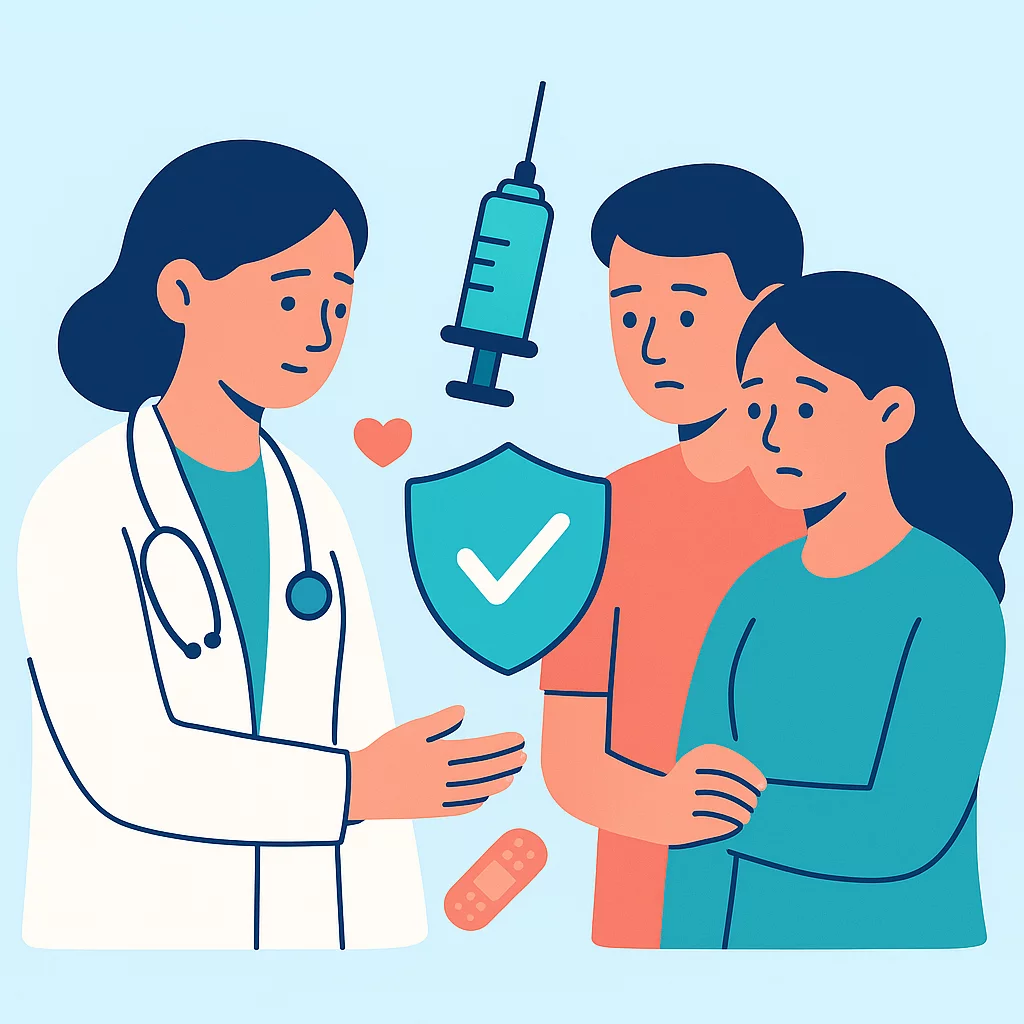
Measles is described by doctors as one of the most contagious viral diseases. Unlike some infections, it has no animal reservoir – the virus spreads only between humans. Transmission occurs mainly through droplets in the air when an infected person coughs, sneezes or even talks. The virus can remain in the air or on surfaces for several hours, so infection is possible even without direct contact, for example by entering a closed room shortly after a sick person has left.
The risk is increased by the fact that a person with measles becomes infectious several days before the characteristic rash appears. During this early period, symptoms can be very similar to a common cold or flu, which means that neither the patient nor those around them may realise that it is measles.
Typical early symptoms include high fever, cough, runny nose, red and painful eyes (conjunctivitis) and extreme sensitivity to light. After a few days, a spotted, raised rash usually starts on the face and then spreads over the body. By the time the rash is visible, the infection is usually already well advanced.
Doctors highlight that measles is not a harmless childhood illness. Complications can include pneumonia, middle ear infections, severe diarrhoea with dehydration, secondary bacterial infections requiring antibiotics and inflammation of the brain (encephalitis). In very rare cases, years after infection, some patients develop subacute sclerosing panencephalitis (SSPE), a fatal degenerative disease of the brain. Globally, measles continues to cause deaths, especially among young children and people with weakened immune systems.
There is no antiviral medicine that cures measles. Treatment focuses on relieving symptoms and managing complications. For this reason, health authorities emphasise that prevention through vaccination is the most important tool. Sanepid notes that two doses of the measles vaccine protect at least 95% of people and significantly reduce the risk of severe outcomes, including neurological complications.
In response to the current outbreak in Podkarpacie, public health officials are advising residents to check their vaccination records, especially if they are unsure whether they received both doses. Adults can be vaccinated at any age, and this is particularly recommended for those who have had contact with a measles case or who plan to travel to regions with higher measles activity.
For the general population, Sanepid recommends several basic protective measures while the region is seeing more cases: avoiding large crowds when possible, covering the mouth and nose when ill, maintaining good hand hygiene and seeking medical advice about vaccination status. Officials and medical experts agree that these steps, combined with high vaccination coverage, are essential to prevent local outbreaks from developing into a larger epidemic.
Info: ‘Polish Learner News’ is a service from ‘Let’s Learn Polish’, a language school dedicated to teaching Polish, where you can learn Polish online through various types of structured courses. We provide regular updates, explanations and practice materials to support your study of the language.
Advanced: Reports from Poland
Polish Learner News
Discover news from Poland to stay informed and practise your skills.
-

Learner News | 07.10.2026
Polish War Loss Returned: Napoleon Painting from Famous Collection
-

Learner News | 07.10.2026
Poland’s 1331 Battle of Płowce: The Truth Behind the Myth
-

Learner News | 07.10.2026
Major Mela Muter Retrospective Opens in Poland and Paris