A holiday conversation that changed everything
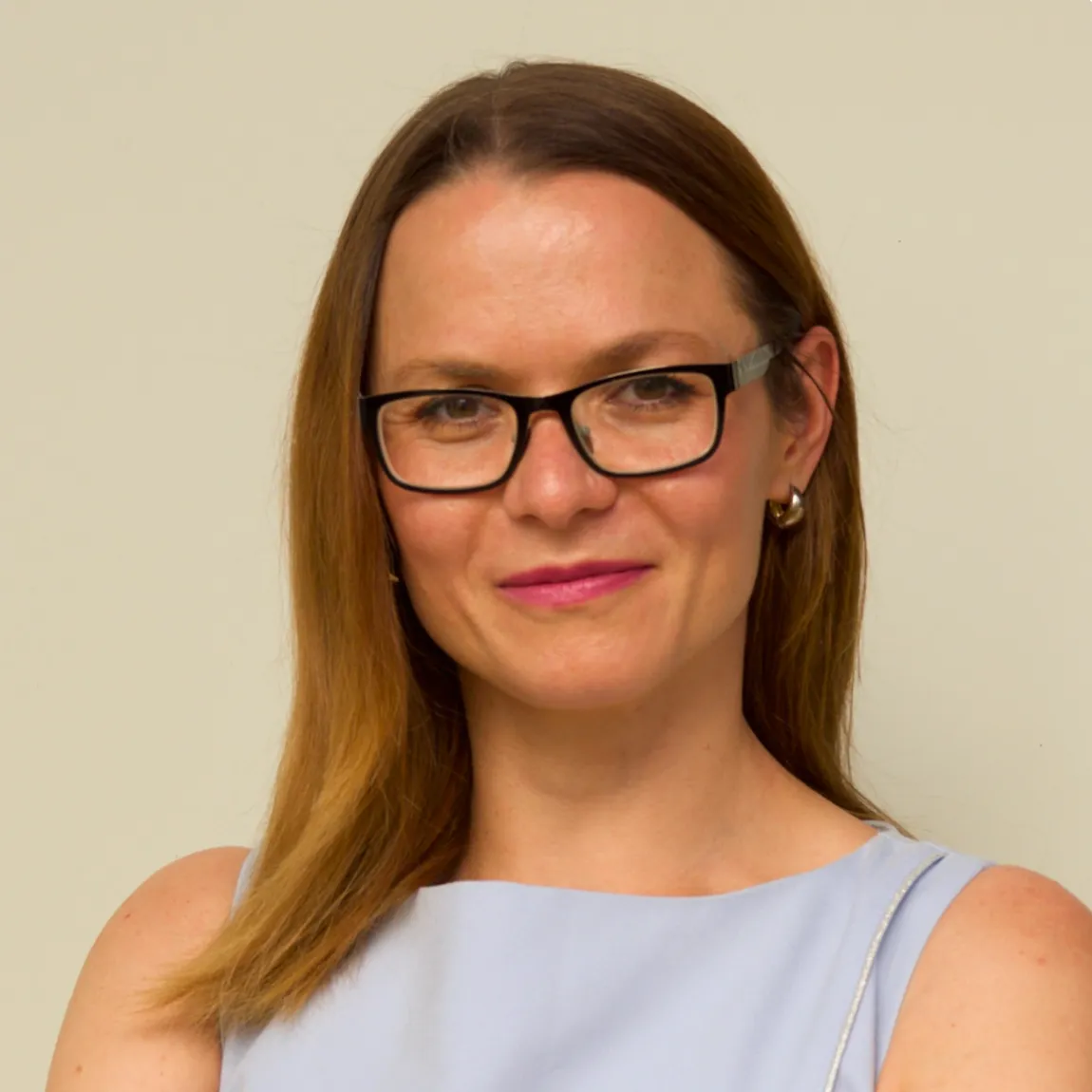
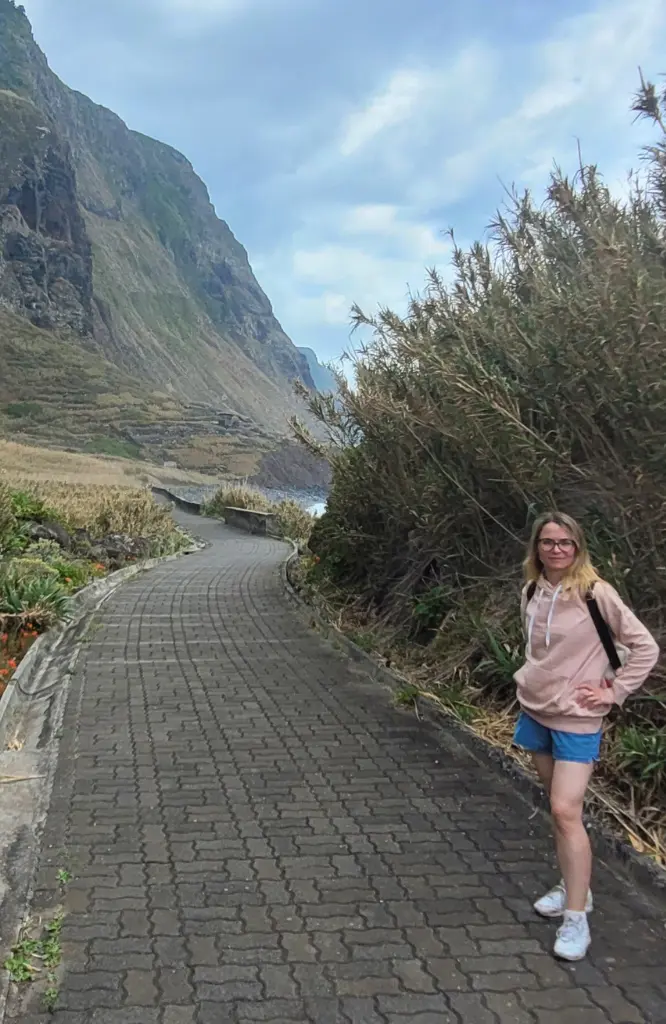
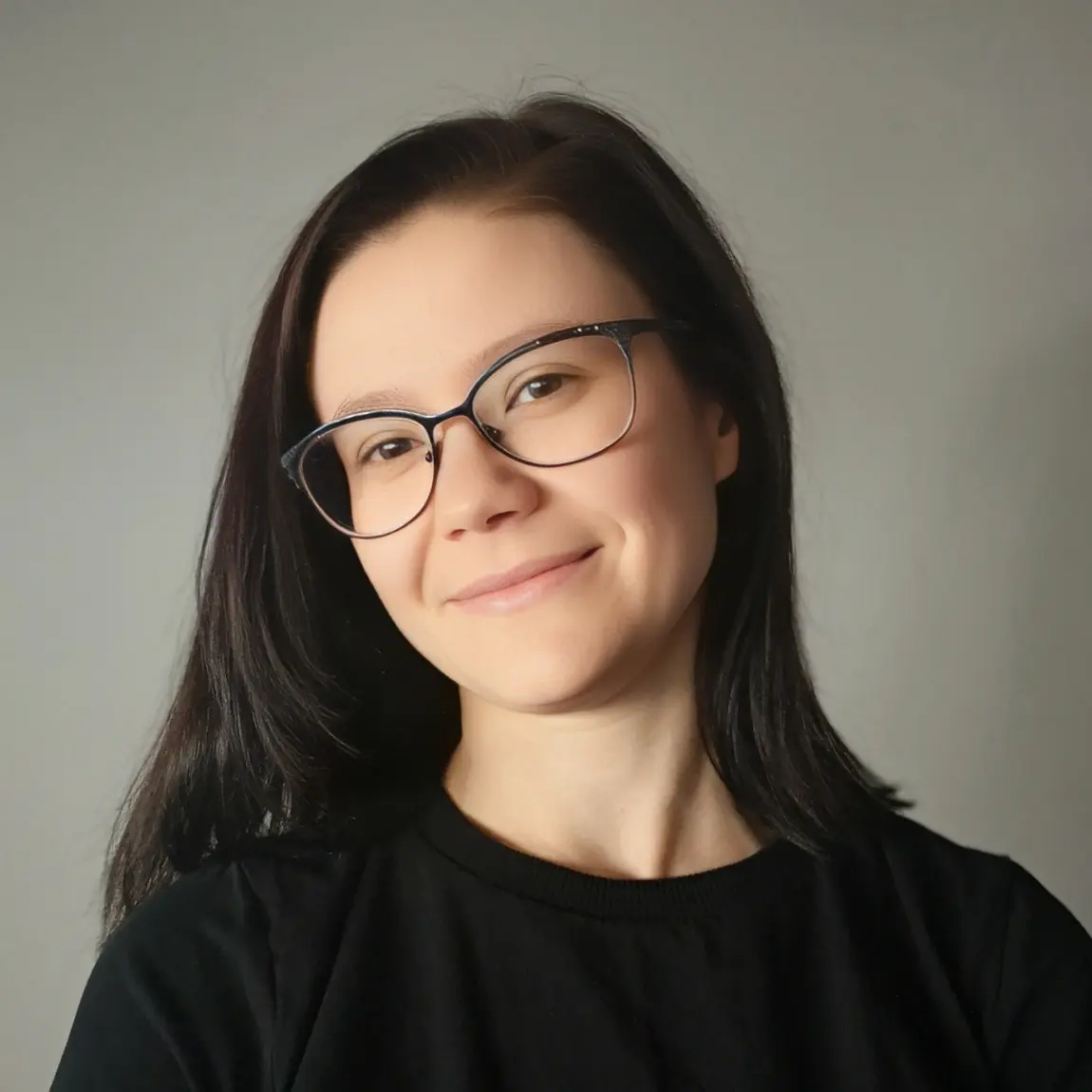
Martyna had always dreamed of becoming a teacher, but she never imagined it would be teaching Polish as a foreign language. The realisation came during a holiday on Madeira Island, in an unexpected conversation after Mass. When a bishop mentioned he didn’t speak Polish, she spontaneously replied, “Maybe you should.” It was a throwaway comment, but it planted a seed. Back in Poland, that moment kept returning to her mind. She enrolled in postgraduate studies to teach Polish as a foreign language, and what began as a curious impulse became a clear sense of direction.
“I think this is the kind of job what I want to do and what I need to do”
Her first student was a Ukrainian woman seeking private lessons. Then came an opportunity with Caritas, posted in a WhatsApp group – they needed someone to teach Polish to newcomers. She applied, got the job, and discovered something important: this wasn’t just work. “I think this is the kind of job what I want to do and what I need to do and what I should do,” she says. The whole progression felt natural, as though she’d been moving towards this all along.
Teaching teenagers and adults: two different worlds
These days, Martyna teaches across three settings. There’s her work with Let’s Learn Polish, private lessons with individual students, and her position at an art high school in Poznań, where she teaches Polish to international students from Ukraine, France, Georgia, and Greece. Each environment demands something different from her.
Working with adults through Let’s Learn Polish feels more straightforward. “They want to learn a language by themselves, because they feel motivated, because they have a purpose, they have a goal,” she explains. High school students arrive at Polish lessons because they must, not because they’ve chosen to. They’re navigating adolescence, adjusting to life in a new country, and Polish grammar isn’t high on their list of priorities. Martyna does her best to animate lessons, to find ways in, but she’s realistic about the challenge. Teenagers have more interesting things on their minds than declensions.
Where art meets language
The art high school suits Martyna perfectly. She paints every weekend – or tries to, when she can find the time and the will to do so. Working in an environment surrounded by creative students and teachers feels like a natural fit, combining her professional life with her personal interests in a way that makes sense.
“I try to see everybody, to give everybody something for them, for everyone”
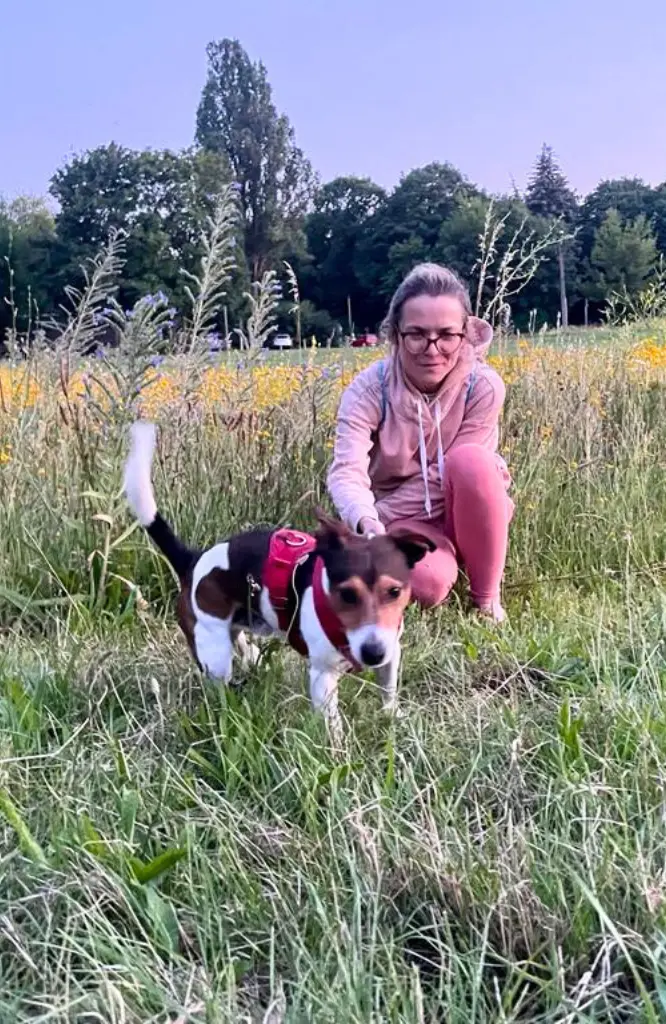
Beyond painting, she finds peace in the mountains – particularly the Karkonosze range these days, rather than the Tatras. “There are less people in these Karpaty Mountains. It’s more peaceful there,” she notes. When she’s not hiking or painting, she’s walking with Heniu, her dog (Henry in English), who she describes simply as “my therapist.” She also reads, with Anne of Green Gables holding a special place – Anne was a teacher, after all, and Martyna read the book as a child when she first dreamed of teaching. Though she’d always imagined becoming a teacher, she never thought it would be teaching Polish as a foreign language.
Creating space for mistakes
Martyna’s teaching philosophy centres on something many students fear: making mistakes. She works deliberately to create an atmosphere where errors aren’t just tolerated but welcomed. “I think that learning a new language or learning anything is based on making mistakes and that we shouldn’t have any fear of it,” she says. “This is part of the process of developing.”
She adapts her approach as she gets to know each student. At first, she offers a mix – listening exercises, writing tasks, conversation, questions – observing which methods resonate. Once she understands someone’s learning style and interests, she adjusts accordingly. Using topics students actually care about makes lessons more engaging, more motivating. The goal is always to help everyone find something in each session that works for them.
Already know some Polish?
Take our free placement test and find your current level in just a few minutes. It’s fun, fast, and helps you understand exactly where you are – and what the next step in your learning journey might be.
Take the free test
When students succeed
One summer stands out. A student from Caritas needed to pass a makeup exam, and Martyna worked with him throughout the holidays. When he succeeded, she felt it as her own achievement. “A success of the student is a success for me as well,” she reflects. There was also a young Polish woman she taught German who landed a job, directly applying her new language skills.
“When I see that it helps them to live in Poland – that’s what matters”
But the most rewarding moments aren’t always the dramatic ones. They’re when students smile during lessons, when they find enjoyment in learning, when they can handle everyday situations in Poland with growing confidence. Martyna sees her role clearly: helping people communicate better, whether they’re settling in Poland long-term, visiting family, or simply navigating daily life. When she sees her teaching making that tangible difference – when Polish stops being an obstacle and becomes a tool – that’s when she knows she’s doing exactly what she should be doing.
Teacher and student stories
Discover inspiring language journeys and see how others are learning and teaching Polish:
Agnieszka | Teacher
A Kraków-based translator discovers that teaching Polish perfectly balances the analytical precision of translation with creative joy.

Dagmar | Student
At 67, family lawyer Dagmar transformed her retirement into a Polish language adventure through her love of horses and riding.

Tomasz | Teacher
From imaginary students to real breakthroughs, Tomasz brings playful energy and deep care to every Polish lesson he teaches.