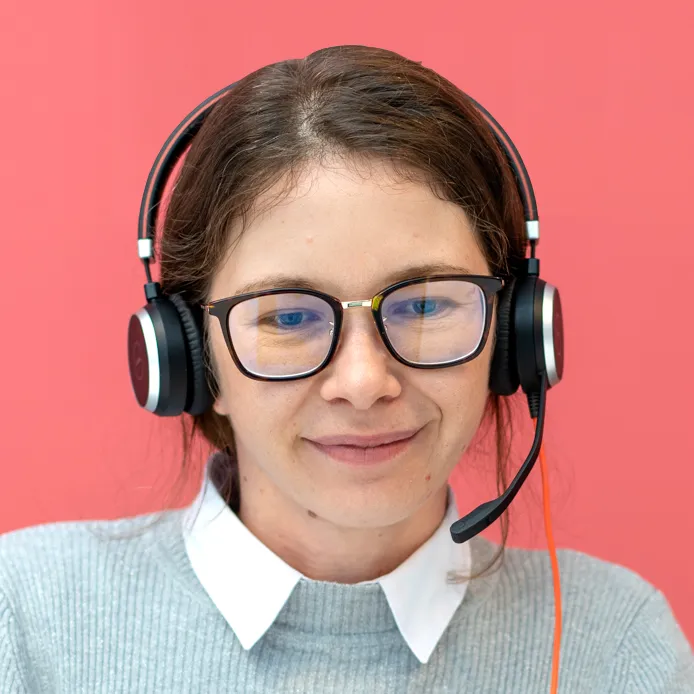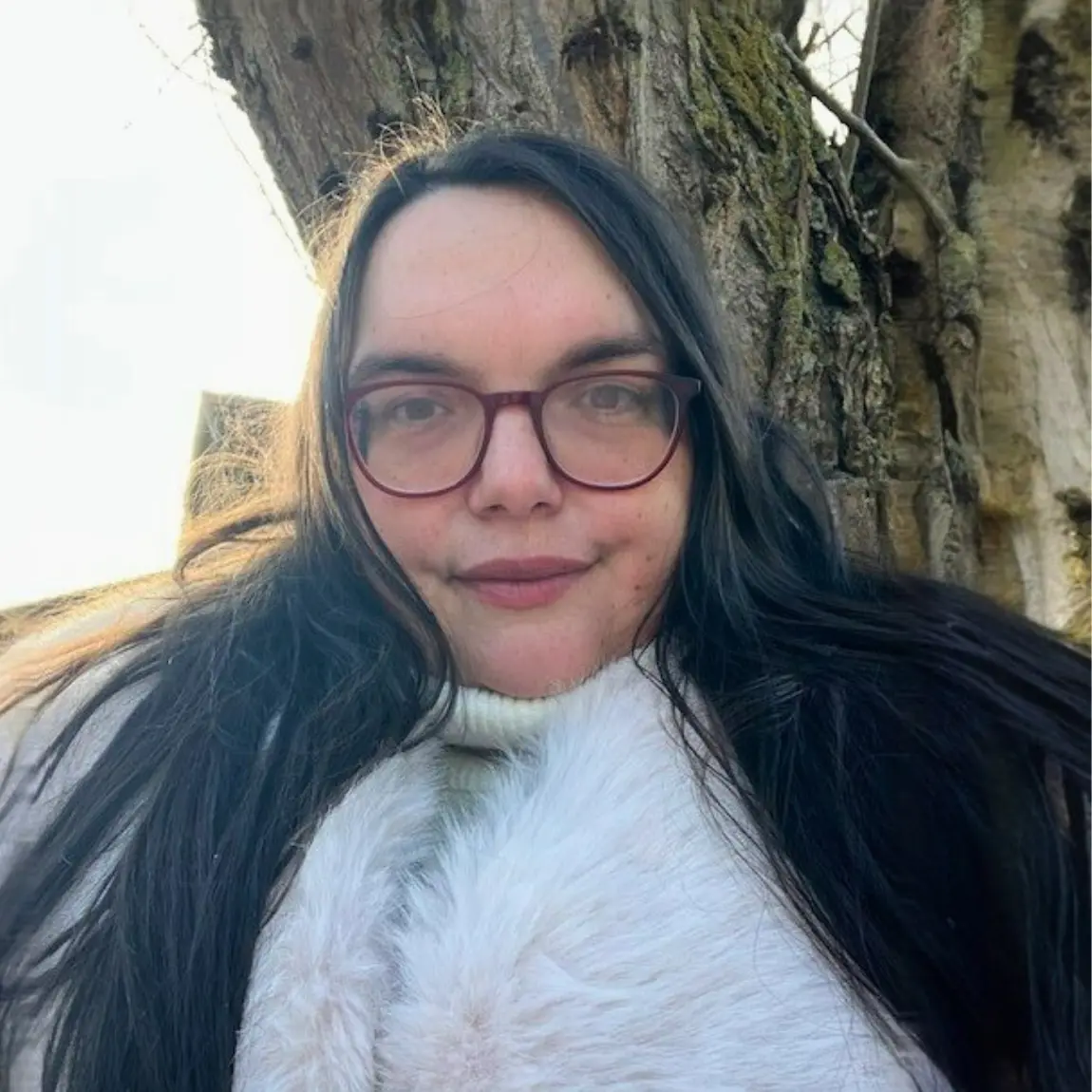
A language that felt like home before she ever studied it
Stefanie’s connection to Polish didn’t begin with a textbook or a classroom. It began in the fields around her family’s farm, where Polish workers came each summer throughout her childhood. “They’ve accompanied me since I was a little girl,” she says. Growing up in a small village on the border between Rhineland-Palatinate and North Rhine-Westphalia, she absorbed fragments of the language naturally – individual words, phrases, the cadence of conversation – without ever formally learning a single rule.
“I noticed I could understand certain words. And sometimes things were explained to me.”
What struck Stefanie most, even then, was that Polish felt alive in a way that school languages never quite did. She studied English at school, but without travel to English-speaking countries or immersion in English culture, the language stayed on the page. Polish, by contrast, was spoken by real people she knew. It came with humour, with warmth, with the particular texture of human contact. That early intuition – that this was a language worth knowing – stayed with her long after those summer seasons ended.
Farm life, family, and the quiet work of caring
Stefanie’s daily life today is shaped largely by family responsibilities. Her mother runs what was once an active farm, and Stefanie has stepped in to support her. Alongside that, she helps care for her grandmother, who is approaching her hundredth birthday this year. “It’s not always easy,” she says, with quiet understatement. But there’s no trace of complaint in how she describes it. Her commitment to the people she loves is simply part of who she is.
Her long-term partner of eight years is another anchor, even if they don’t share a home. Stefanie speaks about her relationships with the same thoughtfulness she brings to everything else – carefully, warmly, without dramatising. She trained as a childcare professional and pedagogical specialist, work that requires both patience and emotional attentiveness. Those same qualities show up in how she approaches language learning: with curiosity, with care, and without rushing herself.
Creativity, depth, and a life lived with intention
Ask Stefanie about her hobbies and the list expands quickly. She reads voraciously, writes poetry and longer texts, creates images using AI tools, and has dabbled in dance – Zumba at university with a friend, and later a course in ballroom and Latin dancing with a partner. She once approached the Women’s Museum in Bonn after admiring one of their exhibitions, went on to take private art lessons, and was subsequently invited to exhibit three of her AI-generated images in the museum shop. She recounts this almost in passing, as if it were a minor footnote.
“I think I like to engage with things deeply. I’m a sensitive person, and I believe that leads you to be creative in certain places – at least I hope so.”
This appetite for depth runs through everything she does. At the Frankfurt Book Fair, she and her partner visited a stand dedicated to Polish literature, and she left with several books translated into German – including a novel called The Doll, which she describes as widely read in Poland. For Stefanie, reading literature is a way of approaching the soul of a place, of developing genuine respect for its people and their inner lives. It’s the same instinct that draws her to Polish: not just the grammar or the vocabulary, but the culture and the humanity behind the language.
Finding her footing in the classroom
Stefanie had taken a few Polish lessons privately before joining Let’s Learn Polish, but it was the group format that made something click. Her first course was with Tomasz, and she found it energising to be in a room – or a virtual room – with people from Austria, Switzerland, and Germany who had all chosen to be there. “These people are all there voluntarily,” she observes. “There’s already a respect for the language and an openness to engaging with it.” That collective enthusiasm made learning feel different from anything she’d experienced in school.
She now works with her teacher Dominika, who sends written notes after each lesson summarising what they’ve covered – a small but meaningful gesture that Stefanie genuinely appreciates. She’s candid about her challenges too: Polish has more grammatical cases than German, and getting her head around the declensions takes real cognitive effort. Time is another constraint. Between caring responsibilities and everyday life, finding hours to study independently is difficult. But she knows the potential is there: given more time to review Dominika’s notes and work through vocabulary, she believes she could reach a solid A1 level.
Curious about Polish lessons?
Thinking about learning Polish, but not sure where to start? Book a friendly video chat with our learning coordinator and get personal guidance on teachers, groups, and next steps.
Book a coordinator chat
Listening closely, losing nothing
One of the approaches that has stayed with Stefanie is a technique Dominika uses in lessons: the student waits while the teacher speaks, then silently repeats the words internally before saying them aloud. It’s a method that rewards attentiveness over speed, which suits Stefanie well. She’s not someone who rushes. Whether she’s reading, writing, or learning a language, she prefers to sit with things, to understand them properly before moving on.
“You need a feel for the language, a little respect, and above all – don’t lose heart.”
Her advice to anyone starting out with Polish is simple: it’s worth it. Not despite the difficulty, but partly because of it. She describes the experience as leaving you “richer and more gifted than when you arrived” – a phrase that feels entirely characteristic of someone who approaches language not as a tool but as a form of connection. For Stefanie, Polish has never just been a practical skill to acquire. It has been, in one form or another, part of her life for as long as she can remember.
Teacher and student stories
Discover inspiring language journeys and see how others are learning and teaching Polish:
Martyna | Teacher
When Martyna told a bishop he should learn Polish, she didn’t know that moment would lead her to discover her true calling as a teacher.
Agnieszka | Teacher
A Kraków-based translator discovers that teaching Polish perfectly balances the analytical precision of translation with creative joy.

Dagmar | Student
At 67, family lawyer Dagmar transformed her retirement into a Polish language adventure through her love of horses and riding.