From Cardiff to Newport, with a few detours along the way
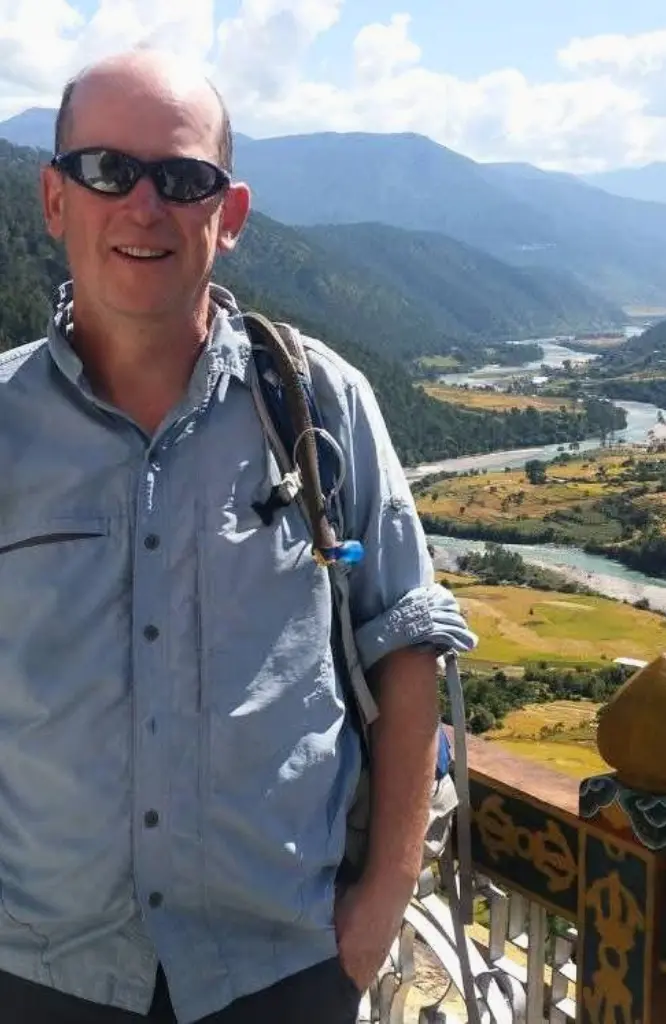
Steve grew up in Cardiff before heading east to study at the University of Reading, just outside London. What was meant to be a temporary stop turned into nearly four decades. He built his career there, working as an IT project manager – first for Prudential, then for Capita – and the years passed quickly. It was only during the COVID pandemic, when remote working became the norm, that he realised geography no longer tied him to any particular place. With his family still rooted in South Wales, the decision to return felt straightforward. He settled in Newport, a town about ten miles from Cardiff.
“I realised that it didn’t really matter where I was.”
Not long after the move, he retired – something he had quietly been looking forward to. He stays in touch with former colleagues through a daily Wordle group on WhatsApp; three of them are still working, and two, himself included, are not. The contact is easy and warm. The work itself, he says plainly, he does not miss.
Scouting, small dogs, and a passport that tells its own story
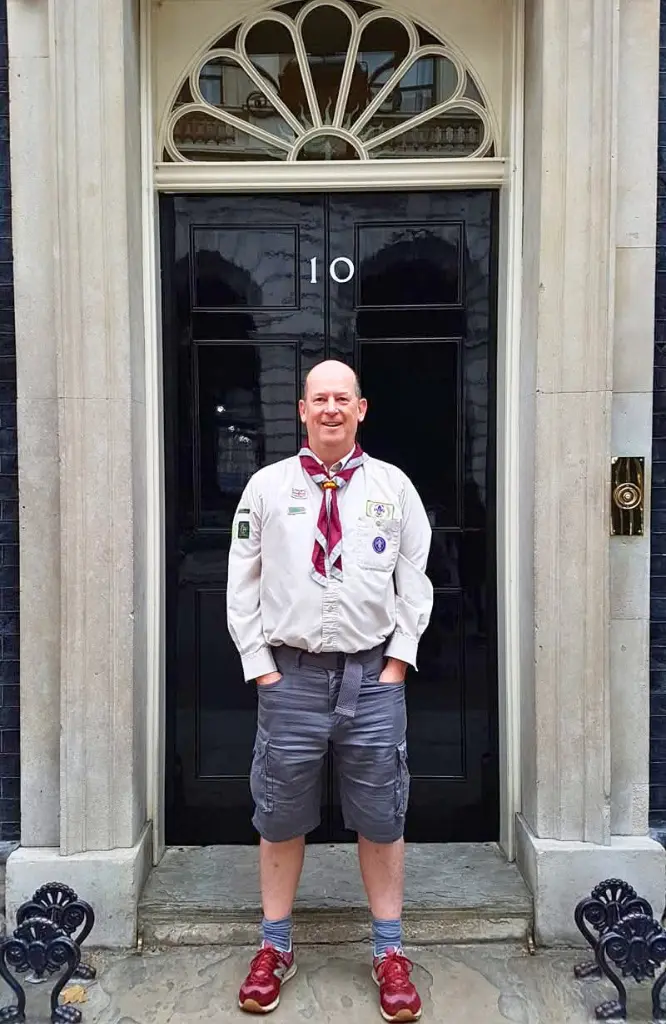
If IT was Steve’s career, scouting has been his life. He joined as an eight-year-old and, with the exception of a gap of a couple of years, has been involved in some form of leadership ever since. These days, two other creatures take up a good share of his attention. Minnie is a Brussels griffon – a breed that tends to draw blank looks from most people – and Chewy is a cross between a griffon and a pug. Both are around seven or eight years old, and both are, by Steve’s own account, demanding. Minnie in particular.
Chewy’s name, incidentally, causes pronunciation difficulties for his Polish partner, who finds it tricky to say – a small irony, given that Steve is now very much on the other side of that particular struggle. Travel has been the third great constant in his life. He has visited 65 countries and set foot on all seven continents, accumulating along the way a collection of Starbucks mugs from the places he has been, including one from a town somewhere south of Gdańsk that he cannot quite pronounce and is determined to visit.
How a trip to Poland changed everything
For all his travelling, Steve’s connection to Poland came from something more personal than tourism. He met his partner, Raf, during one of his trips, and the two have been together for around eight years. They married a year ago. The next chapter involves a small apartment near Modlin Airport, not far from Warsaw – compact, close to the river, and very nearly theirs. They have been waiting a year and a half for the keys, with the handover now just weeks away.
“It would be nice to be polite and speak a bit of Polish back, or at least understand some of the conversation going on.”
It is Raf’s family that gives Steve’s language learning its clearest sense of purpose. His mother-in-law does not speak English, and while one of Raf’s sisters and her husband manage well enough, the day-to-day warmth of family conversation tends to happen around Steve rather than with him. They travel to Poland at least twice a year, flying from Bristol to Gdańsk, Poznań, or Kraków – anywhere, in fact, except Warsaw, which the local airport does not currently serve directly. That, Steve notes with mild exasperation, would make things considerably easier.
No freebies: finding the sounds in a language that gives nothing away
Steve is candid about his history with languages. Welsh was compulsory at school and abandoned as soon as the rules allowed. French came and went in much the same way. German lasted a little longer, but he failed his exam at sixteen, and that, more or less, was that. His own assessment – delivered without self-pity – is that he was never particularly good at them, and Polish has done nothing to challenge that view. It does not, as he puts it, offer many freebies. With a Romance language, familiar-sounding words nudge you in the right direction. Polish works differently. The consonant clusters are unlike anything in English, and the sounds required are simply not ones that come naturally.
The word for the number three – trzy – has become something of a personal benchmark. He practised it on dog walks, playing audio on his phone over and over, and still could not quite get there. He has also found that reviewing his notes silently is not enough: unless he says the words out loud, they do not stick. So he works through his vocabulary three or four times a week between lessons, spending around half an hour each time, going back over what he has covered – not every day, he admits, but often enough to keep things from slipping away entirely.
Practise Polish for free
Use our interactive study tool to improve your Polish with vocabulary quizzes, grammar exercises, and progress tracking. Pick a topic, start a quiz, and see how your skills grow over time.
Try the study tool
Practise, patience, and the long road to Poland
Steve tried Duolingo before signing up with Let’s Learn Polish. It went reasonably well for the first couple of days, then jumped sharply in difficulty on day three – he felt dropped in at the deep end before he had learned to float – and he deleted the app. What he has found more useful is the regularity of a weekly lesson and the quiet accountability that comes with it. He may not always arrive having done everything he intended, but knowing that a lesson is coming keeps him returning to his notes. The main frustration in the early weeks was navigating the course materials – spending more time hunting for the right document than actually studying it. He has since sorted it out with his teacher’s help, saved both files to his laptop, and considers the matter more or less resolved.
“Just stick with it.”
The bigger picture involves a drive across Europe – through France, Belgium, Germany, and into Poland – with Raf and the dogs, once the apartment is in a state that can accommodate them. Dog-friendly hotels along the route, paperwork for the animals, and eventually a couple of months spent living there rather than just visiting. Steve does not expect to be holding fluent conversations any time soon, and he says so without embarrassment. His advice to anyone else starting out is simple: learn the alphabet first, get to grips with the sounds, and do not give up before it gets easier. The words, he is fairly certain, will come eventually. He just has to keep going back to them.
Teacher and student stories
Discover inspiring language journeys and see how others are learning and teaching Polish:
Stefanie | Student
Stefanie grew up alongside Polish seasonal workers on her family’s farm. Decades later, she’s finally learning the language that shaped her childhood.
Martyna | Teacher
When Martyna told a bishop he should learn Polish, she didn’t know that moment would lead her to discover her true calling as a teacher.
Agnieszka | Teacher
A Kraków-based translator discovers that teaching Polish perfectly balances the analytical precision of translation with creative joy.