The news in Polish
- laguna (f.)
Płytki zbiornik wodny oddzielony od morza lub jeziora przez mieliznę lub rafę. ↩︎ - granica (f.)
Linia oddzielająca dwa kraje lub obszary. ↩︎ - gatunek (m.)
Grupa organizmów o podobnych cechach, należących do tej samej kategorii biologicznej. ↩︎ - ptak (m.)
Zwierzę pokryte piórami, mające skrzydła i dziób, zazwyczaj potrafiące latać. ↩︎ - łódka (f.)
Małe, lekkie naczynie wodne służące do pływania po wodzie. ↩︎ - biec
Tu w znaczeniu przenośnym: ciągnąć się, przebiegać przez jakiś obszar lub teren. ↩︎
Translation
Text comprehension
Question 1: How many species of birds live in Szczecin Lagoon?
Question 2: Approximately how long is the R66 cycling route?
Vocabulary
| Polish | English |
|---|---|
| laguna (f.) | |
| granica (f.) | |
| gatunek (m.) | |
| ptak (m.) | |
| łódka (f.) | |
| biec | |
Free trial lesson
Curious about live learning? Join a free trial lesson and see what it’s like to learn with us. No commitment, no pressure – just a friendly session to find out if it’s the right fit for you.
Reserve your spot
Read the full story
Zalew Szczeciński, or the Szczecin Lagoon, is Poland’s largest lagoon, situated on the border with Germany. It is formed where fresh water from the River Oder mixes with salt water from the Baltic Sea, creating a rare and dynamic ecosystem.
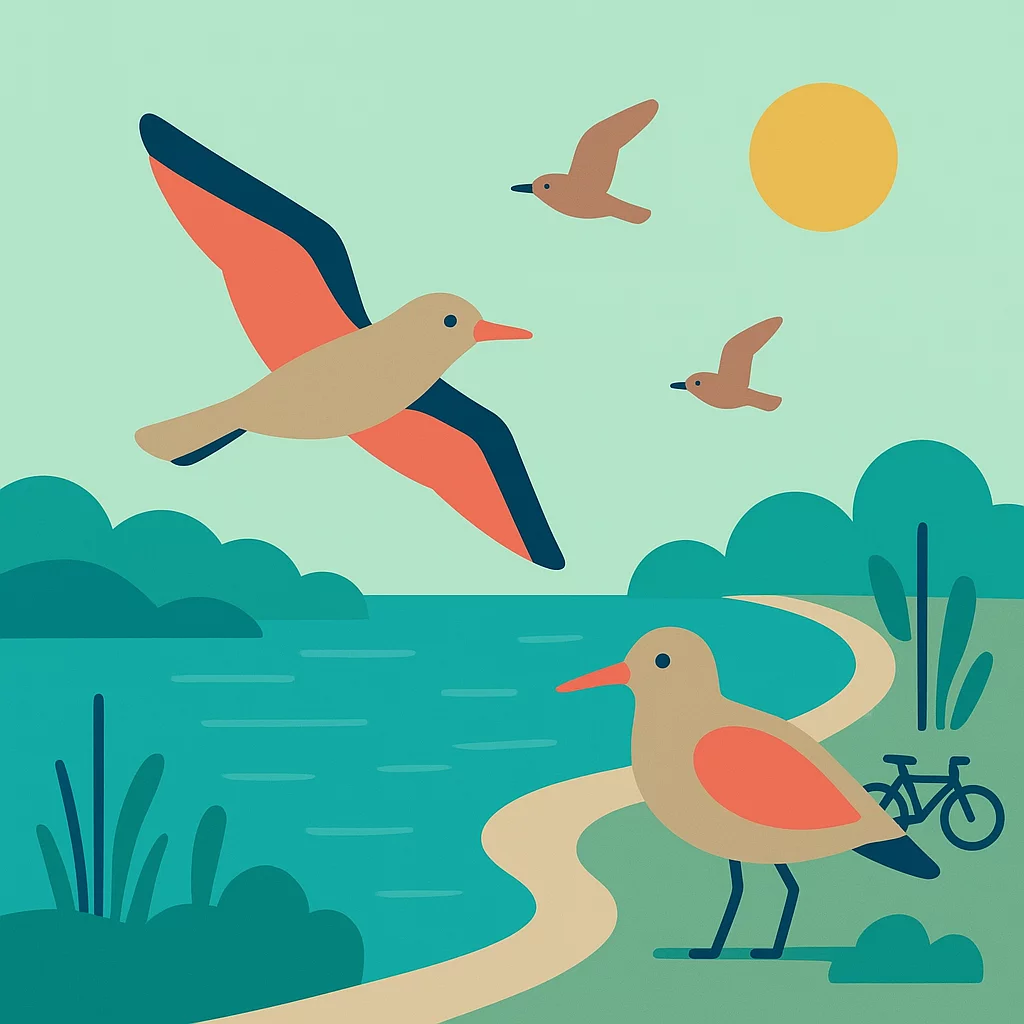
The lagoon is considered one of the most important bird sanctuaries in Europe. More than 260 bird species have been recorded there. In winter, up to 150,000 wetland birds gather on the lagoon, and during migration periods this number can rise to as many as 250,000 individuals. Breeding species include the white-tailed eagle, corncrake, and great crested grebe, while winter visitors include the whooper swan and goosander.
In recent years, efforts to increase breeding sites have included the construction of artificial islands. Between 2021 and 2024, the number of breeding pairs grew from fewer than 200 to nearly 5,000. Among the new arrivals was the Caspian tern, recorded as a breeding species in Poland for the first time.
The lagoon also supports an exceptionally diverse fish population. Species found there include pikeperch, burbot, wels catfish, and sea trout, as well as rarer fish such as the allis shad and ziege. The ecosystem relies heavily on bottom-dwelling organisms, including filter-feeding zebra mussels, which were once capable of filtering several hundred tonnes of water per day.
The lagoon plays a significant role in regional transport. It forms part of the waterway connecting the Baltic Sea to the deep-water port of Szczecin, one of Poland’s most important ports. The Piastowski Canal, built between 1874 and 1880, enabled large vessels to sail directly from the Baltic to Szczecin, greatly increasing the port’s importance.
The lagoon currently accumulates around 1.5 million cubic metres of sediment each year, requiring regular dredging of waterways to a depth of approximately 10.5 metres.
For visitors, the area offers sailing, kayaking, cycling, and walking. An international cycle route, R66, runs approximately 296 kilometres around the lagoon through both Poland and Germany and can be completed in four to six days.
Advanced: Reports from Poland
- Szczecin Lagoon: Poland’s Extraordinary Lagoon Where the Baltic Meets Fresh Water (National Geographic Traveler)
Polish Learner News
Discover news from Poland to stay informed and practise your skills.
-

Learner News | 29.09.2026
Przez ścianę Wins Golden Lions at Gdynia Film Festival 2026
-
Learner News | 22.09.2026
13-Year-Old Girl Breaks Junior World Record Catching Giant Muskie
-

Learner News | 15.09.2026
Warsaw Ranks Among World’s Best Cities for Cyclists