Learn Portuguese online
- Live lessons with native-speaking teachers
- Group and individual lessons planned
- Proven concept from four established schools
- Free Portuguese study tool available now
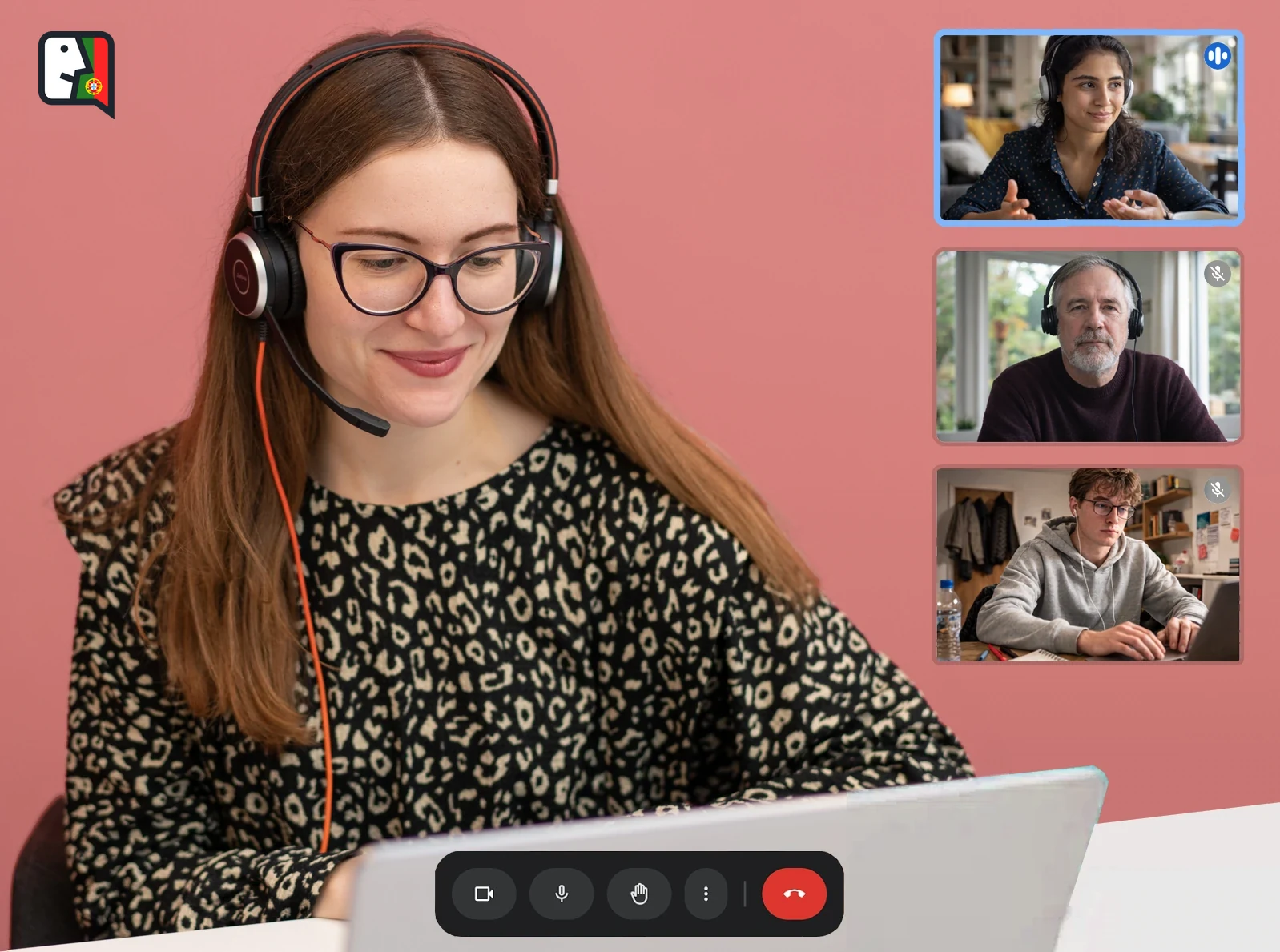
How we’ll teach Portuguese
Our Portuguese school will use the same proven learning formats as our established language schools.
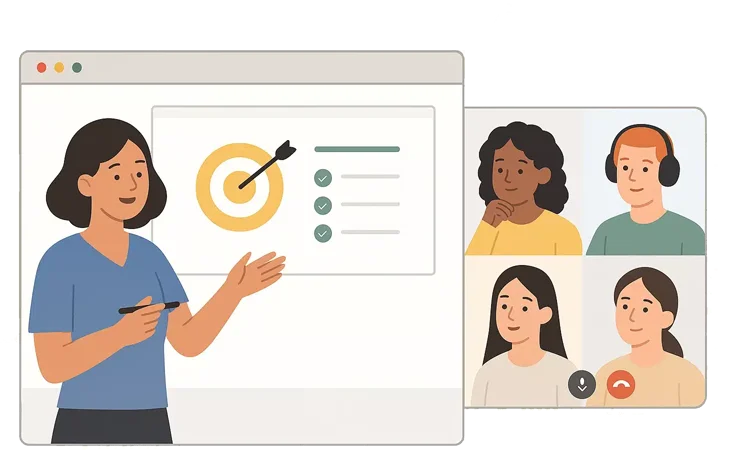
Group courses
Learn live with a small group at a similar level, following a clear programme and weekly rhythm.
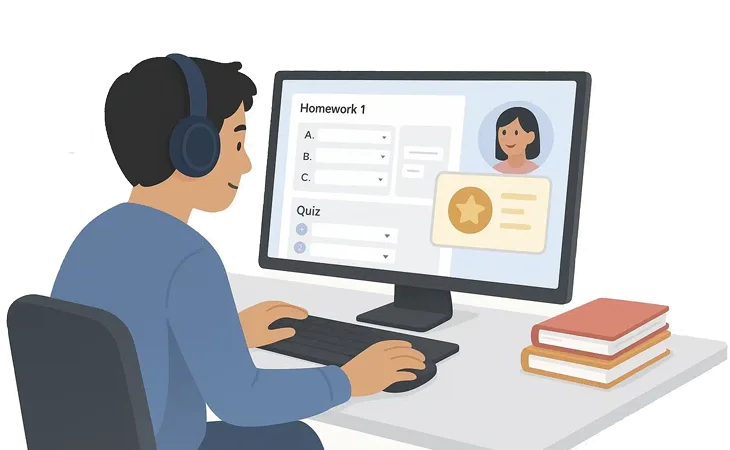
Individual lessons
Learn one-to-one with a teacher, with flexible scheduling and lessons adapted to your goals.
Meet Our Students
Since Let’s Learn was founded in 2009, we’ve helped more than 3,500 learners get to grips with Croatian, Polish, Greek and Ukrainian online.

Stan | Croatian Learner
After 25 years of visits and a repertoire limited to Croatian curse words, this New York journalist finally tackled the language properly.
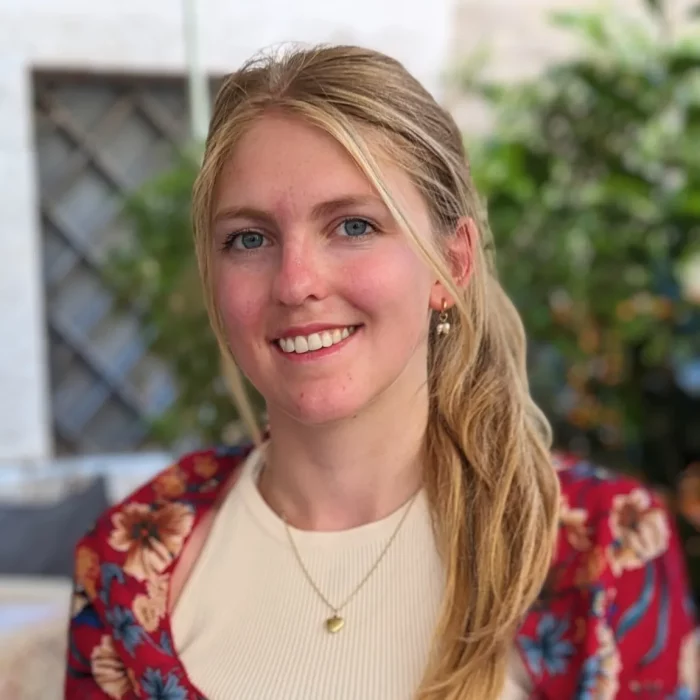
Julia | Greek Learner
Julia traded scattered holiday phrases for structured Greek lessons, finally connecting properly with her father’s heritage
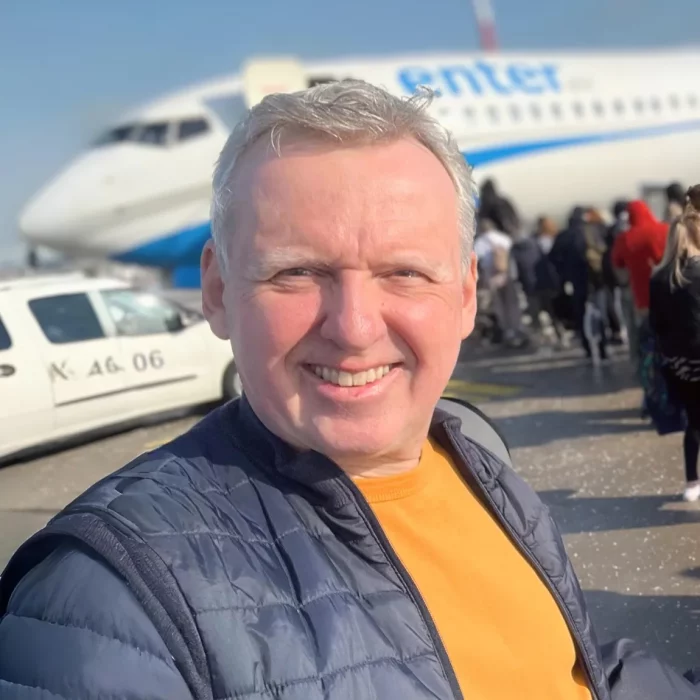
Michael | Polish Learner
A Hamburg teacher discovers Polish isn’t like Norwegian – but finds the challenge worthwhile for love and cultural connection.
15+
Years teaching
experience
450+
Active
learners
27
Teachers
4
Established language
schools

About Let’s Learn
Let’s Learn is an online language school based in Munich and Zagreb. Since 2009, we’ve helped thousands of people learn Croatian, Greek, Polish and Ukrainian through live lessons, our own materials and practical study tools.
Learn Portuguese - start with your first words
Curious how Portuguese sounds? Here are a few essential expressions you can pick up right away. Click any word to hear a native speaker say it - and find out whether the language speaks to you.
Everyday basics
Start with a handful of core Portuguese words you will hear and use in everyday situations - from simple answers like yes and no through to greetings and polite expressions.
Olá - Hello
Bom dia - Good morning
Boa tarde - Good afternoon
Boa noite - Good evening / Good night
Adeus - Goodbye
Até logo - See you later
Até amanhã - See you tomorrow
Sim - Yes (often: repeat the verb)
Não - No / not
Se faz favor - Please (typically Portuguese)
Por favor - Please
Obrigado - Thank you (man; woman: obrigada)
Até já - See you in a moment
De nada - You are welcome
Desculpe - Excuse me / Sorry
Não faz mal - No problem / Never mind
Com licença - Excuse me (getting past)
Faz favor! - Excuse me! (calling out)
Está bem - OK / All right
Prazer - Nice to meet you

Your first conversations in Portuguese
Once single words feel comfortable, you can practise typical question-and-answer pairs. These are the foundation of any everyday conversation - you will need them constantly when meeting new people or chatting with locals:
Como está? - How are you?
Estou bem, obrigado. E consigo? - I am fine, thank you. And you? (a woman says obrigada)
Como se chama? - What is your name?
Chamo-me Ana. - My name is Ana.
Muito prazer. - Very nice to meet you.
De onde é? - Where are you from?
Sou da Alemanha. - I am from Germany.
Fala inglês? - Do you speak English?
Desculpe, não falo português. - Sorry, I do not speak Portuguese.
Não percebo. Pode repetir, se faz favor? - I do not understand. Could you repeat that, please?
Where is Portuguese spoken?
Why do people learn Portuguese?
Is Portuguese hard to learn?
Frequently asked questions
Can I currently book Portuguese lessons?
Not yet. We are preparing or assessing a future Portuguese school. Register your interest and we will contact you when the first trial lessons or courses become available.
When will Portuguese courses begin?
We do not yet have a confirmed launch date. Once our first teaching dates are fixed, people on the interest list will hear from us first.
Will you offer group and individual lessons?
We expect to offer both formats, although the first trial phase may begin with a more limited selection.
Is Portuguese hard to learn for English speakers?
Not especially hard on paper, but much harder to hear than to read. The US Foreign Service Institute places Portuguese in Category I, its easiest group for English speakers, at roughly 600-750 classroom hours to professional working proficiency. Vocabulary comes quickly thanks to thousands of shared cognates, and the grammar holds few surprises. The real obstacle is listening, especially in European Portuguese, where unstressed vowels are reduced or dropped entirely.
Should I learn European or Brazilian Portuguese?
Pick the variety spoken where you will actually use it. Brazilian Portuguese has far more speakers, with about 211 million in Brazil alone, and far more learning material. European Portuguese is what is spoken in Portugal and what the CIPLE citizenship exam tests. They remain the same language and stay mutually intelligible, so neither choice is wasted. Our vocabulary trainer uses European Portuguese.
How long does it take to learn Portuguese?
Around 70-80 hours to reach A1, and roughly 300-500 hours to reach B1, where conversation starts feeling comfortable. The often-quoted 600-750 hour figure from the Foreign Service Institute targets professional working proficiency at B2 or C1, and it assumes intensive classroom study, so self-study normally needs more hours. At five hours a week, expect several months to A2 and one to two years to a solid B1.
Why can I read Portuguese but not understand it when spoken?
Because European Portuguese reduces or deletes unstressed vowels, so words sound far shorter than they look. Portuguese is stress-timed, which squeezes unstressed syllables until they centralise or vanish: ‘de manhã’ collapses toward ‘dmanhã’, and a four-syllable word can arrive as two. Natives are not mumbling or speaking unusually fast, you simply have not learned to parse the reductions yet. Listening with native audio from day one is the cure.
Is Portuguese similar to Spanish?
Very similar in writing, considerably less so in speech. The two share roughly 90% lexical similarity, so a Spanish speaker can often read Portuguese and follow most of it. Spoken intelligibility is far lower, around 50-60%, and it runs asymmetrically: Portuguese speakers understand Spanish better than Spanish speakers understand Portuguese. Nasal vowels and vowel reduction are the barrier. Spanish gives you a real head start, and a supply of false friends.
Do I need to speak Portuguese to move to Portugal?
No, the D7 and digital nomad visas have no language requirement, and permanent residency does not test language either. Portuguese citizenship does: you need A2, usually proven with the CIPLE exam from CAPLE, which costs about 79 euros and needs 55% overall plus at least 25% in every section. The certificate never expires. Since citizenship generally follows five years of residency, there is little reason to leave it late.
How should a complete beginner start with European Portuguese?
Start with audio rather than text. European Portuguese is not pronounced the way it is written, so learning words silently teaches you a pronunciation you will later have to unlearn. Pair every new word with a native recording, build a core of high-frequency vocabulary, and start listening early even when you catch very little. Our free vocabulary trainer is aimed squarely at that first vocabulary step.
Why is most Portuguese learning material Brazilian?
Because Brazil has roughly twenty times as many speakers as Portugal, so most courses, apps and podcasts are built for that market and default to Brazilian without saying so. If you are learning for Portugal, check the variety before you commit: material that says only “Portuguese” is usually Brazilian. The giveaways are vocabulary such as autocarro against ônibus, telemóvel against celular, and comboio against trem.
Where is Portuguese spoken, and is it worth learning?
Portuguese is an official language in nine countries and has roughly 258 million speakers, putting it among the most spoken languages in the world. The Community of Portuguese Language Countries spans four continents: Portugal, Brazil, Angola, Mozambique, Cape Verde, Guinea-Bissau, São Tomé and Príncipe, East Timor and Equatorial Guinea. Brazil accounts for most speakers at about 211 million. One language opens Portugal, Brazil and much of Lusophone Africa.
Interested in learning Portuguese with us?
Leave your details and we will contact you when our first trial lessons or courses become available. There is no commitment, and we will not register you for anything automatically.