Learn Czech online
- Live lessons with native-speaking teachers
- Group and individual lessons planned
- Proven concept from four established schools
- Free Czech study tool available now
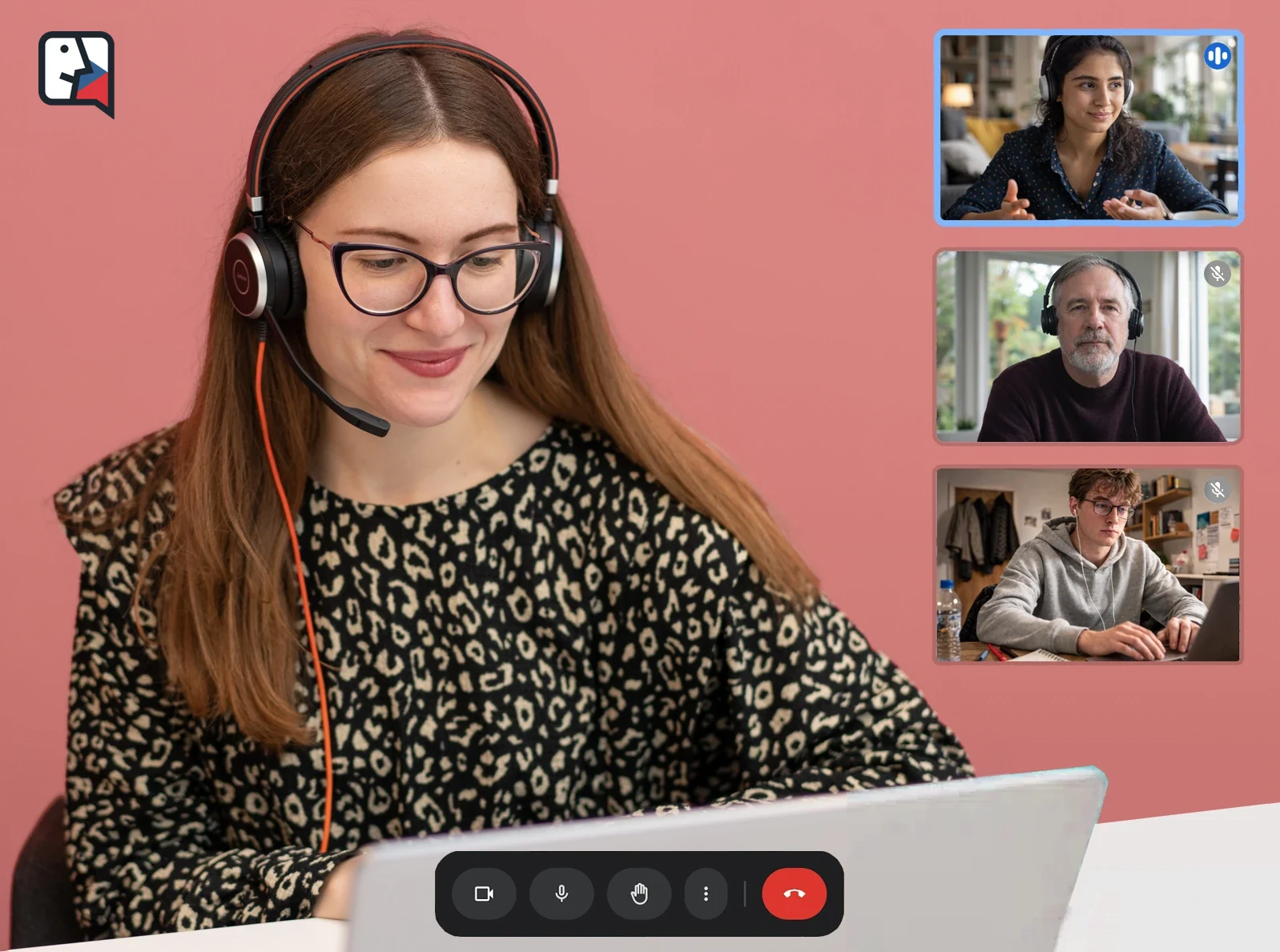
How we’ll teach Czech
Our Czech school will use the same proven learning formats as our established language schools.
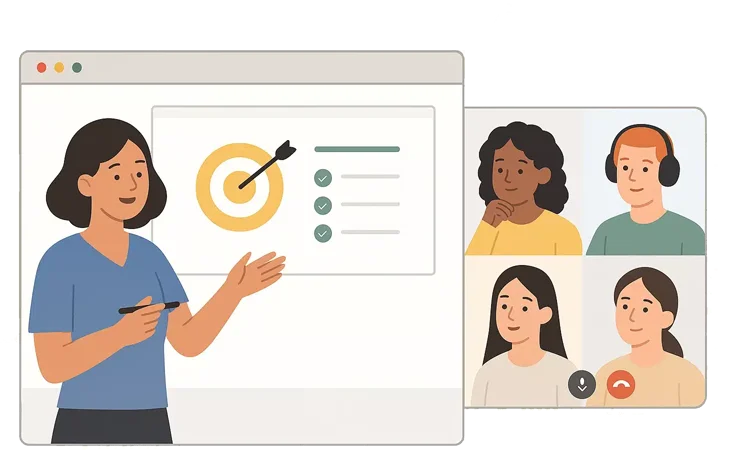
Group courses
Learn live with a small group at a similar level, following a clear programme and weekly rhythm.
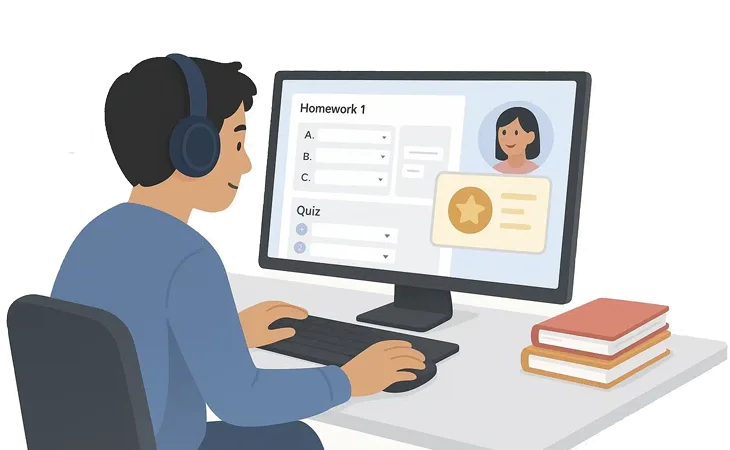
Individual lessons
Learn one-to-one with a teacher, with flexible scheduling and lessons adapted to your goals.
Meet Our Students
Since Let’s Learn was founded in 2009, we’ve helped more than 3,500 learners get to grips with Croatian, Polish, Greek and Ukrainian online.

Stan | Croatian Learner
After 25 years of visits and a repertoire limited to Croatian curse words, this New York journalist finally tackled the language properly.

Julia | Greek Learner
Julia traded scattered holiday phrases for structured Greek lessons, finally connecting properly with her father’s heritage

Michael | Polish Learner
A Hamburg teacher discovers Polish isn’t like Norwegian – but finds the challenge worthwhile for love and cultural connection.

15+
Years teaching
experience
450+
Active
learners
27
Teachers
4
Established language
schools

About Let’s Learn
Let’s Learn is an online language school based in Munich and Zagreb. Since 2009, we’ve helped thousands of people learn Croatian, Greek, Polish and Ukrainian through live lessons, our own materials and practical study tools.
Learn Czech - start with your first words
Curious how Czech sounds? Here are a few essential expressions you can pick up right away. Click any word to hear a native speaker say it - and find out whether the language speaks to you.
Everyday basics
Start with a handful of core Czech words you will hear and use in everyday situations - from simple answers like yes and no through to greetings and polite expressions.
Dobrý den - Hello / Good day
Dobré ráno - Good morning
Dobrý večer - Good evening
Ahoj - Hi / Bye (friends only)
Na zdraví! - Cheers!
Na shledanou - Goodbye
Nashle - Bye (colloquial)
Dobrou noc - Good night
Ano - Yes
Jo - Yeah (common in speech)

Your first conversations in Czech
Once single words feel comfortable, you can practise typical question-and-answer pairs. These are the foundation of any everyday conversation - you will need them constantly when meeting new people or chatting with locals:
Jak se máte? - How are you?
Dobře, děkuji. A vy? - I am fine, thank you. And you?
Jak se jmenujete? - What is your name?
Jmenuji se Anna. - My name is Anna.
Odkud jste? - Where are you from?
Jsem z Německa. - I am from Germany.
Mluvíte anglicky? - Do you speak English?
Promiňte, nemluvím česky. - Sorry, I do not speak Czech.
Nerozumím. Můžete to prosím zopakovat? - I do not understand. Could you repeat that?
Kolik to stojí? - How much does it cost?
Where is Czech spoken?
Why do people learn Czech?
Is Czech hard to learn?
Frequently asked questions
Can I currently book Czech lessons?
Not yet. We are preparing or assessing a future Czech school. Register your interest and we will contact you when the first trial lessons or courses become available.
When will Czech courses begin?
We do not yet have a confirmed launch date. Once our first teaching dates are fixed, people on the interest list will hear from us first.
Will you offer group and individual lessons?
We expect to offer both formats, although the first trial phase may begin with a more limited selection.
Is Czech hard to learn for English speakers?
Yes, Czech is genuinely one of the harder languages for English speakers, but it is not in the hardest tier. The US Foreign Service Institute budgets roughly 44 weeks, about 1,100 class hours, to reach professional working proficiency in Czech, the same bracket as Polish, Russian, Greek and Turkish. The truly hardest group, at around 2,200 hours, is Arabic, Chinese, Japanese and Korean. The real work in Czech is the grammar, not the vocabulary.
How long does it take to learn Czech?
Around 1,100 class hours for professional-level fluency, but useful conversation arrives far sooner. That FSI figure assumes intensive, full-time study with a teacher, which is not most people’s situation. At an hour a day, A1 basics such as greetings, ordering and simple questions take a few months. A solid B1 conversational level realistically takes somewhere between 18 months and three years for a self-paced learner. Consistency matters more than intensity.
Why is the Czech ř so hard to pronounce?
Because ř is a trill and a fricative at the same time, a combination almost no other language uses. Written [r̝] in IPA, it is roughly a rolled r and the sound in the middle of “measure” produced simultaneously rather than one after the other. It is famously the last sound Czech children master, and some native speakers never produce it cleanly. Practise the rolled r and the ž sound separately, then merge them.
Can you get by in Prague with only English?
Honestly, yes, in central Prague. Hotels, restaurants, attractions, public transport and most shops in the tourist core run in English, and you could spend an entire holiday there without a word of Czech. But the coverage is thinner than it looks. Roughly half of Czechs speak some English and only a small minority are genuinely proficient, concentrated among under-40s in service jobs. Step into a village pub, a post office or a doctor’s waiting room and English runs out fast.
Do I need Czech to live in the Czech Republic long-term?
For a visit, no. For residency, often yes. Non-EU applicants for Czech permanent residency must pass a state Czech language exam at A2 level, and Czech citizenship requires B1 plus a separate Czech Life and Institutions exam. Applicants under 15 or over 60 are exempt from the residency exam. So getting by in English works fine for tourists and short-stay nomads, but actually settling has a language requirement attached to the paperwork.
How similar are Czech and Slovak?
Very similar, and they are often called the closest pair of mutually intelligible national languages in Europe. Both are West Slavic and sit in the same Czech-Slovak sub-branch, and speakers can usually hold a conversation with each side using their own language. There is a generational catch: people who grew up before the 1993 split understand each other almost natively, while younger speakers raised on separate media and schooling catch a little less. Learning Czech gets you most of Slovak for free.
Why does Czech have seven cases, and do I need all of them?
Czech has seven cases, nominative, genitive, dative, accusative, vocative, locative and instrumental, because word endings, not word order, show what each noun is doing in a sentence. English uses position; Czech packs the same information into the ending. You do not learn them all at once. Beginners usually start with nominative and accusative, then add the rest gradually, alongside three genders, with masculine splitting into animate and inanimate.
Can a Czech sentence really have no vowels?
Yes. “Strč prst skrz krk”, meaning “stick a finger through your throat”, is a real and fully grammatical Czech sentence with no vowels in it at all. It works because Czech allows r, l and m to act as syllabic consonants, carrying a syllable on their own the way a vowel normally would. It is more party trick than daily obstacle, but it does explain why Czech consonant clusters look alarming before your ear adjusts.
Can I learn Czech for free?
Yes, a good deal of Czech is learnable at zero cost. Free vocabulary lists, podcasts and native-audio pronunciation clips are all available online, along with Czech radio for authentic listening. Free resources handle vocabulary and listening well. They are weakest on speaking practice and on correcting your case endings, which is where most self-taught learners stall. Our Czech vocabulary trainer is free to use.
Interested in learning Czech with us?
Leave your details and we will contact you when our first trial lessons or courses become available. There is no commitment, and we will not register you for anything automatically.