The news in Polish
Sąd w Warszawie zdecydował1, że minister edukacji Barbara Nowacka musi przeprosić historyka2 Wojciecha Roszkowskiego. Powiedziała, że w jego podręczniku3 do „Historii i Teraźniejszości” „na każdej stronie jest kłamstwo”. Sąd uznał4, że to narusza5 jego dobre imię6. Profesor nie dostanie jednak pieniędzy.
- zdecydować
podjąć jasną, ostateczną decyzję w jakiejś sprawie ↩︎ - historyk (m.)
osoba, która zawodowo zajmuje się badaniem i opisywaniem historii ↩︎ - podręcznik (m.)
książka do nauki jakiegoś przedmiotu w szkole lub na studiach ↩︎ - uznać
oficjalnie stwierdzić, że coś jest w określony sposób; przyjąć jakąś ocenę ↩︎ - naruszać
łamać czyjeś prawa, zasady lub normy; szkodzić czemuś ↩︎ - imię (n.)
pierwsze, osobiste określenie człowieka (np. Anna, Piotr); w wyrażeniu „dobre imię” chodzi o opinię o kimś ↩︎
Translation
Text comprehension
Question 1: What did the court in Warsaw order Barbara Nowacka to do for historian Wojciech Roszkowski?
Question 2: Why did the court say that Barbara Nowacka’s words were wrong?
Vocabulary
| Polish | English |
|---|---|
| zdecydować | |
| historyk (m.) | |
| podręcznik (m.) | |
| uznać | |
| naruszać | |
| imię (n.) | |
Interested in learning Polish?
Have a question before you start? Send us a message and we’ll help you figure out the next step – whether you’re just exploring your options or already thinking about lessons.
Contact us about learning
Read the full story
A court in Warsaw has ruled that Poland’s education minister Barbara Nowacka must publicly apologise to historian Professor Wojciech Roszkowski for comments she made about his controversial school textbook for the subject “Historia i Teraźniejszość” (History and the Present, HiT).
The case concerned a speech Nowacka gave at a Koalicja Obywatelska (Civic Coalition) convention on 12 October 2024. Criticising education reforms introduced under the previous government, she referred to the HiT course and said that in the textbook, “there was a lie on every page” and that pupils were being taught “how to lie and manipulate”.
Professor Roszkowski, the author of the textbook, argued that these words were untrue and damaged his personal rights, academic reputation and professional integrity. He demanded a public apology and financial compensation of 1,000 złoty for each of the book’s 512 pages, a total of around 512,000 złoty (approximately 120,000 euros).
During the trial, Nowacka maintained that her phrase “on every page” should not be taken literally. She described it as “licentia poetica” – a Latin term meaning poetic licence – and said her intention was to express a strong political opinion about the textbook rather than to present a factual count of errors.
The Warsaw District Court, presided over by Judge Magdalena Kubczak, delivered its verdict on Friday. The judge stressed that the proceedings were not about deciding historical truth or evaluating the content of the textbook in detail. Instead, the central issue was the limits of freedom of expression and whether Nowacka’s statement unlawfully infringed Roszkowski’s personal rights.
The court accepted that the minister’s words were a form of opinion and involved a metaphor. At the same time, it found that accusing a named scholar of spreading lies on every page of a textbook went beyond acceptable political criticism. According to the judge, such a sweeping allegation harmed Roszkowski’s scientific authority and the perception of his reliability as an author, especially because the statement came from a senior public official and was widely broadcast in the media.
As a result, the court ordered Nowacka to publish a formal apology on the YouTube channel of her political grouping Koalicja Obywatelska. She must do this within seven days after the judgment becomes final. The wording of the apology was not detailed in the reports, but it is meant to address the specific claim about lies being present on every page of the book.
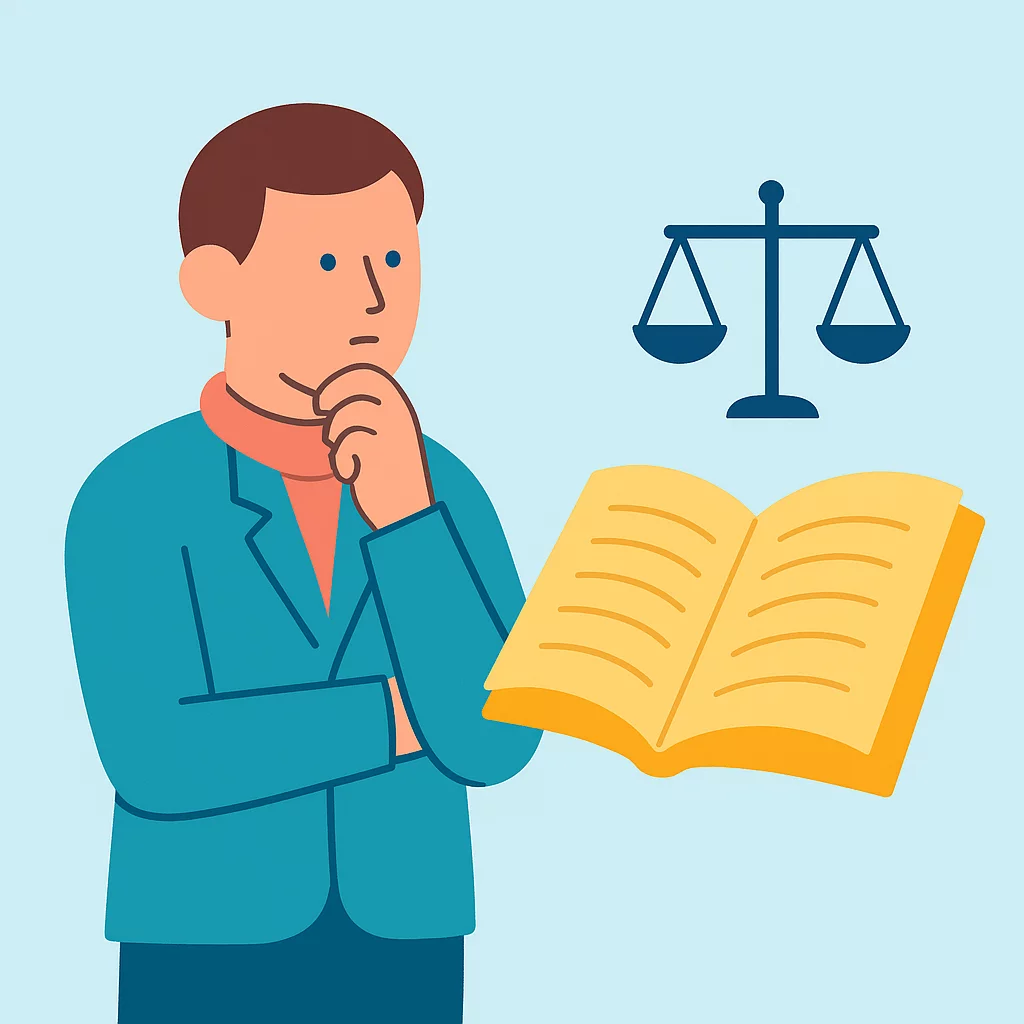
However, the court rejected Roszkowski’s claim for monetary damages. Judge Kubczak explained that the requested sum was disproportionate and that, under Polish civil law, apologies are the primary way to repair non-material harm. Financial compensation is granted only when apologies alone are considered insufficient, which in this case the court did not accept.
The ruling also addressed the question of legal costs. Nowacka was ordered to pay Roszkowski about 1,300 złoty to cover part of his court expenses. At the same time, the historian must pay the minister roughly 10,800 złoty towards her own costs, including representation during the proceedings. This division reflects the mixed outcome: Roszkowski succeeded in obtaining an order for an apology but failed in his high financial claim.
Both sides reacted publicly after the verdict. Nowacka described the decision as a “court defeat” for Roszkowski because he did not receive the half‑million złoty he had requested and now has to cover most of her legal costs. She announced that she will appeal the part of the judgment requiring her to apologise.
Roszkowski, in turn, welcomed the court’s confirmation that his personal rights had been violated. In social media comments he suggested that, from his perspective, the outcome showed a “1:0” result in favour of truth over the minister. He also indicated that he, too, plans to appeal, signalling that he may continue to pursue stronger redress.
The conflict between the two figures is part of a broader dispute in Poland over the HiT subject and its textbook, introduced into upper‑secondary schools on 1 September 2022. The course was designed to combine recent history with contemporary civic issues. Critics, including many opposition politicians and some academic experts, argued that the textbook by Roszkowski contained politically biased interpretations and ideological language.
Passages that drew particular attention included claims that the European Union promotes atheism, that “gender ideology” is spreading, and that feminism is presented as an ideology. Another controversial section discussed family, fertility and assisted reproduction, using expressions likening some modern reproductive practices to the “production” and even “breeding” of human beings. These phrases led to strong criticism from parts of the public, opposition parties and several organisations.
In response to the backlash, the publisher Biały Kruk, together with Roszkowski, later decided to remove the most disputed fragment from the textbook, while still defending the overall concept of the work and rejecting what they described as unfair interpretations by opponents.
The present court case does not resolve the wider political and educational argument over the HiT textbook. Instead, it illustrates how, in Poland’s current climate, disputes about school curricula and recent history can quickly move from the classroom to the courtroom, raising questions about freedom of speech, responsibility of public officials and protection of personal reputation.
Info: ‘Polish Learner News’ is a service from ‘Let’s Learn Polish’, a language school dedicated to teaching Polish through various types of online courses, where we regularly share guidance on how to learn Polish fast based on practical study tips and learning resources.
Advanced: Reports from Poland
- Court Ruling Over “History and the Present” Textbook: Barbara Nowacka Ordered to Apologize to Wojciech Roszkowski (TVN24.pl)
- Barbara Nowacka Ordered to Apologize Over Her Comments on the HiT Textbook (Onet.pl)
- Barbara Nowacka Ordered to Apologize in Textbook Case Ruling (Interia.pl)
- Warsaw District Court: Education Minister Barbara Nowacka Must Apologize for Her Claims of Lies in the HiT Textbook (Gazeta.pl)
Polish Learner News
Discover news from Poland to stay informed and practise your skills.
-

Learner News | 07.10.2026
Polish War Loss Returned: Napoleon Painting from Famous Collection
-
Learner News | 07.10.2026
Poland’s 1331 Battle of Płowce: The Truth Behind the Myth
-

Learner News | 07.10.2026
Major Mela Muter Retrospective Opens in Poland and Paris