From Łódź to Poznań, via half of Central Europe
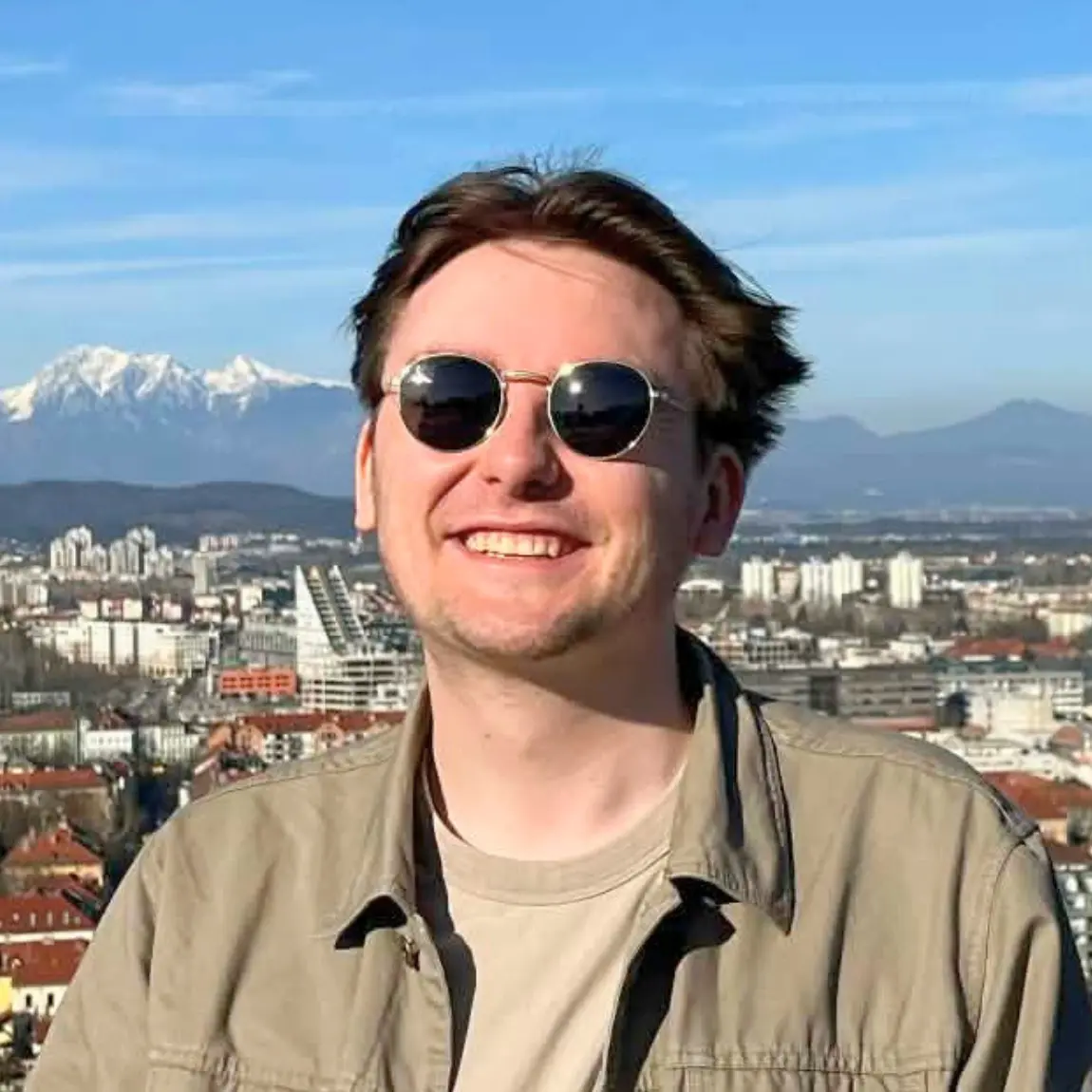
Born in Łódź and now based in Poznań, Wojciech is a teacher of Polish, Czech, and German whose professional life is inseparable from his personal passions. He studied Czech and Hungarian Philology alongside History, completing both degrees before going on to specialise in Polish as a foreign language. Today he speaks six languages – English, German, Czech, Slovak, Hungarian, and Slovenian – a list that reflects not just academic dedication but a genuine curiosity about the people and places behind each tongue.
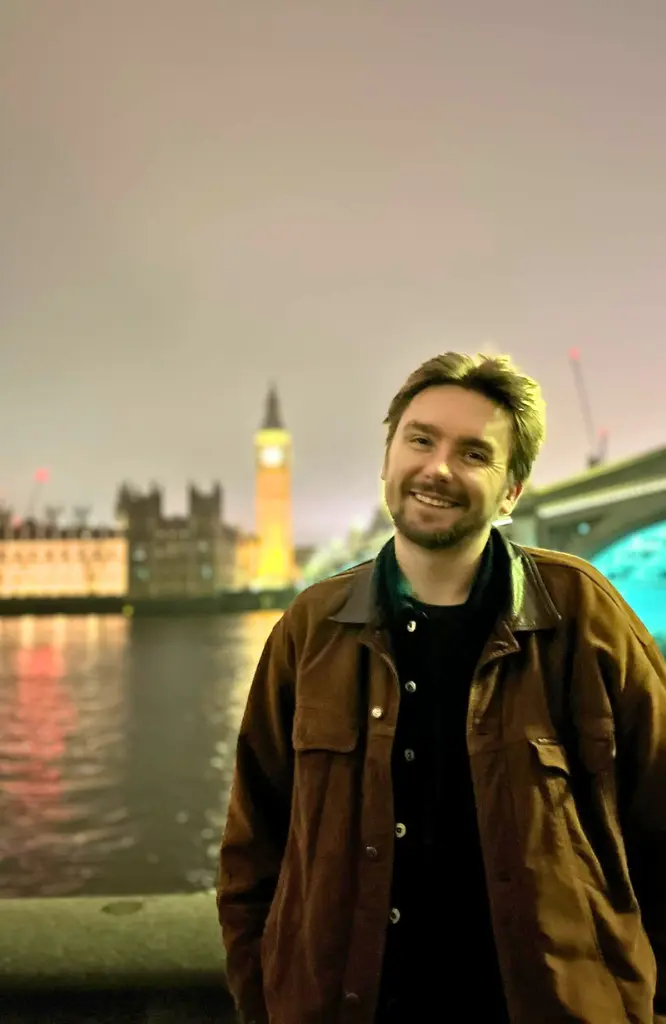
“My goal was to use no English – on every trip. And I did it.”
That curiosity took him across Central Europe on no fewer than six Erasmus exchanges, bringing him to Vienna, Prague, Berlin, Bratislava, Budapest, and Ljubljana. Of all these cities, Ljubljana left the deepest impression. He spent a full semester there, studying entirely in Slovenian – having set himself the rule of using no English on any of his travels – and worked a placement at the Polish embassy. He remembers it as one of the finest periods of his life, and speaks of the city, its mountains, and the nearby Adriatic coast with the kind of warmth that comes from a place genuinely loved.
Teachers who inspired him, and a student who became one
Wojciech did not arrive at teaching through a single decisive moment. Languages were always his world – absorbed through study, travel, and sheer enjoyment – but the decision to teach came gradually. Around two and a half years ago, he completed a one-year course in Polish for foreigners, approaching his own mother tongue from the outside in. A practicum at a Polish Studies department in Budapest followed, and it confirmed what he had long suspected: that teaching suited him, and that he was good at it. His own teachers, he says, were the original inspiration.
What struck him most was how natural the work felt. He found he could explain how Polish was built, show its logic, lead students through its structure – and none of it felt like effort. He describes it as something he could do voluntarily, without stress, simply because he genuinely enjoys it. That ease, combined with a real interest in his students as people, has shaped the kind of teacher he has become: patient, methodical, and quietly attentive to the moment when something finally clicks.
Explaining it as if to a child
Ask Wojciech about his teaching style and he reaches for a principle he once heard and has never forgotten: that we truly understand something only when we can explain it to a child. It is a standard he holds himself to in every lesson. Rather than assuming a baseline of knowledge, he begins from the very beginning – the foundations of how Polish works, its sounds, its structure, its internal logic – and builds methodically from there.
“I try to see the language I’m teaching the way a student would. I’ve learnt several languages myself, and I know what it means not to know one.”
Patience, he says, is essential – not a quality he performs, but one that comes naturally when the work is genuinely rewarding. He watches his students’ eyes as he explains, looking for the moment of recognition. That moment – visible, immediate, and impossible to fake – is what he describes as his greatest satisfaction. The reward is not abstract. It is there, lesson by lesson, in the growing confidence of people who arrived knowing nothing and gradually find themselves able to describe the world in a new language.
Pierogi, inline skates, and a plan to finally see the Croatian coast
Outside the classroom, Wojciech’s life is full of movement – literally and figuratively. He swims, skates on inline skates, reads widely, meets friends, and picks up the guitar from time to time. Travel is a constant, usually directed towards the countries of the old Austro-Hungarian monarchy – Czech Republic, Slovakia, Slovenia – which fascinate him both linguistically and historically. He has visited Trieste and Gorizia, studied in Ljubljana, and has had Croatia on his list for some time. So far he has only passed through Sveti Martin na Muri on his way south, and the coast remains a plan waiting to be fulfilled.
When it comes to Polish food, Wojciech is warmly enthusiastic without being evangelical about it. Pierogi top the list – his grandmother made them throughout his childhood and the association is as much about memory as flavour. He also loves żurek, the sour rye soup eaten at Easter, and describes a typical Sunday lunch that will sound familiar across the region: rosół, a clear chicken soup, followed by a breaded cutlet with potatoes and pickles. Polish food, he observes, tends to win over visitors who arrive sceptical – his Czech and German friends reliably come back impressed.
Already know some Polish?
Take our free placement test and find your current level in just a few minutes. It’s fun, fast, and helps you understand exactly where you are – and what the next step in your learning journey might be.
Take the free test
Seeing someone speak their first full sentence in Polish
What motivates Wojciech is, he says, straightforward: seeing people progress. He works with several beginner groups – A0 and A1 – and it is here that the transformation is most vivid. Students who cannot read a single word of Polish when they arrive are, after a few months, constructing full sentences, answering questions, describing their lives. When that happens, he says, he feels something he can only describe as fullness – a sense that the work has genuine meaning, particularly when students are learning for concrete personal reasons: because they live in Poland, because their partner is Polish, because they want to be understood at a dinner table or in a shop.
“When I see their progress, I feel that my work has truly meant something.”
Working at Let’s Learn has suited Wojciech’s approach well. He values the entirely Google-based structure – no separate applications, everything in one place, recordings and shared materials accessible to students at any time – and speaks warmly of the support from Maja and the wider coordination team. But perhaps more than the practicalities, what he enjoys is the simple fact of meeting people: asking where they are from, what brought them to Polish, how the language has become part of their lives. That curiosity, the same one that sent him across Central Europe on six Erasmus exchanges, is still very much alive – and it is, he says, what keeps him coming back to the classroom.
Teacher and student stories
Discover inspiring language journeys and see how others are learning and teaching Polish:
Steve | Student
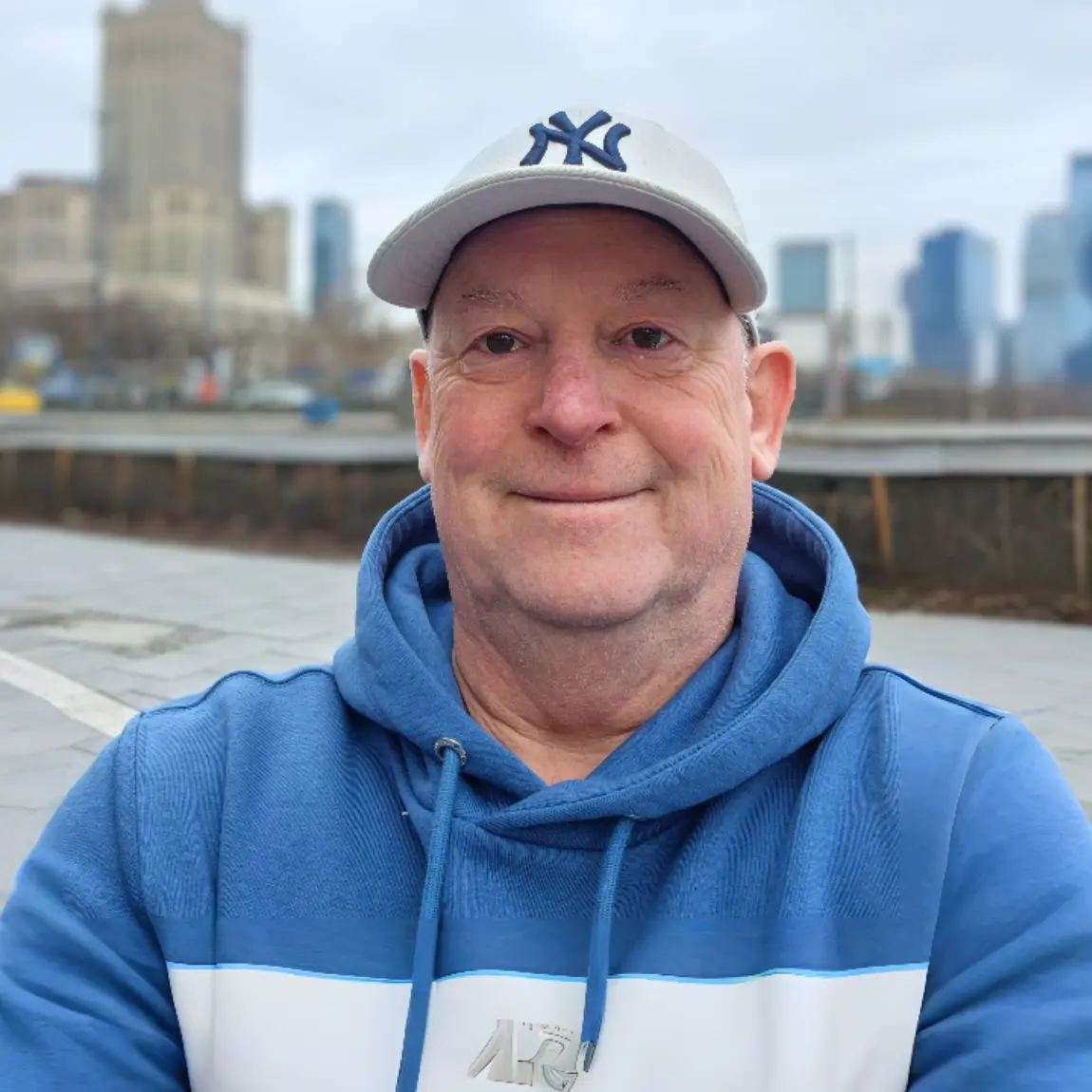
A retired IT manager from South Wales is learning Polish to connect with his partner’s family – one challenging sound at a time.
Stefanie | Student
Stefanie grew up alongside Polish seasonal workers on her family’s farm. Decades later, she’s finally learning the language that shaped her childhood.
Martyna | Teacher
When Martyna told a bishop he should learn Polish, she didn’t know that moment would lead her to discover her true calling as a teacher.