Learn Hungarian online
- Live lessons with native-speaking teachers
- Group and individual lessons planned
- Proven concept from four established schools
- Free Hungarian study tool available now
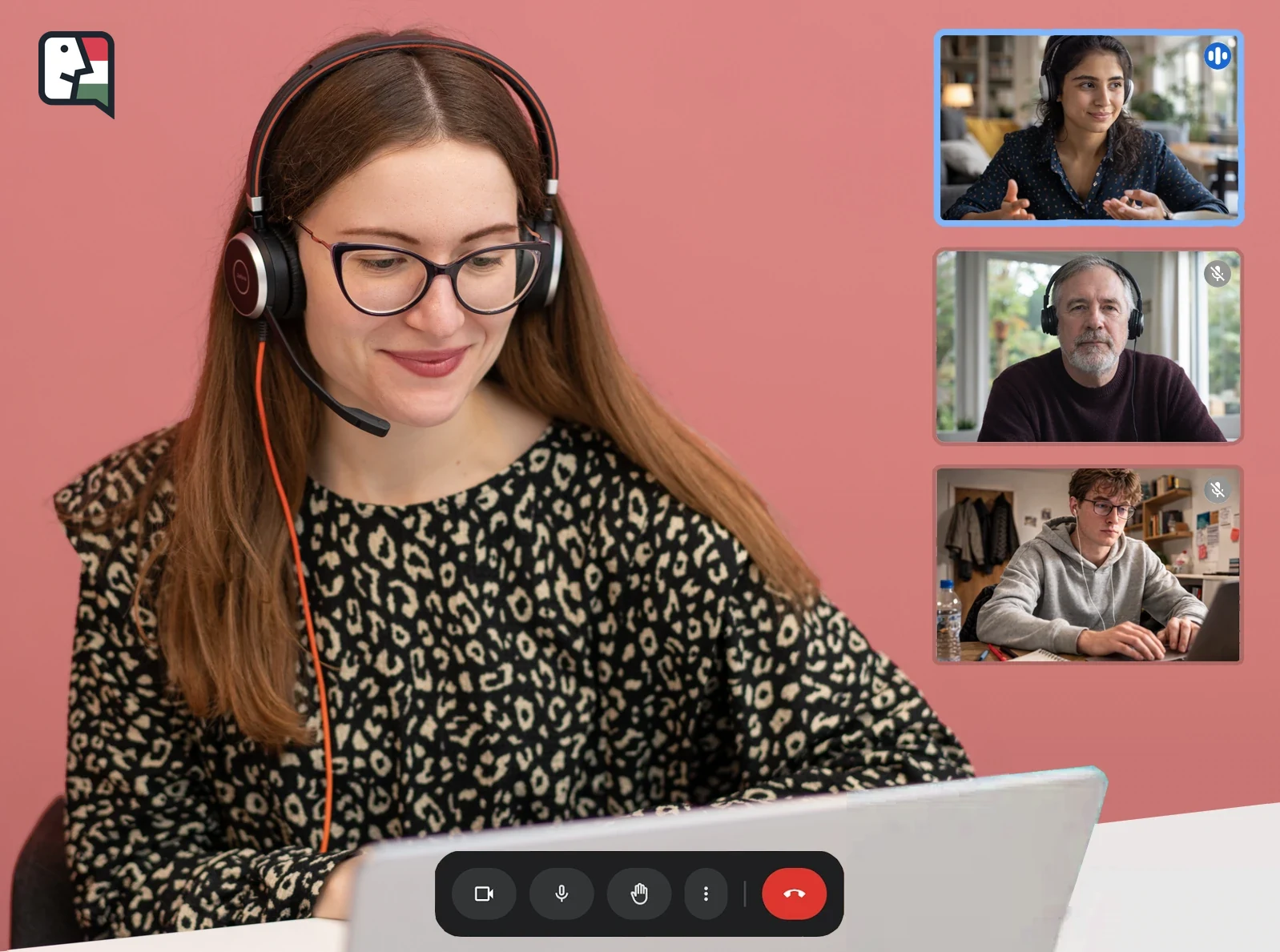
How we’ll teach Hungarian
Our Hungarian school will use the same proven learning formats as our established language schools.
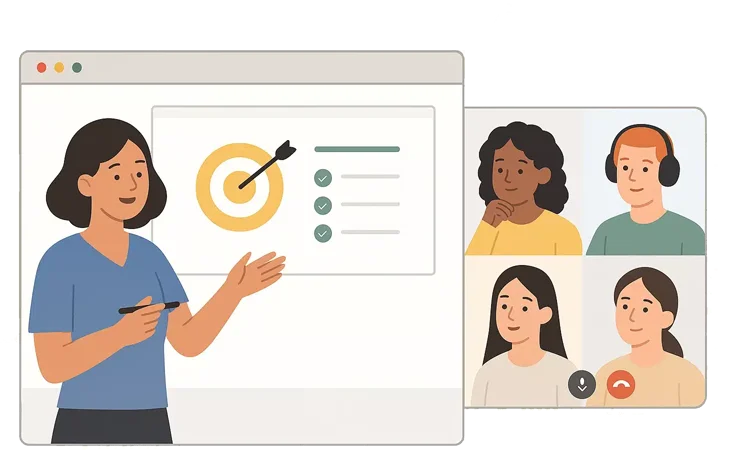
Group courses
Learn live with a small group at a similar level, following a clear programme and weekly rhythm.
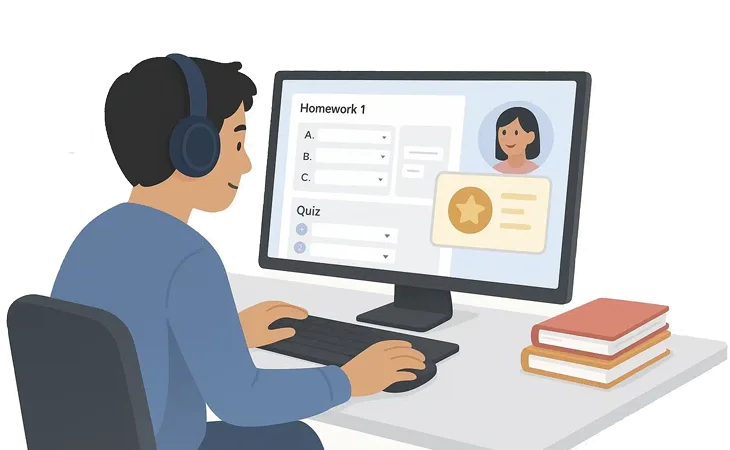
Individual lessons
Learn one-to-one with a teacher, with flexible scheduling and lessons adapted to your goals.
Meet Our Students
Since Let’s Learn was founded in 2009, we’ve helped more than 3,500 learners get to grips with Croatian, Polish, Greek and Ukrainian online.

Stan | Croatian Learner
After 25 years of visits and a repertoire limited to Croatian curse words, this New York journalist finally tackled the language properly.

Julia | Greek Learner
Julia traded scattered holiday phrases for structured Greek lessons, finally connecting properly with her father’s heritage

Michael | Polish Learner
A Hamburg teacher discovers Polish isn’t like Norwegian – but finds the challenge worthwhile for love and cultural connection.

15+
Years teaching
experience
450+
Active
learners
27
Teachers
4
Established language
schools

About Let’s Learn
Let’s Learn is an online language school based in Munich and Zagreb. Since 2009, we’ve helped thousands of people learn Croatian, Greek, Polish and Ukrainian through live lessons, our own materials and practical study tools.
Learn Hungarian - start with your first words
Curious how Hungarian sounds? Here are a few essential expressions you can pick up right away. Click any word to hear a native speaker say it - and find out whether the language speaks to you.
Everyday basics
Start with a handful of core Hungarian words you will hear and use in everyday situations - from simple answers like yes and no through to greetings and polite expressions.
Szia - Hi / Bye
Sziasztok - Hi everyone
Jó reggelt kívánok - Good morning
Jó napot kívánok - Good afternoon / Hello
Jó estét kívánok - Good evening
Jó éjszakát - Good night
Viszontlátásra - Goodbye
Viszlát - Bye
Igen - Yes
Nem - No
Köszönöm - Thank you
Köszönöm szépen - Thank you very much
Szívesen - You are welcome
Kérem - Please (informal: kérlek)
Legyen szíves - Would you be so kind
Tessék - Here you go / Pardon
Elnézést - Excuse me (more polite)
Bocsánat - Sorry (more casual)
Nem értem - I do not understand
Egészségedre / Egészségére - Cheers (formal: Egészségére)

Your first conversations in Hungarian
Once single words feel comfortable, you can practise typical question-and-answer pairs. These are the foundation of any everyday conversation - you will need them constantly when meeting new people or chatting with locals:
Hogy vagy? - How are you? (informal)
Köszönöm, jól. És te? - Thank you, well. And you?
Hogy van? - How are you? (formal)
Hogy hívnak? - What is your name? (informal)
A nevem Anna. - My name is Anna.
Örülök, hogy megismerhetem. - Pleased to meet you.
Beszél angolul? - Do you speak English?
Sajnálom, nem beszélek magyarul. - I am sorry, I do not speak Hungarian.
Csak egy kicsit beszélek magyarul. - I speak only a little Hungarian.
Ön honnan való? - Where are you from? (origin)
Where is Hungarian spoken?
Why do people learn Hungarian?
Is Hungarian hard to learn?
Frequently asked questions
Can I currently book Hungarian lessons?
Not yet. We are preparing or assessing a future Hungarian school. Register your interest and we will contact you when the first trial lessons or courses become available.
When will Hungarian courses begin?
We do not yet have a confirmed launch date. Once our first teaching dates are fixed, people on the interest list will hear from us first.
Will you offer group and individual lessons?
We expect to offer both formats, although the first trial phase may begin with a more limited selection.
Is Hungarian hard to learn for English speakers?
Yes, Hungarian is genuinely hard for English speakers, but the difficulty is routinely overstated. The US Foreign Service Institute budgets roughly 1,100 hours of intensive study to reach professional working proficiency, about double what Spanish or French require. The reason is distance, not chaos. Hungarian is Uralic, so almost no vocabulary looks familiar. The grammar is unfamiliar but unusually regular, with few irregular verbs and consistent spelling.
Is Hungarian the hardest language in the world?
No, and the FSI data that these listicles cite actually says the opposite. FSI puts Hungarian at 1,100 hours, in its second-hardest band. Five languages sit above it at 2,200 hours: Arabic, Mandarin, Cantonese, Japanese and Korean, which take literally twice as long. The confusion is numbering. Older five-tier lists label Hungarian Category IV, while the current State Department chart uses four tiers and reserves Category IV for that super-hard group.
How long does it take to learn Hungarian?
The Foreign Service Institute allows about 1,100 hours, or 44 weeks full-time, to reach professional working proficiency. At an hour a day that is several years. But that figure is for working-level fluency, not survival Hungarian, and FSI publishes no A1 equivalent. Greetings, introductions and ordering food arrive far sooner, and most learners manage simple everyday exchanges long before approaching that total.
How many cases does Hungarian have?
There is no settled answer, and any source stating one number confidently is skipping a real linguistic debate. Textbooks and Wikipedia usually say 18. Kenesei, Vago and Fenyvesi (1998) count between 17 and 27, depending on whether marginal or unproductive suffixes qualify. Andrew Spencer has questioned whether case is even the right framework, arguing Hungarian’s markers behave like fused postpositions. The count is definitional, not factual.
Why is Hungarian so different from other European languages?
Because it is not Indo-European. Hungarian belongs to the Uralic family, so it is unrelated to German, to the Slavic languages, and to Romanian, all of which surround it. Its nearest relatives, Finnish and Estonian, separated thousands of years ago and are no longer mutually recognisable. Centuries of contact still left heavy borrowing: roughly 20% of its vocabulary is Slavic, 11% German and 9.5% Turkic. It is not related to Turkish.
Why are Hungarian words so long?
Because Hungarian is agglutinative: it stacks suffixes onto a single word where English uses separate words. In London becomes Londonban, with the suffix -ban doing the preposition’s job. Vowel harmony then reshapes each suffix to match the root’s vowels, giving -ban after back vowels (házban) but -ben after front ones (kertben). The long words are therefore predictable rather than random, and once you can segment them they are far easier than they look.
Is Hungarian pronunciation hard to learn?
The sounds take practice, but spelling is the easiest part of Hungarian. The alphabet runs to 44 letters: 30 consonants and 14 vowels forming seven short and long pairs (a/á, e/é, i/í, o/ó, ö/ő, u/ú, ü/ű). Spelling is essentially phonetic with no silent letters, so once you know the letters you can pronounce almost any written word you meet. The genuinely hard part is vowel length, which changes meaning.
Is Hungarian worth learning if people in Budapest speak English?
It depends entirely on what you want from Hungary. English works well in central Budapest among younger people and in tourism, so you can visit comfortably without a word of Hungarian. Outside that bubble it thins out fast: local markets, smaller towns, older people, landlords, doctors and official paperwork. With around 13 million speakers, Hungarian will not travel far beyond Hungary, so the honest case rests on living there, ancestry, or real curiosity.
How can I start learning Hungarian vocabulary for free?
Start with the alphabet and pronunciation, then build a base of high-frequency words before worrying about grammar. Because Hungarian shares almost no cognates with English, vocabulary is the real bottleneck, and short daily reviews beat long weekly sessions. Free vocabulary trainers, podcasts and Hungarian radio all help train your ear early. Our Hungarian vocabulary trainer is free to use and covers exactly that first step.
Interested in learning Hungarian with us?
Leave your details and we will contact you when our first trial lessons or courses become available. There is no commitment, and we will not register you for anything automatically.