An unexpected beginning
A few years ago, Ula met a Korean family who needed a Polish teacher after relocating to Poland. They chose her, and that’s how it all began. What started as a simple tutoring arrangement gradually evolved into something more significant. As the years passed, she began pursuing Polish language teaching as a future career, eventually finding her way to Let’s Learn Polish.
“I see the progress they’ve made. They understand a lot, they speak a lot, and that’s something I’m really happy about.”
The family she first worked with remains part of her teaching life. Their three children now attend Polish school, and she’s witnessed remarkable improvements in their language skills. “I see the progress they’ve made,” she reflects. “They understand a lot, they speak a lot, and that’s something I’m really happy about.” Watching young learners develop from tentative beginners to confident speakers reinforced her belief that this was the right path.
The individual approach to every student
Teaching adults differs markedly from her work with children. Ula finds that adult learners typically arrive with stronger motivation and clearer objectives. Some have Polish family members, others need the language for work. These defined goals help her tailor her teaching to what each student actually needs rather than following a rigid curriculum.
Adapting to different student types requires conscious effort. For those who want to dive deeper into Polish, she provides additional materials and challenges. When someone struggles with particular topics, she makes a point of engaging them more actively during lessons. She’s learned that students sometimes know more than they initially reveal – someone in the group will recognise a few words from one theme, someone else from another. These moments of unexpected knowledge create valuable teaching opportunities.
Teaching the way she’d want to be taught
Ula’s personal learning style directly influences her classroom approach. She teaches others the way she’d want to be taught herself. That means making lessons genuinely interesting, sharing curious facts about Polish culture, and consistently implementing feedback she receives from students.
“I try to make my students learn a bit for themselves. It allows them to engage more, to think about it, and not just listen to the words I say and then repeat them.”
Her method emphasises active discovery rather than passive reception. When introducing new vocabulary, she wants students to figure out the meaning first. This approach requires them to engage more deeply, to think critically, rather than simply listening and repeating. “I try to make my students learn a bit for themselves,” she explains. “It allows them to engage more, to think about it, and not just listen to the words I say and then repeat them.” The strategy often surprises her when students connect words to their existing knowledge from other languages or life experiences.
The philosophy behind the practice
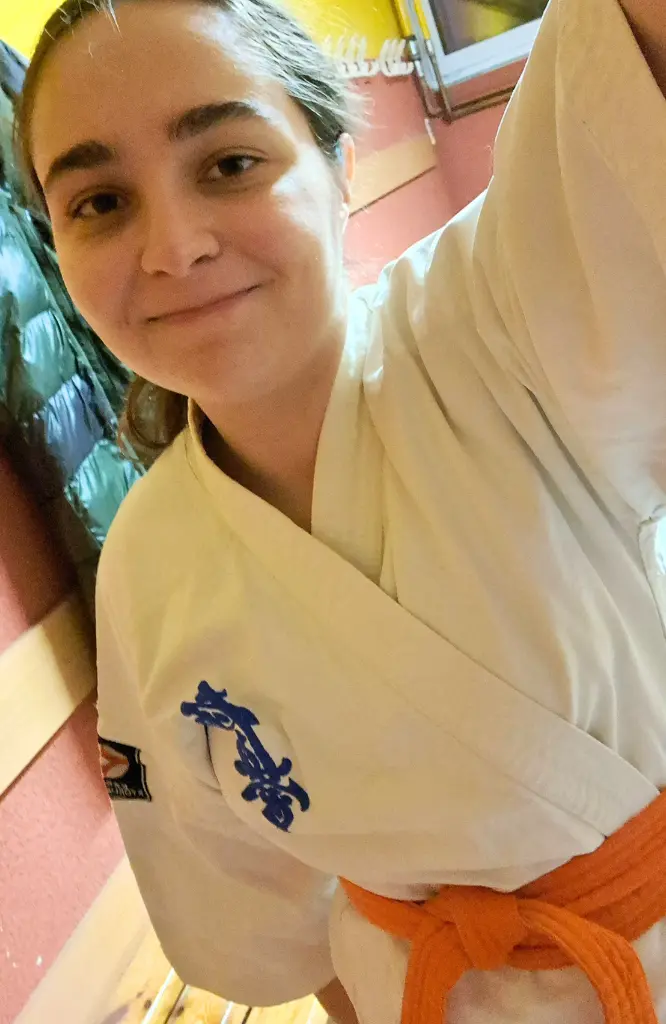
For the past four years, Ula has trained in Kyokushin karate. She doesn’t compete – the practice serves her health and personal enjoyment. But there’s something deeper that draws her to the discipline: the philosophy of constant self-improvement. It’s a principle that applies equally to martial arts and language acquisition.
This mindset permeates her teaching. The questions students ask motivate her most, especially when they’re unexpected. Someone once asked why Polish uses different cases for certain verbs – whether there’s a pattern or if it’s random. She’d never considered it before and couldn’t answer immediately. She had to think about it later. But she loved the question. That curiosity, that willingness to probe beneath the surface, represents exactly what she values in learning. It’s the same exploratory spirit she brings to her own studies in cognitive technologies, and to the six languages she’s learned to varying degrees: English, German, Russian, Finnish, and Korean alongside her native Polish.
Curious about Polish lessons?
Thinking about learning Polish, but not sure where to start? Book a friendly video chat with our learning coordinator and get personal guidance on teachers, groups, and next steps.
Book a coordinator chat
Finding home in a city of trees
Gliwice, part of a larger urban agglomeration in Silesia, has become Ula’s home whilst she studies. Originally from a small village in western Poland, she’s grown to love city life here. Poland’s abundance of trees – present everywhere you travel – particularly appeals to her. The greenery makes even urban areas feel connected to nature.
“Polish is sometimes very difficult. When I see how the pronunciation or the vocabulary, the grammar, improves in my students, I’m sometimes really impressed.”
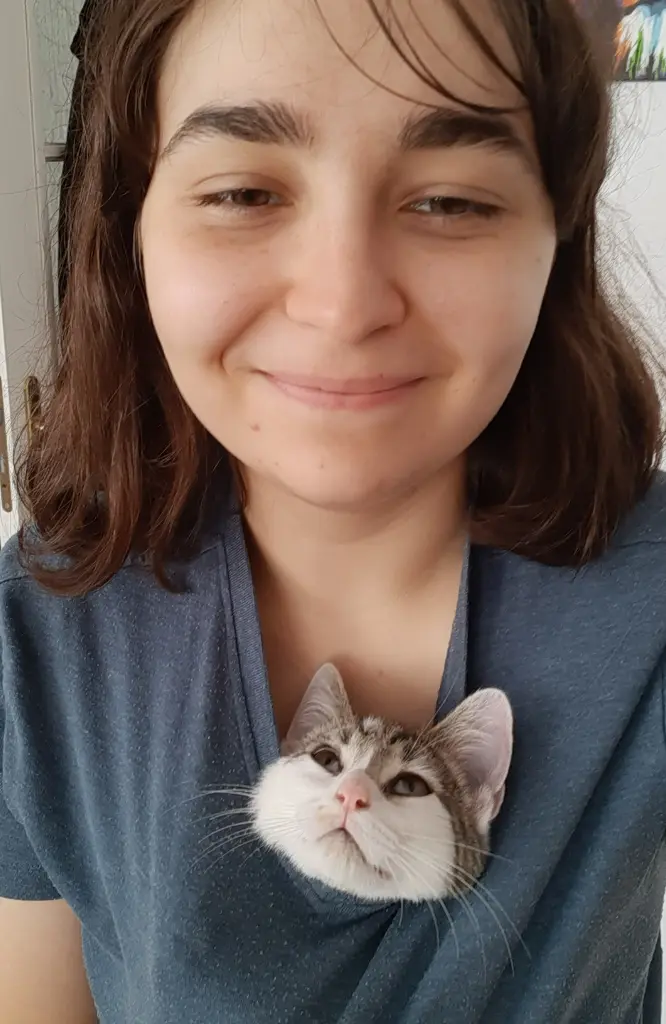
At home, her two cats provide constant companionship. Kociątko, whose name roughly translates as “sweet kitten”, and her brother Czarny – “the black one” – are, as she puts it, the loves of her life. Beyond her animals and martial arts training, she maintains interests that might surprise people expecting a typical language teacher: mathematics, chemistry, science generally, and technology including computer gaming. Her favourite game, Gothic, isn’t widely known internationally but enjoys cult status in Poland. When it comes to Polish culture she’d recommend to learners, she points to older films, particularly comedies from the 1980s like “Miś”, which humorously depicts life during the communist era. These films, she believes, offer more than entertainment – they provide genuine insight into Polish history and character. What keeps her motivated as a teacher is witnessing student engagement and progress. Polish presents genuine challenges with its pronunciation, vocabulary, and grammar. Seeing improvement in these difficult areas genuinely impresses her. And that, ultimately, is what she finds most valuable.
Teacher and student stories
Discover inspiring language journeys and see how others are learning and teaching Polish:

Michael | Student
A Hamburg teacher discovers Polish isn’t like Norwegian – but finds the challenge worthwhile for love and cultural connection.

Maja | School manager
Blending stagecraft and empathy, Maja creates classrooms where students safely explore language – and parts of themselves.

Sara | Learning coordinator
Once struggling herself with German, Sara now guides others with patience and passion, proving it’s never too late to succeed.