The language that slipped away
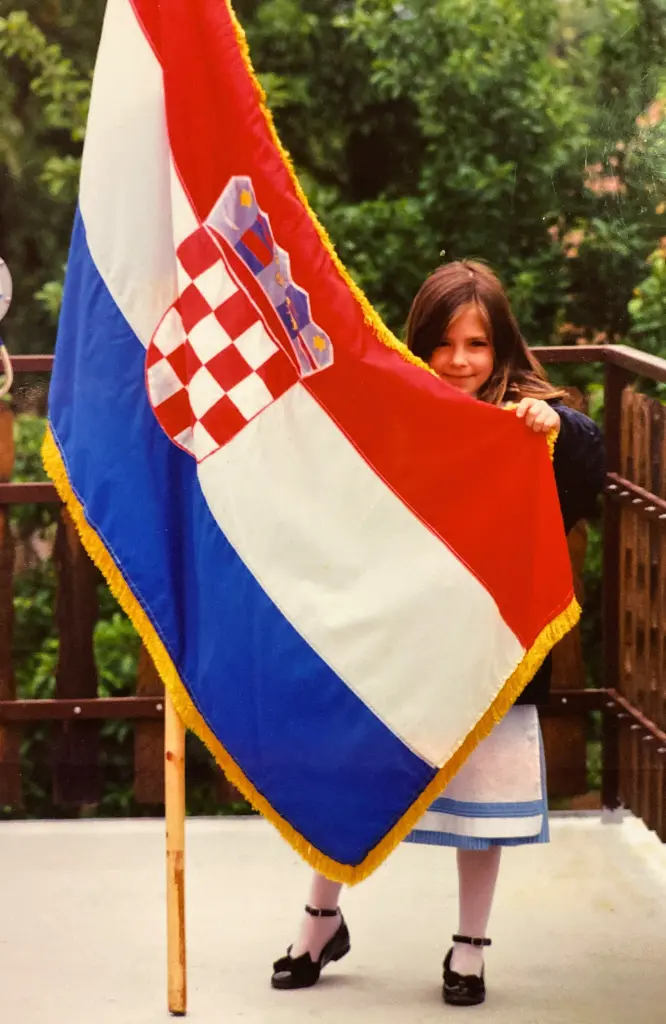
Sarah’s first language wasn’t German. Until she started kindergarten in Vorarlberg, she spoke only Croatian with her mother, who had arrived in Austria during the wave of Yugoslav guest workers in the textile industry. Her mother still recalls how factory managers stood at railway stations with signs, recruiting workers straight off the trains. But when Sarah entered kindergarten, everything changed overnight. Her mother switched exclusively to German, a practical decision to help her daughter integrate more quickly into Austrian society.
The Croatian didn’t disappear entirely – it just retreated to summer holidays. Sarah’s grandparents eventually returned to Croatia after the war, rebuilding their house and their lives there. Those summer visits kept the language alive for Sarah, but just barely. “My Croatian was pretty low level,” she admits. Her vocabulary remained frozen at a child’s level, cycling through the same simple sentences year after year. When her grandparents came to visit in Graz, she would ask her mother to speak Croatian with her young son, but decades of speaking German had made the switch difficult, even for a native speaker.
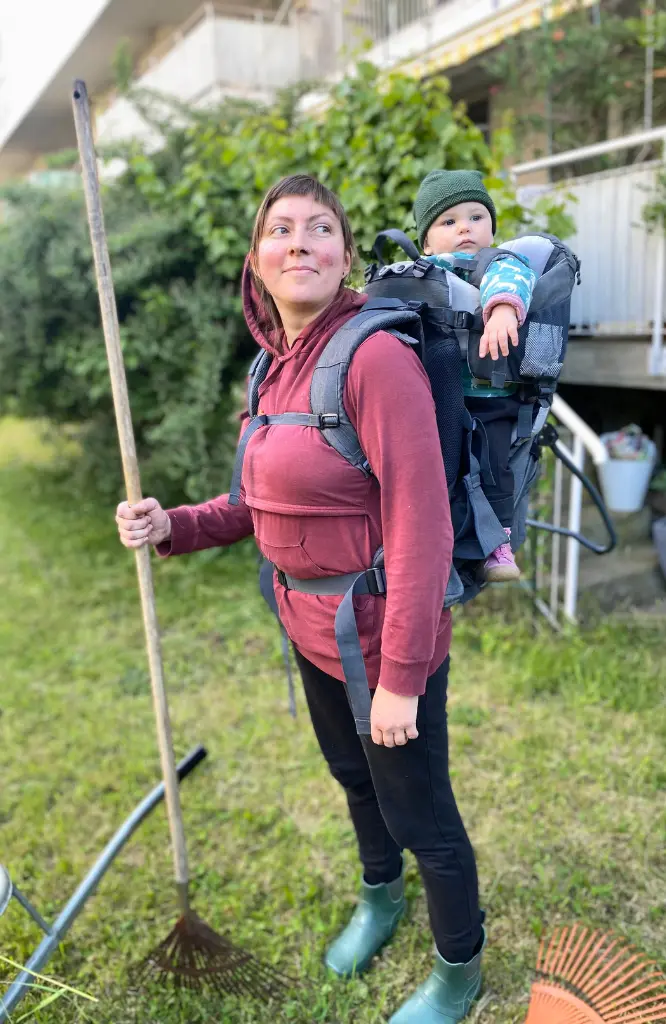
“I always said when I have a child, I’ll learn it again – I really want them to grow up bilingual.”
Building what was never taught
Learning Croatian formally has revealed just how much Sarah had been missing. The colloquial language she picked up from her family – people from a simple village near Osijek in Slavonia – was functional but limited. Her teacher frequently points out the difference between what Sarah learned at home and standard Croatian. “They come from the countryside, from a simple village,” Sarah explains. “It’s very different from how people speak in Zagreb.”
The grammatical structure of the language was entirely new territory. Sarah had never consciously thought about the seven cases, the mobile “a”, or the various exceptions that govern Croatian grammar. She had simply absorbed patterns through listening, never learning the underlying rules. Now, seeing everything written down, being able to look things up, ask questions, and receive corrections on homework has been transformative. Recently, she even caught herself self-correcting – a small moment that signalled genuine progress. Writing in Croatian was also completely new. For years, it had been purely a spoken language for her, something heard rather than read.
The circus life in Graz
Sarah’s life extends far beyond language learning. She serves on the board of Graz’s juggling association, where members gather regularly in a gymnasium to train together. Before her son was born, aerial acrobatics consumed much of her free time. She also practises hula hoop and loves dancing. “It’s calmer now,” she says of her circus involvement since becoming a mother. The Austrian circus scene operates differently from countries like France or Belgium, where circus arts are respected professions. In Austria, circus work still carries a stigma – the old attitude of “learn something proper instead” persists.
“I see it with some students – pronunciation is really difficult, and I understand that if you’ve never heard how it’s actually supposed to sound.”
Still, Sarah remains deeply involved in the organisational side. She helps coordinate the Long Night of Juggling each December and the annual Austrian gathering that brings circus enthusiasts together for a weekend of training and exchange. With her family support network back in Vorarlberg and just her and her husband managing childcare in Graz, the circus has shifted from performance to community building. She’s currently training to become a specialist social care worker, having previously worked as a master tailor and aspiring milliner. Her son, now 18 months old, is just starting at nursery, which will allow Sarah to return to work soon.
Grammar as a breakthrough
For months, grammar felt like an impenetrable wall. Then came a recent homework assignment that changed everything. Sarah completed the exercises without needing to check her notes – and got them right. “That was a good moment,” she reflects. “I had the feeling that finally something’s moving forward, because for a long time it was just struggling.” The moment represented more than correct declensions; it marked a shift from passive knowledge to active control.
The small group work during lessons has accelerated this progress. When the class breaks into pairs or groups of three, conversations become more intimate and focused. “It makes the whole exchange more intense,” Sarah explains. The smaller setting creates space for closer connections between students, making the online format feel almost like being in the same room. This structure has helped her move beyond the simple, repetitive phrases she uses with her son – reading picture books together has expanded her vocabulary to include animals and plants, but the formal lessons are teaching her how the language actually works beneath the surface.
Free 6-week email course
Just starting with Croatian? Get one easy lesson per week plus a short exercise to help things stick. Sign up now to begin your Croatian journey!
Sign up for freeFree 6-week email course
Enter your email and we'll send one short lesson a week — straight to your inbox.

Practical advantages and overcoming fear
Sarah’s Croatian has already proven professionally valuable. In August, during a job interview, the project manager’s face lit up when he saw “BKS” listed on her CV. Graz has a substantial population of Bosnian-Croatian-Serbian speakers, and in social care work, being able to communicate in someone’s native language simplifies processes and builds immediate rapport. While the focus remains on clients learning German, Sarah’s language skills smooth certain interactions and earn instant sympathy points from grateful clients.
“Mistakes aren’t something negative or bad – they’re actually really good because that’s how you learn, how you move forward.”
Her advice for new learners focuses on immersion and removing psychological barriers. Watch Croatian series, even familiar ones like Friends with subtitles. Listen to music to absorb the language’s melody – something she notices many students struggle with when they haven’t heard Croatian spoken before. She learned Spanish the same way, watching countless films to internalise the rhythm. Sarah also recommends eavesdropping on native speakers in cafés and seeking out language exchange partners at events like Graz’s various language cafés. Most importantly, she emphasises developing a healthy relationship with errors. “It’s actually totally unnecessary to have inhibitions,” she insists. Language learning moves in waves – periods of stagnation followed by sudden breakthroughs. The key is pushing through the difficult stretches and remembering that communication matters more than perfection.
Teacher and student stories
Discover inspiring language journeys and see how others are learning and teaching Croatian.

Josh | Student
When Josh realised he could claim Croatian citizenship, he knew he couldn’t do it without speaking the language. What started as practicality became cultural rediscovery.

Cornelia | Teacher
A German-Croatian teacher’s journey from Stuttgart to Rijeka, connecting two cultures through language learning and personal discovery.
Alexandra | Student
After years of understanding but not speaking Croatian, Alexandra is finally turning childhood church memories into daily conversations.
“`