The news in Croatian
- instrument (m.)
Predmet koji se koristi za sviranje glazbe, npr. gitara ili violina. ↩︎ - freska (f.)
Slika naslikana na mokroj žbuci zida ili stropa, često u crkvama ili starim zgradama. ↩︎ - kazalište (n.)
Zgrada ili prostor u kojemu se izvode predstave, opere ili koncerti. ↩︎ - istarski
Pridjev koji se odnosi na Istru, poluotok na sjeverozapadu Hrvatske. ↩︎ - stoljeće (n.)
Vremensko razdoblje od sto godina. ↩︎ - glazben
Pridjev koji se odnosi na glazbu ili zvukove organizirane u melodiju ili ritam. ↩︎
Translation
Text comprehension
Question 1: Who is the author of Musica Affrescata?
Question 2: Where was the book presented?
Vocabulary
| Croatian | English |
|---|---|
| instrument (m.) | |
| freska (f.) | |
| kazalište (n.) | |
| istarski | |
| stoljeće (n.) | |
| glazben | |
Practise Croatian for free
Use our interactive study tool to improve your Croatian with vocabulary quizzes, grammar exercises, and progress tracking. Pick a topic, start a quiz, and see how your skills grow over time.
Try the study tool
Read the full story
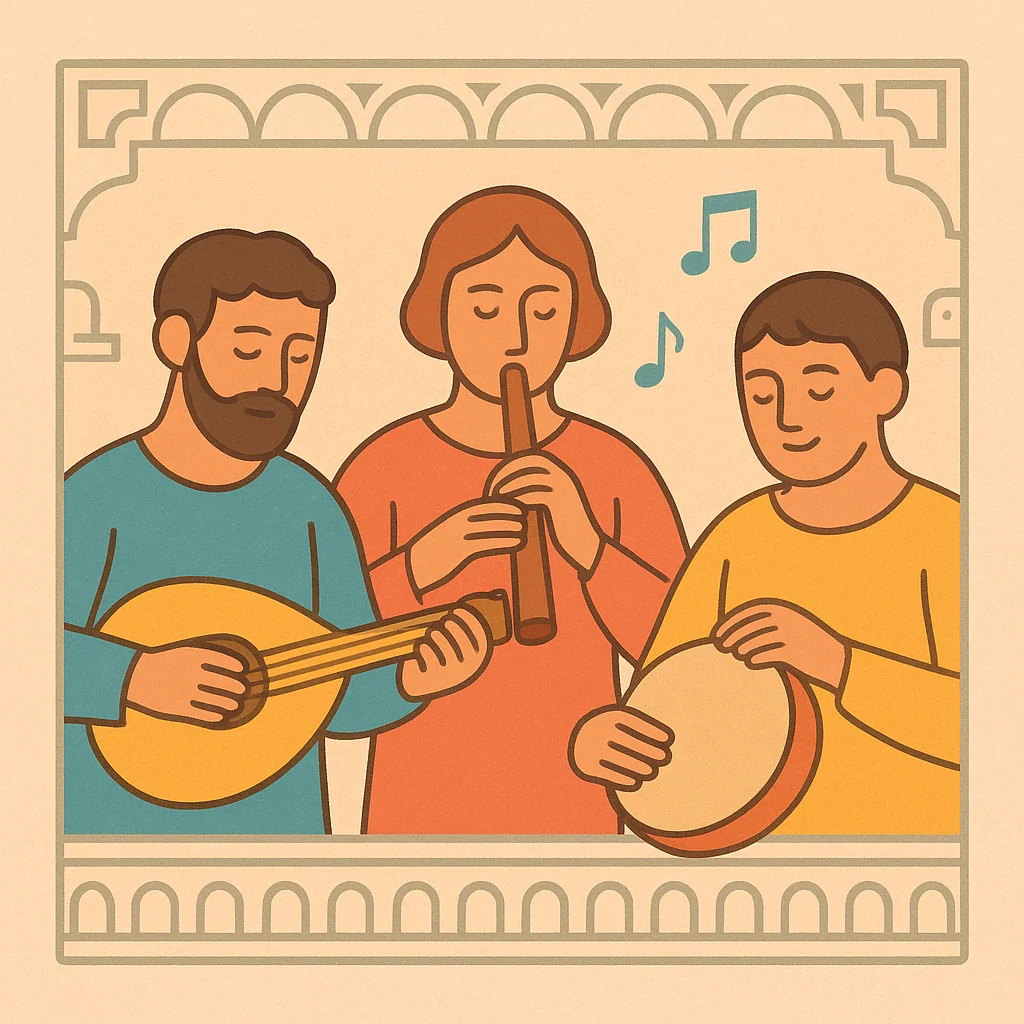
A new publication exploring musical instruments depicted in medieval frescoes across Istria has been presented at the Vincent of Kastav Gallery in the Istrian National Theatre in Pula. The book, titled Musica Affrescata, was written by Dario Marušić and published by the Historical and Maritime Museum of Istria.
The publication examines musical instruments as they appear in wall paintings from the 14th and 15th centuries, offering a window into the world of medieval music — from heavenly orchestras and angels playing instruments to processions and dances. It connects the visual and musical heritage of the region.
The book was produced as part of the international project Terra Gothica Incognita, co-funded by the European Union through the INTERREG Slovenia–Croatia programme (2021–2027), which researches and presents the Gothic heritage of the Istrian geographical area.
Editor Katarina Marić explained that the publication grew out of a series of concerts held in fresco churches. What was originally intended as a short brochure expanded considerably thanks to Marušić’s research, growing from around ten pages to 110 pages. Fellow editor Sunčica Mustač described it as a guide for navigating churches with frescoes, noting that her involvement began when TV Nova filmed an eight-episode series on wall paintings, which led her to contact Marušić about the instruments shown in them.
Ethnologist and cultural anthropologist Noel Šuran praised the work as a significant contribution to Istrian ethnomusicology, noting that Marušić builds replicas and reconstructions of instruments and reaches back deep into history. He highlighted that scholar Koraljka Kos had previously done the most work in this field.
Marušić himself spoke about the importance of visual perception of frescoes and their connection to music, pointing out that many of the instruments depicted were little known or almost entirely forgotten. He also noted that numerous instruments historically arrived from Persia via Africa before being transformed into the forms known today. He demonstrated how several of the instruments sound, and performers Edna Strenja and Goran Farkaš presented songs and music on the occasion.
Among the instruments analysed in the publication are the drum, cymbal, bagpipes, gittern, harp, harpsichord, clavichord, hurdy-gurdy, lute, portative organ, psaltery, rebec, shawm, tambourine, viol, and viola da gamba, among others.
Advanced: Reports from Croatia
Croatian Learner News
Discover news from Croatia to stay informed and practise your skills.
-

Learner News | 27.10.2026
Two Istrian Vocal Groups Win Gold at Croatia Cantat Competition
-

Learner News | 13.10.2026
Croatia’s CroCube Satellite Registered with United Nations
-

Learner News | 29.09.2026
Four Croatian Astronomers Discover New Planetary Nebula Candidate