From Genoa to Munich, with no plans to leave
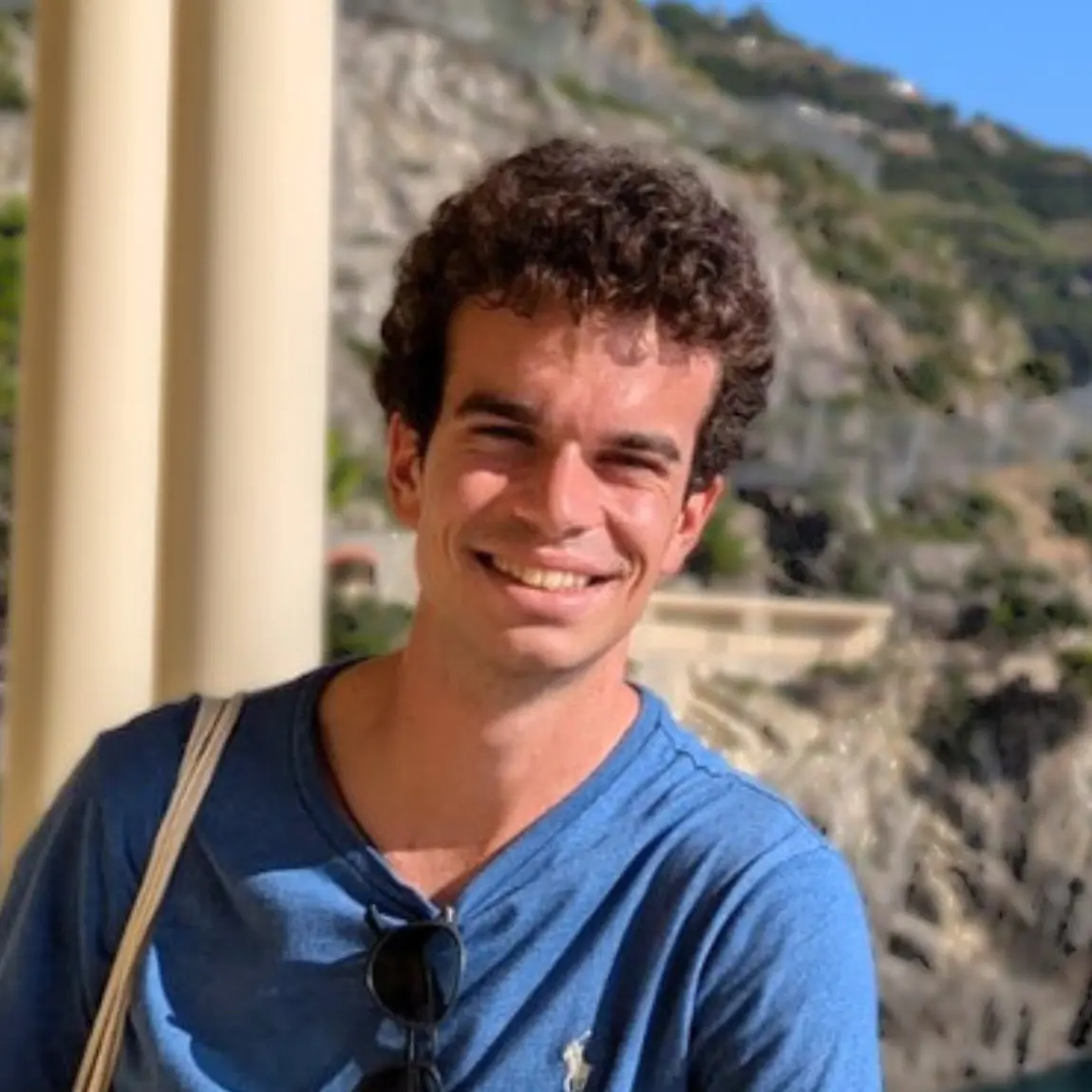
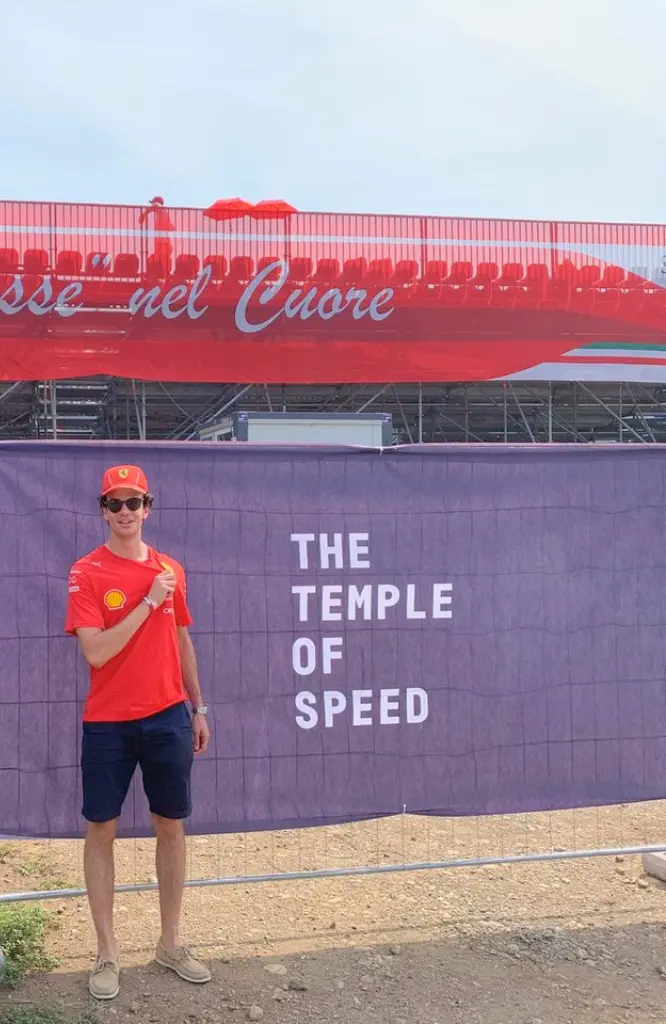
Camillo is 23, originally from Genoa, and currently finishing a master’s degree in automotive engineering in Munich. His passion for the field goes well beyond coursework: he follows Formula 1 and MotoGP with the kind of attention that gets called a lifestyle rather than a hobby. The rest of his free time tends to involve sport – padel, tennis, and football feature regularly, whether he is playing or watching. Munich was a practical choice for his studies; what surprised him was how easily it started to feel like home.
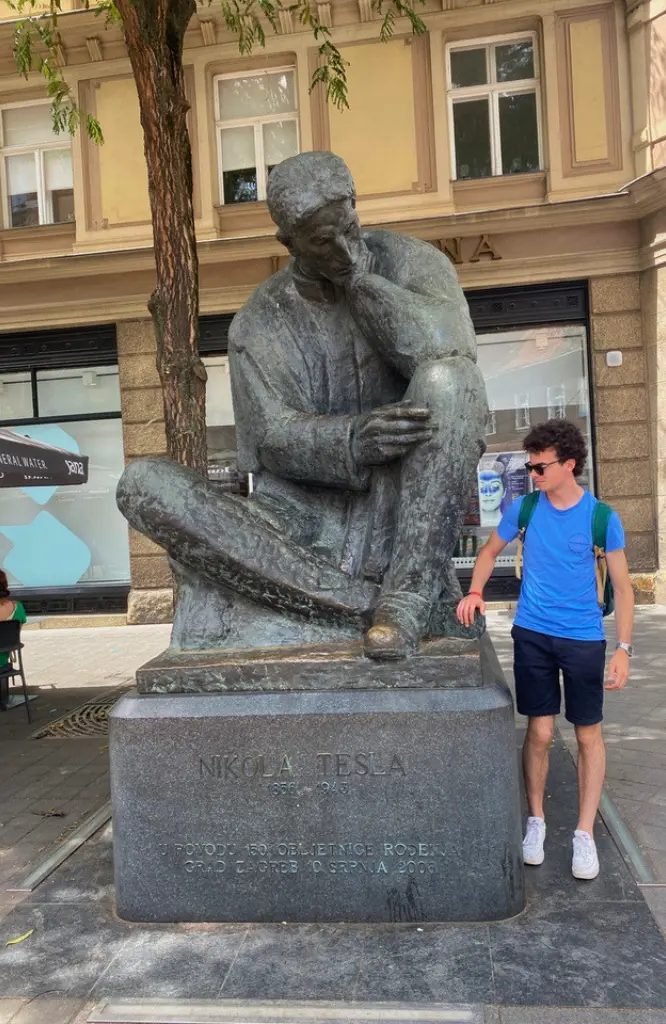
“I’ve always felt comfortable in Germany – especially here in Munich.”
He expects to stay in Germany after graduating – 80 per cent certain, he says, with a precision that suits his discipline. Career opportunities in automotive engineering are better in Munich than in Genoa, and his girlfriend is also planning to remain. He has noticed real differences between Italian and German social cultures – building close friendships with Germans takes longer, he observes; there is a certain reserve that needs time to soften. But he has found genuine connections here, and the distance from Italy is manageable. He has never felt truly far from home.
Two reasons to learn Croatian
For a long time, Croatia was simply a place Camillo thought he might visit one day. It looked beautiful, and that was reason enough. But learning Croatian? That was a different proposition. Slavic languages felt entirely remote, and without a compelling reason to choose one over another, the idea never took shape. Then he met his girlfriend.
She is Croatian, studies at the same university in Munich, and her family lives in Varaždin. Camillo has visited twice. The situation there is straightforward: almost her entire family communicates only in Croatian, and while she is happy to translate, he wanted more than that. He wanted to introduce himself properly, to follow a conversation, to show the effort. His girlfriend herself has said she believes people express themselves most naturally and freely in their mother tongue. And the grandmother, Camillo mentions, did once learn German – back in primary school, a very long time ago. He would have to meet the language on its own terms.
What Croatian feels like from the outside
Camillo’s starting point with Croatian was essentially zero – a language that sounded entirely unfamiliar, full of consonant clusters and unfamiliar rhythms. But once he began working on it properly, the experience turned out to be less daunting than expected. His years of Latin at school proved unexpectedly useful: the concept of cases – the idea that word endings carry grammatical meaning rather than separate articles – was already familiar to him, even if Croatian’s specific system was new. And small overlaps with Italian surfaced here and there. The Croatian word for ham, he says, sounds almost identical to the Italian.
“Croatian isn’t easy – that has to be said. But it’s turning out to be more learnable than I expected, especially with Latin in the background.”
The challenges are real, too. Some Croatian words contain very few vowels, which takes adjustment for someone used to Italian’s open soundscape. Irregular forms add another layer – “otac” for father becomes “oče” in the vocative, a shift that seems to follow no obvious logic until it is simply memorised. And then there is the question of dialect. The Croatian Camillo hears in Varaždin is Kajkavian, with its own vocabulary and a scattering of German loanwords absorbed over centuries of contact. His course works from standard Croatian, which is the right foundation – but he is beginning to notice when what he hears at the family dinner table does not quite match what he has learned in class.
Why learning together makes the difference
Before finding Let’s Learn, Camillo had tried teaching himself from a textbook – six or seven months earlier, he bought one and made a proper attempt. The problem was not the content exactly, but the structure: it jumped from self-introductions to hotels to family topics without a clear sense of how the pieces fitted together. He put it down and left it there.
What he found in a group course was immediately different. Part of it is the structure – a deliberate, progressive path through the basics. But much of it is the group itself. Nearly everyone in his class has arrived at Croatian the same way: through a partner, a spouse, a family connection that made the language personally urgent. That shared situation changes the atmosphere entirely. And without a fixed appointment and other people learning alongside him, he is honest enough to admit he would find reasons to postpone. A scheduled session with others in the same position is what keeps him consistent.
Free 6-week email course
Just starting with Croatian? Get one easy lesson per week plus a short exercise to help things stick. Sign up now to begin your Croatian journey!
Sign up for freeFree 6-week email course
Enter your email and we'll send one short lesson a week — straight to your inbox.

Small victories, long road
Camillo is careful about where he places himself on the learning curve. He is early in the process, and he knows it. But there have been moments already – small ones, but noticed. Sitting at dinner in Varaždin, he heard the word for glass and understood it without waiting for a translation. Then bread. Then a few other words scattered across the conversation. They had come up in class, stayed in memory just long enough, and suddenly they were alive in real use. That, he says, is when things start to feel real.
“Every time I go back, they expect a little more – and I want to give them that.”
On his second visit to Varaždin, he could introduce himself more fully than on the first, and the grandparents were pleased – perhaps a little too eager to continue the conversation in Croatian at full speed. He followed as far as he could. Beyond the personal, he has also considered whether the language might find professional uses: Rimac, the Croatian electric car company, operates in his field, and he has already had a Croatian manager in Munich. He is aware that proximity matters – Munich is close enough to Croatia that connections appear naturally. His advice to anyone just starting out is simple and unglamorous: take the course, work through the vocabulary cards systematically, and do not expect shortcuts. He is following his own advice, steadily and one card at a time.
Teacher and student stories
Discover inspiring language journeys and see how others are learning and teaching Croatian.
Niclas | Student
A Leipzig dispatcher learning Croatian to reconnect with his Croatian father’s family – and discovering that Mondays are his best day.
Irma | Teacher
A biotechnologist who once taught herself fluent German at 15, Irma now brings that same careful curiosity to teaching Croatian.
Melisa | Student
Melisa from Karlsruhe started learning Croatian for her husband – and discovered a whole world of friendships, books, and belonging.