
The news in Croatian
- službeno
na način koji je povezan s državnim ili javnim institucijama; prema pravilima i propisima ↩︎ - proglasiti
službeno objaviti da nešto ima određeni status ili naziv ↩︎ - neeksplodiran
koji još nije eksplodirao, ali može eksplodirati ↩︎ - poljoprivreda (f.)
djelatnost uzgoja biljaka i životinja za hranu i druge proizvode ↩︎ - modernizirati
učiniti nešto suvremenijim, boljim i učinkovitijim prema novim standardima ↩︎ - sustav (m.)
skup povezanih dijelova koji zajedno rade kao cjelina ↩︎
Translation
Text comprehension
Question 1: What has happened to all the mines and unexploded bombs in Croatia?
Question 2: Why are the villages and fields now safe in Croatia?
Vocabulary
| Croatian | English |
|---|---|
| službeno | |
| proglasiti | |
| neeksplodiran | |
| poljoprivreda (f.) | |
| modernizirati | |
| sustav (m.) | |
Free trial lesson
Curious about live learning? Join a free trial lesson and see what it’s like to learn with us. No commitment, no pressure – just a friendly session to find out if it’s the right fit for you.
Reserve your spot
Read the full story
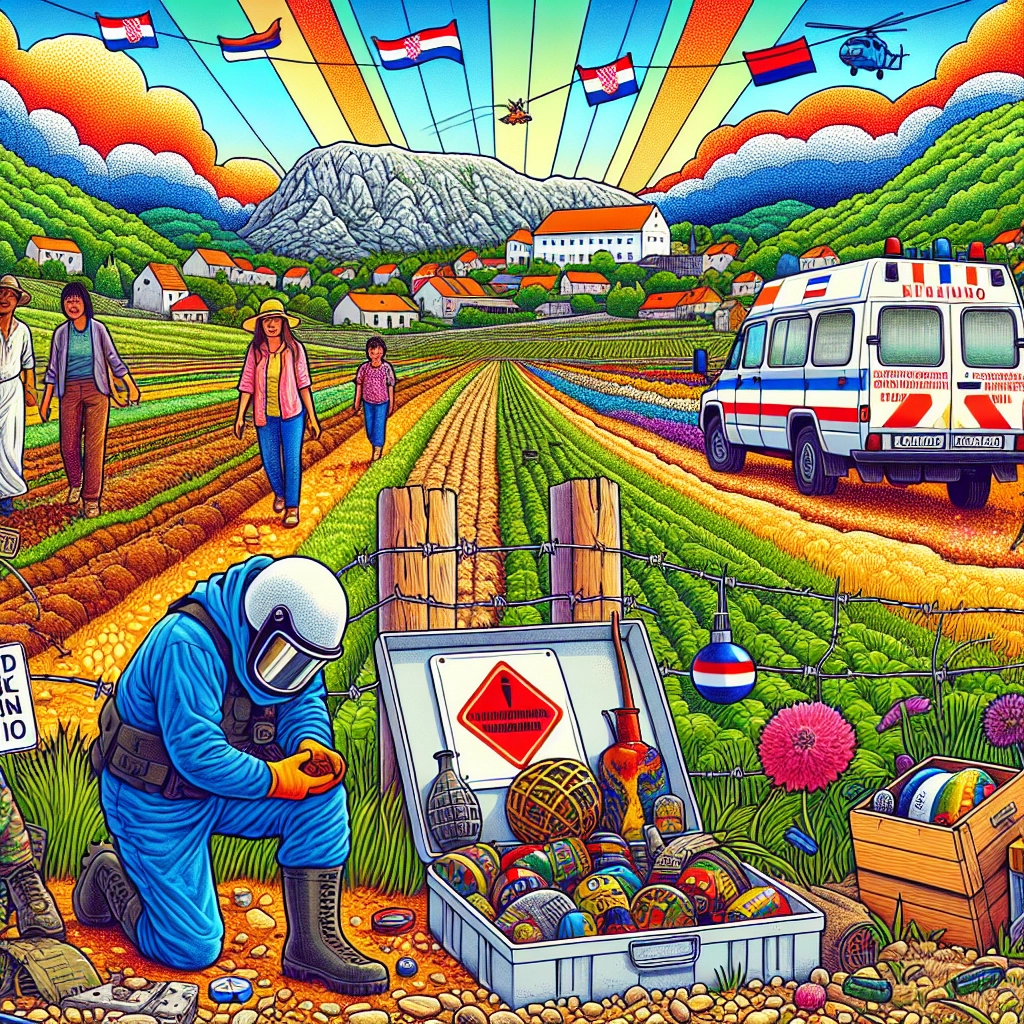
Croatia has officially been declared a country free of landmines almost 30 years after the end of the 1990s war. The announcement was made by Interior Minister Davor Božinović during events marking the International Day of Civil Protection and the Croatian Civil Protection Day in Zagreb.
According to the minister, Croatia has completed its obligations under the Ottawa Convention, the international treaty that aims to eliminate anti-personnel landmines worldwide. He stated that around 107,000 landmines and other explosive devices and approximately 470,000 unexploded ordnance items have been removed from Croatian territory.
Božinović described the end of mine clearance not only as a technical achievement but also as a moral responsibility fulfilled towards war victims, their families and the deminers who were killed or injured while doing this work. The process involved Croatian institutions, specialist experts and international partners over many years.
The minister said that a mine-free Croatia opens new possibilities for the country. Rural regions that were once dangerous can now be safely used for agriculture, local development and tourism. For residents and visitors, he argued, everyday life and travel are now significantly safer.
The announcement was made in the wider context of a ceremony honouring civil protection services. Božinović emphasised that civil protection forces are now facing new types of risks, including more frequent natural disasters, climate-related emergencies and threats to critical infrastructure. He underlined that their task is in some ways more demanding than in the past.
To respond to these challenges, Croatia is working on the modernisation of its civil protection system. This includes new legal frameworks and digital early warning systems designed to inform the population quickly in case of danger. The minister described civil protection personnel as a vital link between state institutions and citizens, especially in times of crisis.
Božinović also highlighted progress in specialised rescue capabilities. Croatia has obtained its first EU‑certified civil protection module for speleological rescue, which involves complex operations in caves and underground spaces. This module, developed with the expertise of the Croatian Mountain Rescue Service (HGSS) and the Civil Protection Directorate, reportedly received very high evaluations at the European level.
As part of future plans, the Civil Protection Directorate will organise civilian service for people with conscientious objection to military service. Through training and education, these individuals are expected to form a new generation of citizens prepared to act correctly in emergencies and crises.
During the Zagreb ceremony, authorities presented awards and recognitions for special achievements in rescue operations, for contributions to the development of the civil protection system, and for scientific and professional work in this field. Officials underlined that, thanks to the efforts of these services, both Croatian citizens and foreign visitors can feel more secure that they will receive assistance when difficult situations arise.
Info: ‘Croatian Learner News’ is a service from ‘Let’s Learn Croatian’, a language school for Croatian offering various types of online courses and opportunities to learn Croatian in Croatia. It provides information and updates relevant to learners who wish to improve their language skills both remotely and during visits to the country.
Advanced: Reports from Croatia
Croatian Learner News
Discover news from Croatia to stay informed and practise your skills.
-

Learner News | 11.05.2026
Croatia Urges 10–20% Price Cuts for Tourists
-

Learner News | 04.05.2026
Croatian Ski Chief Pavlek Arrested in Kazakhstan
-

Learner News | 03.05.2026
Over 12,000 Catholic youths gather in Požega