The news in Croatian
- crpka (f.)
uređaj kojim se tekućina (npr. gorivo ili voda) iz jednog mjesta prenosi na drugo, obično pomoću tlaka ↩︎ - poskupljenje (n.)
situacija ili proces u kojem nešto postaje skuplje, povećanje cijene ↩︎ - smanjiti
učiniti nešto manjim po količini, broju ili jačini ↩︎ - poskupjeti
postajati skuplji, rasti u cijeni ↩︎ - poljoprivrednik (m.)
osoba koja radi na zemlji i uzgaja biljke ili životinje za hranu ili prodaju ↩︎ - ribar (m.)
osoba koja lovi ribu, kao posao ili hobi ↩︎
Translation
Text comprehension
Question 1: Why are people standing in long lines at petrol stations in Croatia?
Question 2: Why is the price increase of blue diesel a big problem?
Vocabulary
| Croatian | English |
|---|---|
| crpka (f.) | |
| poskupljenje (n.) | |
| smanjiti | |
| poskupjeti | |
| poljoprivrednik (m.) | |
| ribar (m.) | |
Free trial lesson
Curious about live learning? Join a free trial lesson and see what it’s like to learn with us. No commitment, no pressure – just a friendly session to find out if it’s the right fit for you.
Reserve your spot
Read the full story
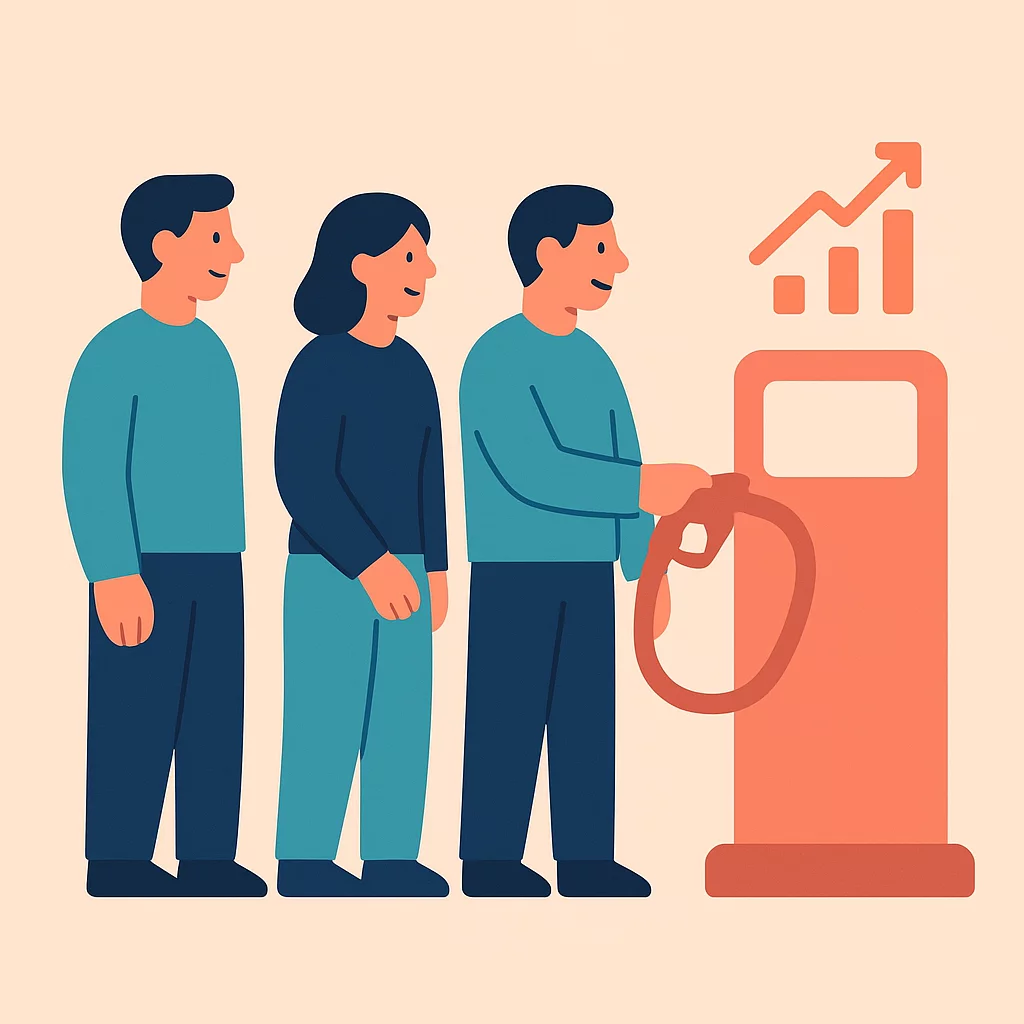
On the eve of a major rise in fuel prices in Croatia, long queues formed at petrol stations across the country as drivers hurried to fill their tanks before the new tariffs took effect at midnight.
According to Croatian media, many stations experienced what they described as a true “rush”. Cars lined up deep into surrounding streets, with drivers sometimes waiting a long time to reach the pumps. People hoped to save up to around ten euros per full tank by buying fuel at the old prices.
The Croatian government had earlier announced that, despite state intervention, a significant price increase for fuel would still go ahead. The cabinet decided to reduce excise duties and cap retail margins in an attempt to soften the impact on citizens. Government representatives emphasised that without these measures the increase would have been even stronger.
From midnight, the price of Eurosuper 95 petrol rose from about 1.50 euros to roughly 1.62 euros per litre. Eurodiesel climbed from around 1.55 euros to approximately 1.73 euros per litre. The sharpest jump affected “blue diesel”, a form of subsidised fuel used mainly by farmers and fishermen, which went up from about 0.89 euros to 1.19 euros per litre. This last rise has been described in local reports as particularly worrying for those sectors, which depend heavily on fuel for daily work.
Croatian Prime Minister Andrej Plenković commented that the country is facing an “aggressive and powerful rise” in oil prices on global markets. He linked this mainly to instability in the Middle East, describing the situation as a structural crisis and an external shock that creates serious problems for Croatia and for other European states. The government’s view, as presented in domestic media, is that Croatia is reacting within its limited national tools to a problem largely created abroad.
Television footage and online videos from various cities showed orderly but very long queues in front of petrol stations. Drivers, aware that fuel will be noticeably more expensive the next day, appeared willing to wait in line. Some reports also noted that the regulated prices do not apply on motorways, where fuel is typically more expensive, meaning that people who travel long distances may feel the increase even more strongly.
While most coverage focused on the price changes and the government’s explanation, Croatian outlets also highlighted the broader economic context. The higher cost of fuel is expected to raise transport and production costs, potentially influencing the prices of other goods and services. In particular, agricultural producers and the fishing industry could face rising operational expenses due to the jump in the price of blue diesel.
For now, the public reaction reported in the media has mainly taken the form of practical responses such as refuelling in advance and adjusting travel plans. Some reports suggested concern among citizens about the long-term effects if global oil prices remain high, but detailed political debates and official opposition reactions were less prominent in initial coverage.
The situation illustrates how global energy market changes can quickly influence everyday life in a relatively small European Union member state such as Croatia. While the government insists its measures have limited the scale of the rise, Croatian consumers and key sectors like agriculture are now preparing for a period of higher fuel costs and possible knock-on effects on the wider economy.
Info: ‘Croatian Learner News’ is a service from ‘Let’s Learn Croatian’, a language school dedicated to teaching Croatian through a range of online Croatian classes, resources and learning support.
Advanced: Reports from Croatia
Croatian Learner News
Discover news from Croatia to stay informed and practise your skills.
-

Learner News | 29.09.2026
Four Croatian Astronomers Discover New Planetary Nebula Candidate
-

Learner News | 06.10.2026
Croatian Renaissance Playwright Držić to Feature at London Events
-

Learner News | 06.10.2026
Croatia’s Best Restaurants 2026 Named at Dobri Restorani Awards