
Ukrainian courses
online & live
- Learn with an experienced teacher
- Live online group or one-to-one lessons
- Interactive homework & study tools
- Flexible courses for daily life, family & work
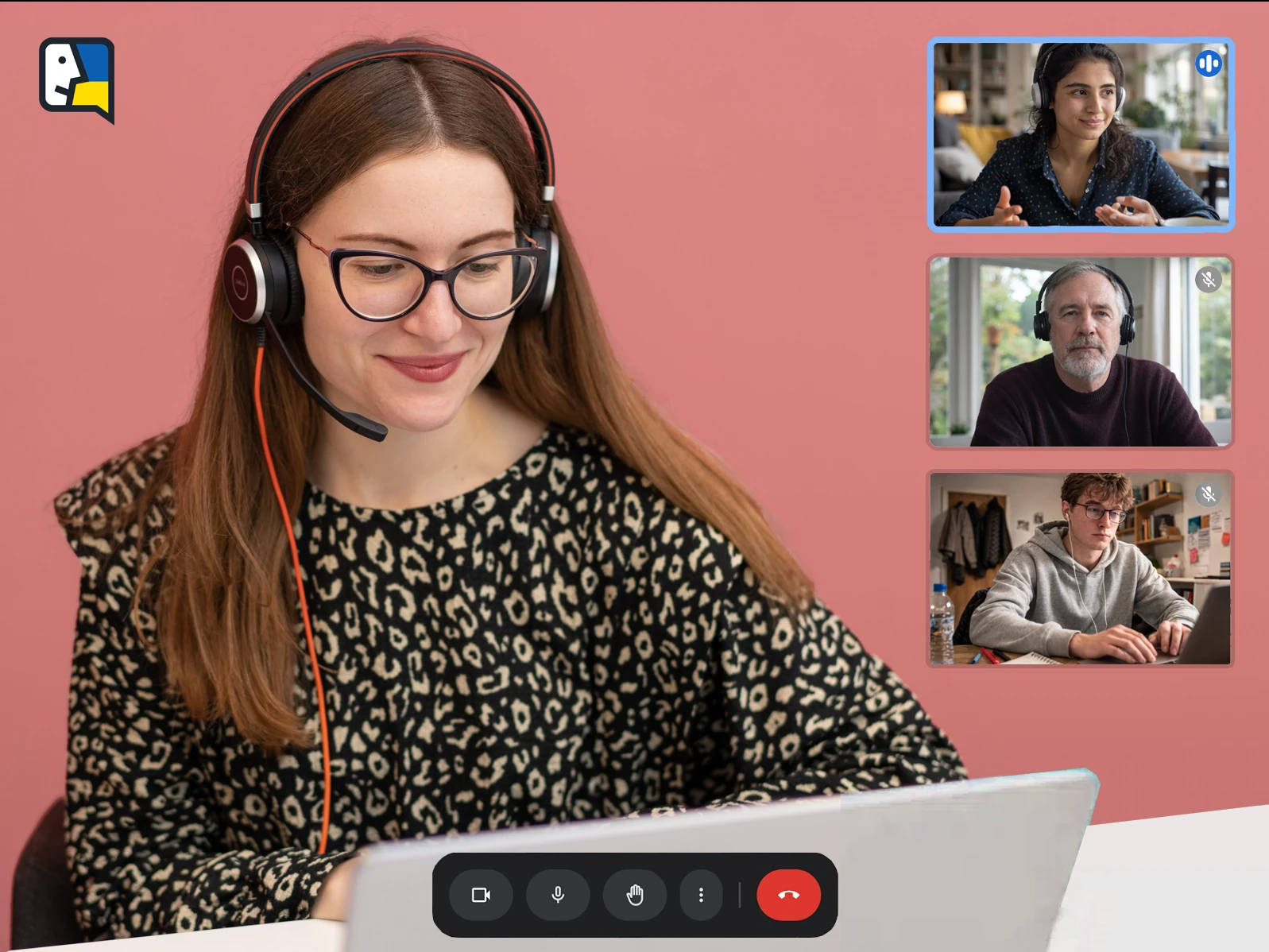
How would you like to learn Ukrainian?
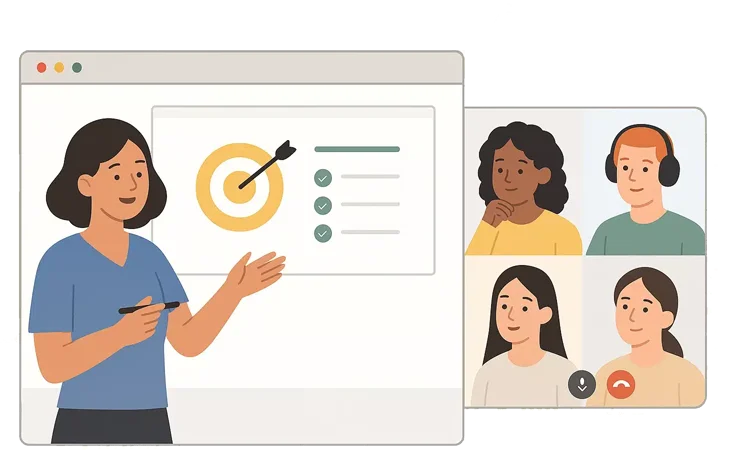
Group courses
A fixed learning group, a clear weekly rhythm and 12 weeks of live lessons. Ideal if you want to learn alongside others and stay on track step by step.
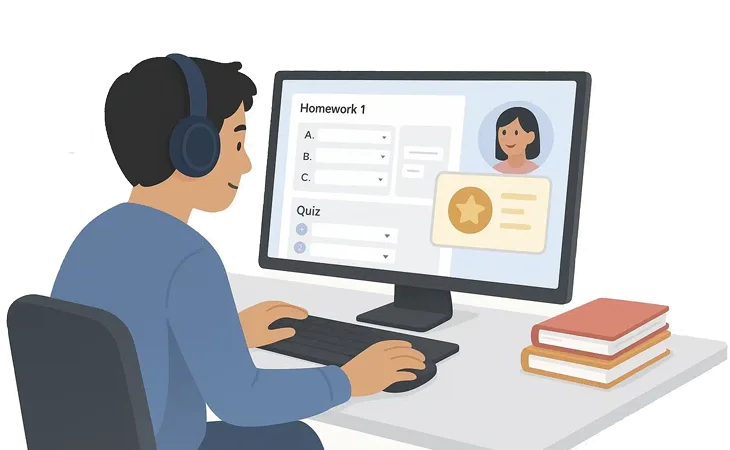
Individual lessons
Your own teacher, flexible scheduling and lessons built around your goal. Ideal if you want to start sooner, plan more freely or focus on specific topics.
Meet Our Students
Since Let’s Learn was founded in 2009 we’ve been trusted by more than 3,500 language learners – from Norway … and over 50 other countries!

Anuar | Student
Anuar blends science and curiosity to explore Ukrainian, building bridges between his Mexican roots and Eastern European culture.

Johannes | Student
An Austrian engineer reconnects with his grandmother’s Ukrainian heritage whilst juggling work, sport, and the challenge of speaking up.
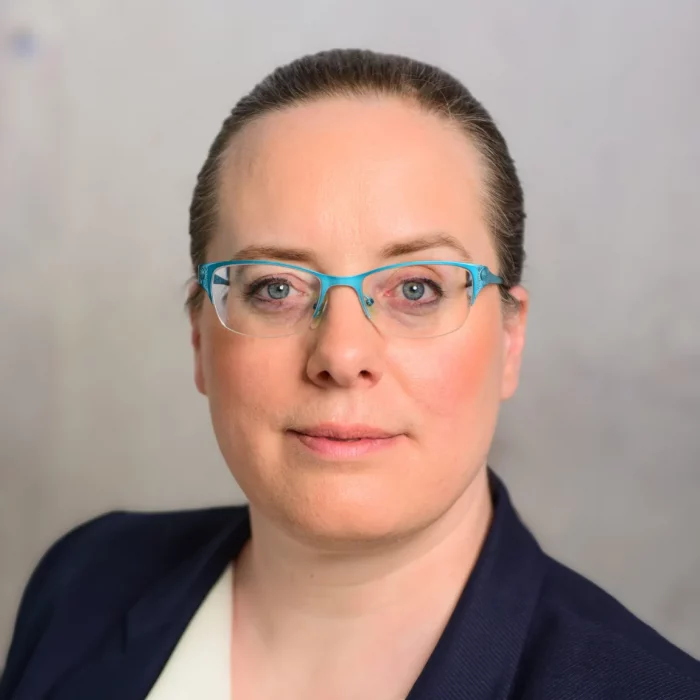
Anait | Student
From biochemistry labs to Ukrainian lessons – one German student’s journey of solidarity and discovery through language learning.

10+
Years teaching
online
450+
Active
Students
40
Million native
Ukrainian speakers
8
Words for love
in Ukrainian
Group Courses
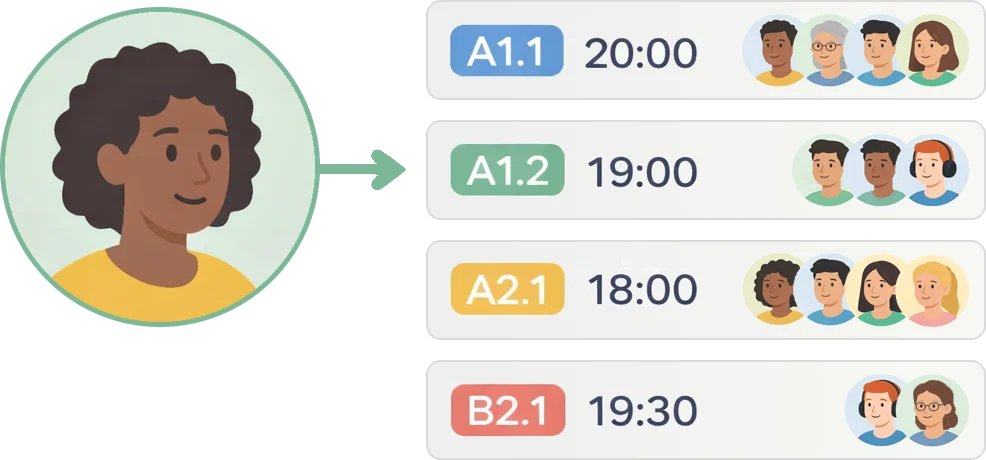
How do groups work?
Courses run for 12 weeks with one 90-minute lesson per week, live via Google Meet. You’ll learn in a small group at a similar level, in a supportive environment where mistakes are part of the process.
Between lessons, you’ll have access to interactive homework, self-study materials, and lesson recordings through our classroom app. Each month there’s an optional check-in test to track progress.
Whether you’re an ambitious learner who wants to study between classes or prefer a slower tempo with lesson recordings to review, we provide the tools and flexibility to match your learning style.

Why group learning?
Great value for money – group lessons are the most cost-effective way of learning. At less than 11€ per teaching hour, group learning is less than a third the cost of individual learning.
Learn faster and better – learning in a group is a very effective form of learning a language. In a group, students tend to feel more relaxed speaking a foreign language and making mistakes.
Learn with others – sharing your journey with like-minded learners can be a big boost. Motivate each other, study together between classes, and maybe make some friends along the way.
Get started with a group course
249€
12-week course
Includes 12 weekly lessons of 90 minutes in a small group. All learning materials are included.
199€
Follow-up courses
Enjoying your course and want to continue? Book the next course early and pay 199€ – saving 50€.
20€
Sign-up fee
Covers testing, trials & behind-the-scenes admin. A one-off cost, even if you take a break & return later.
Individual Lessons
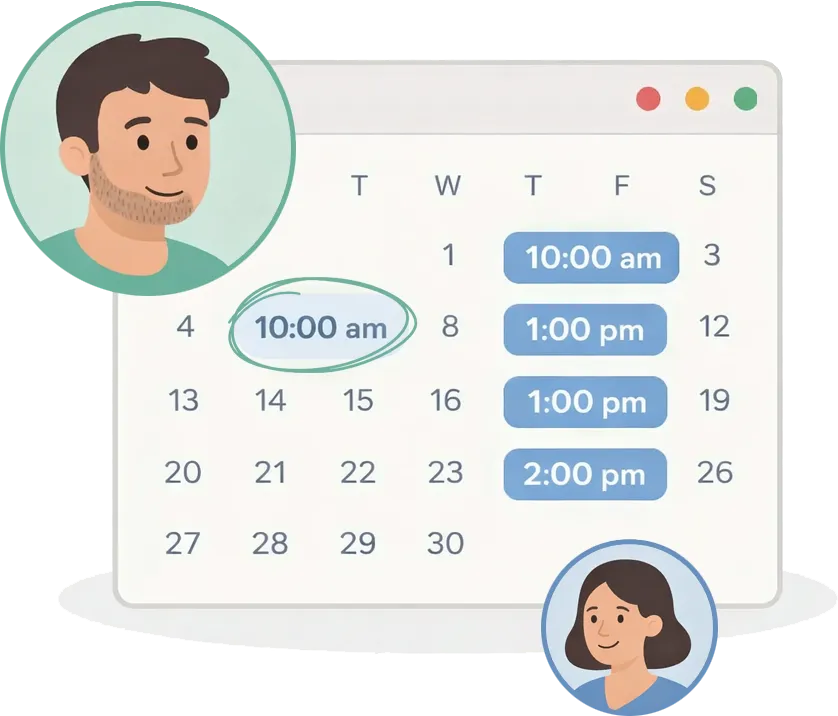
How does it work?
You’ll be assigned a teacher and given access to their calendar, then you can book 45-minute lessons to suit your schedule – and if needed can cancel at no cost up to 24 hours beforehand.
Between lessons, you’ll be given access to interactive homework and self-study material through our classroom app. All course materials and digital resources are included in the lesson price.
Ready to start learning? There’s no time like the present! In most cases you should be able to start individual lessons within a week of contacting us for the first time.

Why learn individually?
Personal teacher – you’ll be assigned your own teacher, given access to their calendar, and you’re welcome to contact them any time with questions through our classroom app.
Flexible scheduling – enjoy complete flexibility with scheduling. Book lessons in your teacher’s calendar to suit your schedule – and cancel up to 24 hours beforehand at no cost.
Tailored learning – with one-to-one attention, you set the pace and focus on what matters to you … whether you want to improve your conversational skills, master grammar, or get ready for vacation!
Get started with individual lessons
29€
50 Lessons – Annual pack
(valid for 12 months)
Challenge yourself to learn every week!
37€
30 Lessons – Maxi
(valid for 12 months)
41€
15 Lessons – Medium
(valid for 6 months)
45€
5 Lessons – Starter
(valid for 3 months)
About our Language School
Let’s Learn Ukrainian is an online language school specialised in teaching Ukrainian, founded in 2009. Since then, more than 3,500 learners from all over the world have put their trust in us.
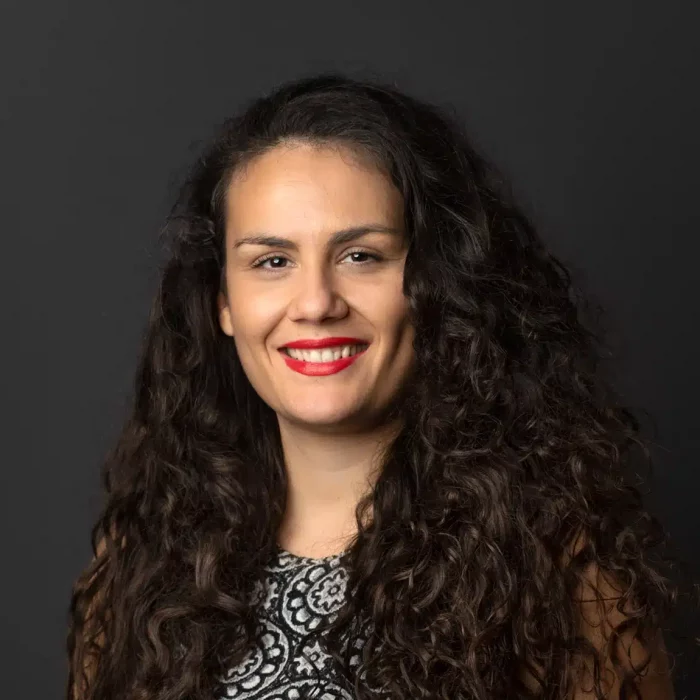
Maja | School manager
Blending stagecraft and empathy, Maja creates classrooms where students safely explore language – and parts of themselves.

Andrea | Learning coordinator
Andrea’s world blends forest trails and foreign verbs, turning curiosity and discovery into her signature teaching style.
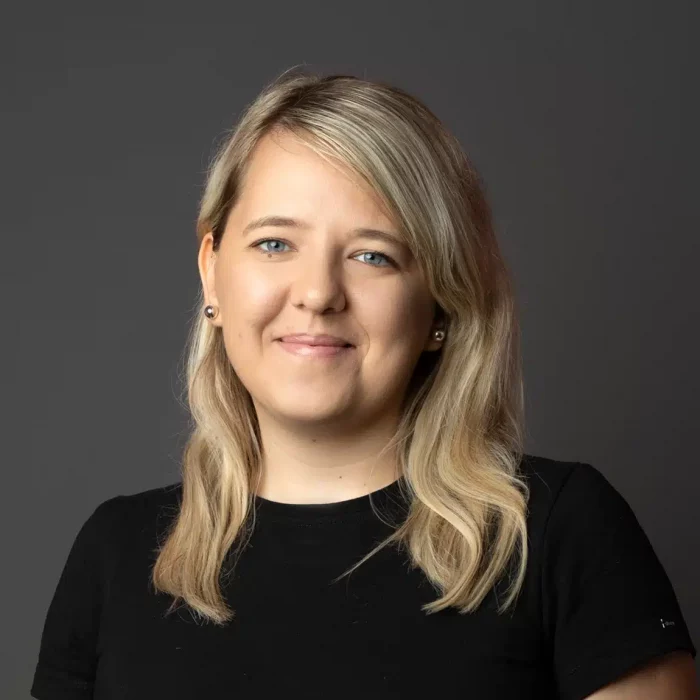
Sara | Learning coordinator
Once struggling herself with German, Sara now guides others with patience and passion, proving it’s never too late to succeed.
Your learning path
Our Ukrainian classes follow the Common European Framework of Reference (CEFR), the international standard for language learning. Here’s what you can expect at each level.
A1
Beginner
You can introduce yourself, order food, ask for directions, and handle basic everyday situations in Ukrainian. This is where most learners start.
A2
Elementary
You can hold short conversations on familiar topics, understand common expressions, and manage routine situations like shopping.
B1
Intermediate
You can follow conversations on everyday topics, express opinions, describe experiences, and deal with most situations while engaging with people.
B2
Upper Intermediate
You can participate in detailed discussions, understand more complex texts, and interact with native speakers naturally and with confidence.
C1
Advanced
You can express yourself fluently, understand demanding texts, and use Ukrainian effectively in professional or academic settings.
Learn Ukrainian – start with your first words
Curious what Ukrainian sounds like? Here are some essential phrases you can learn right now. Click on any word to hear native pronunciation, and see if the language resonates with you.
Essential vocabulary for daily conversations
Start by familiarising yourself with some core Ukrainian words you’ll hear and use in everyday situations, from simple answers like yes and no to greetings and polite expressions.
так – yes
ні – no
дякую – thank you
будь ласка – please
привіт – hi or bye
нема за що – you’re welcome
добрий день – good day
звичайно – of course
точно – exactly
чудово – great
можливо – maybe
вибачте – excuse me
Доброго ранку! – Good morning!
Добрий вечір! – Good evening!
До побачення! – Goodbye!
На добраніч! – Good night!
добре – okay / good
Будьмо! – Cheers!
Смачного! – Enjoy your meal!
звісно – certainly

Your first conversations in Ukrainian
Once you’re comfortable with individual words, it’s time to practise common question-and-answer pairs. These phrases form the foundation of everyday conversation in Ukrainian – you’ll use them constantly when meeting new people or chatting with locals:
Як справи? – How are you? (informal)
Як Ваші справи? – How are you? (formal)
Добре, дякую. – Fine, thank you.
Як тебе звати? – What’s your name? (informal)
Як Вас звати? – What’s your name? (formal)
Мене звати … – My name is …
Ви розмовляєте англійською? – Do you speak English?
Вибачте, я не розмовляю українською. – Sorry, I don’t speak Ukrainian.
Вибачте, де тут туалет? – Excuse me, where’s the toilet?
Мені тут подобається! – I like it here!

How does Ukrainian pronunciation work?
Ukrainian pronunciation is largely phonetic – each letter almost always represents the same sound, which makes reading predictable once you’ve learned the Cyrillic alphabet. Most students feel comfortable reading within the first few lessons. The main challenge is that word stress is unpredictable and not marked in writing, so it needs to be learned for each word. The grammar includes seven cases that change word endings depending on context. But don’t let that intimidate you – with the right guidance and regular practice, you’ll be speaking confidently in no time.
Our group Ukrainian courses and individual lessons are designed to take you from these first phrases all the way to confident, fluent conversation. Whether you’re a complete beginner or looking to brush up on existing knowledge, we’ll help you achieve your Ukrainian learning goals.
Where is Ukrainian spoken?
Why do people learn Ukrainian?
Is Ukrainian hard to learn?
Frequently asked questions
Can I try a lesson before I commit?
Absolutely. We offer free drop-in trial lessons every week where you can experience our teaching style, meet other learners, and pick up a few Ukrainian words – with no obligation. It’s our recommended first step for both group and individual learners.
How much do Ukrainian courses cost?
Group courses start at 249€ for a 12-week initial course – that works out to under 11€ per teaching hour, making it one of the most cost-effective ways to learn a language online. Follow-up courses are 199€. There’s also a one-off 20€ sign-up fee that covers your placement test and trial lesson. Individual lessons are available in bundles from 29€ per 45-minute lesson (pack of 50), up to 45€ per lesson (pack of 5). All learning materials are included in the price.
What’s the difference between group courses and individual lessons?
A group course follows a structured 12-week programme with a fixed weekly time, lets you learn alongside others at a similar level, and is very cost-effective at under 11€ per teaching hour. Individual lessons offer complete flexibility with scheduling, one-to-one attention from your teacher, and content tailored entirely to your personal goals and pace. Many students combine both for the best results.
Is Ukrainian hard to learn?
Ukrainian has a logical structure that becomes more intuitive with practice. The first step is learning the Cyrillic alphabet, which most students master within a few lessons. The pronunciation is largely phonetic – each letter almost always sounds the same. The grammar includes seven cases, which take time to learn, but with a structured course and regular practice, most learners find Ukrainian much more approachable than its reputation suggests. If you already speak another Slavic language, you’ll have a significant head start.
How long does it take to learn Ukrainian?
It depends on your starting point, how often you study, and your goals. Most beginners reach the A1 level (basic conversation) after two 12-week group courses with consistent practice. For comfortable everyday conversation, expect around 6 to 12 months. Reaching fluency typically takes several years, but you’ll be having real conversations long before that.
What is the best way to learn Ukrainian?
The most effective approach combines structured lessons with a teacher – either in a group course or through individual lessons – with self-study between classes. Regular speaking practice is essential: even short, frequent sessions are more effective than occasional long ones. Our Ukrainian courses include interactive homework and study tools specifically designed to reinforce what you learn in class.
Can I learn Ukrainian online?
Yes, and online learning has become one of the most popular and effective ways to take Ukrainian classes. All our lessons are taught live via Google Meet, which means you get real interaction with your teacher and fellow students from anywhere in the world. Combined with our classroom app for homework and self-study, online learning offers the same quality as in-person classes with much greater flexibility.
Where can I learn Ukrainian for free?
We offer a range of free resources for learning Ukrainian. Explore our interactive vocabulary and grammar tool or dive into our language guide. These resources are ideal for self-study and independent progress.
Is there an app to learn Ukrainian?
While large platforms may offer limited Ukrainian courses, our free study tool delivers interactive exercises. In addition, check out Ukrainian podcasts, YouTube channels, and dedicated online courses to enrich your learning experience.
What special letters exist in Ukrainian?
The Ukrainian alphabet, based on Cyrillic, consists of 33 letters including unique characters like Ґ, Є, І, and Ї. Each letter has a consistent pronunciation that is key to mastering the language.
Start with a free trial lesson
Experience the teaching live and learn from the very first minute.
Pick a time in 2 minutes, join comfortably by video.
You'll quickly sense whether our method and pace suit you.
Get to know one of our teachers in person.
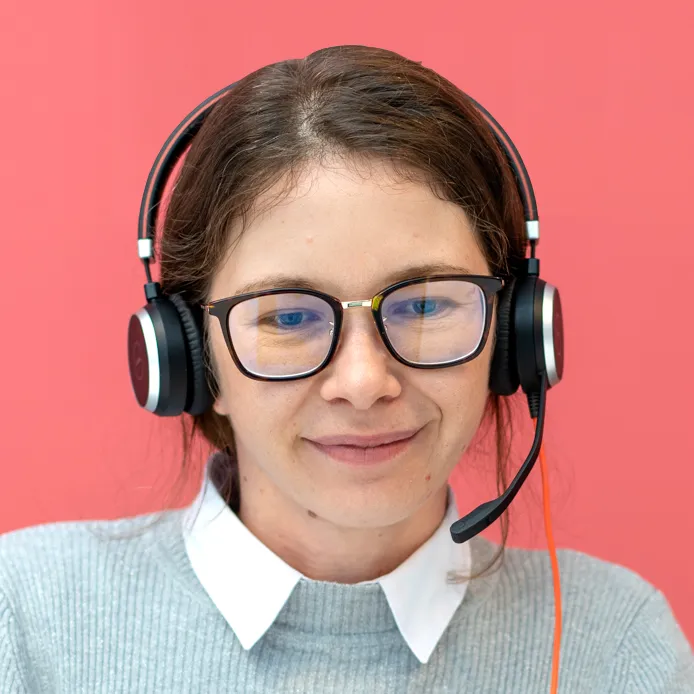
Prefer to contact our team directly?
If you have any questions, Andrea is happy to help – simply choose the way that suits you best.