A grandmother’s voice waiting to be heard
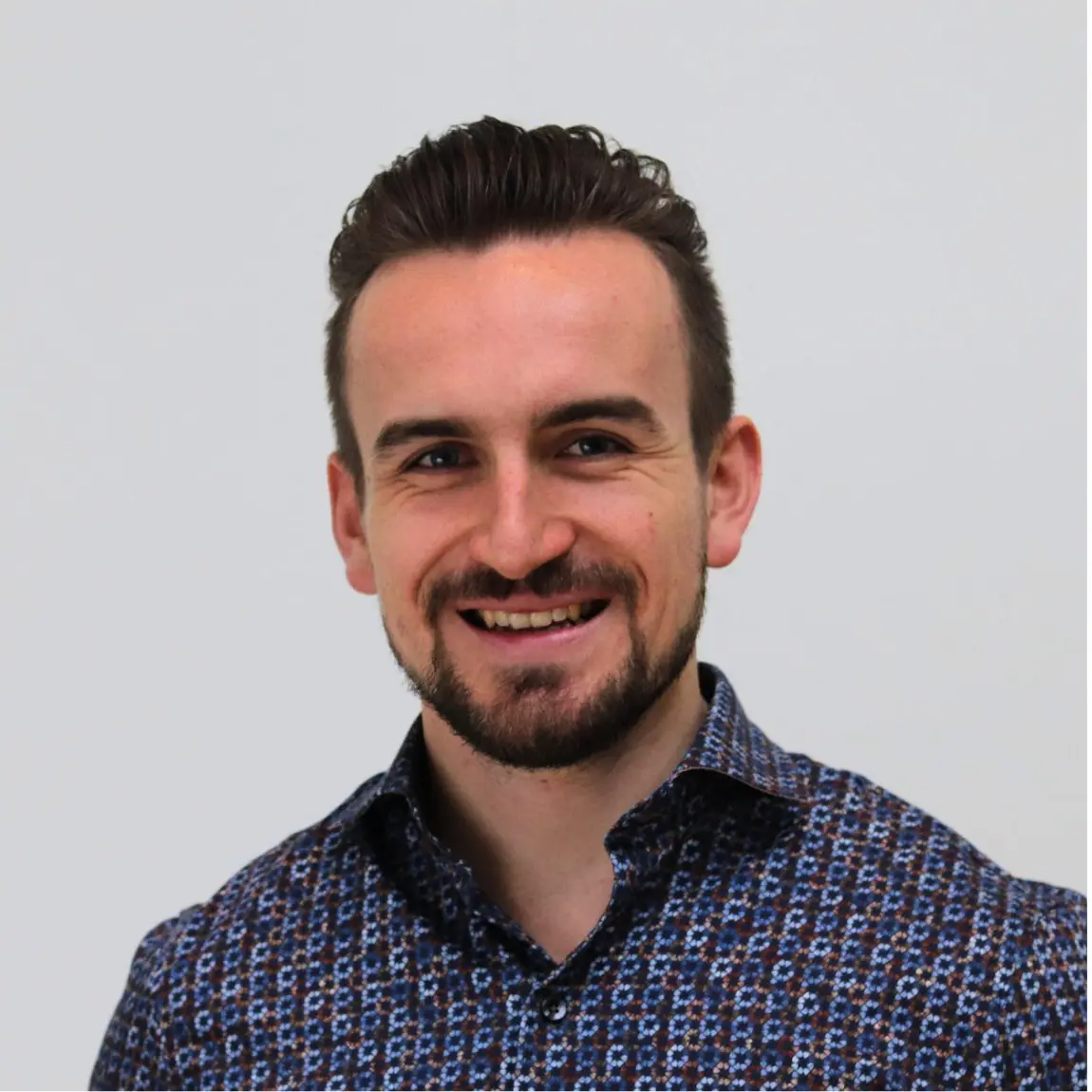
Johannes’s grandmother was born in Ukraine and fled to England during the Second World War as a small child. Raised by her grandfather, she grew up speaking Ukrainian despite being far from home. Now living in Austria, she’s been patiently waiting for her grandson to reach the point where they can have their first proper conversation in her mother tongue. “She’s already waiting for us to have our first conversation,” Johannes says. “I don’t quite dare yet, but I’m slowly getting more confident.”

“She’s already waiting for us to have our first conversation. I don’t quite dare yet.”
The connection runs deeper than just family history. Working in the electric vehicle battery industry in Graz, Johannes regularly encounters colleagues from Slavic countries. These workplace interactions, combined with his annual road trips through the Balkans to reach his favourite beach volleyball spots in southern Greece, have gradually exposed him to the sounds and rhythms of languages similar to Ukrainian. It’s created a cultural curiosity that goes beyond simply ticking off another language on a list.
The structure behind the sound
When Johannes first encountered Ukrainian, he found the melodic quality of Slavic languages inherently appealing. The initial words and simple sentences came easily, creating an optimistic sense that progress would be swift. Then reality set in. “The first words and smaller sentences were relatively easy, and I was very, very positive that it would go very quickly and very far,” he recalls. “The more I got into the depth of it, I realised that there’s actually quite a lot to do with grammar.”
His analytical mind – honed through engineering work – approaches Ukrainian as a system to be understood logically. Every structural pattern he recognises feels like a small victory, even if the thinking process takes longer than he’d like. Learning numbers proved to be one of those breakthrough moments: the logical structure behind Ukrainian numerals clicked relatively quickly. Now he’s working towards the bigger milestone – thinking directly in Ukrainian rather than translating in his head – though he acknowledges he still needs to build more vocabulary before that becomes natural.
From Duolingo disappointment to structured learning
Johannes initially tried teaching himself Ukrainian through Duolingo, having previously attempted another language using the same app. The experience left him unconvinced. The lack of structure and contextual understanding made it difficult to use words correctly, even when he’d memorised their translations. That’s when he turned to Let’s Learn Ukrainian and started working with his teacher Alex.
“It’s not just that I get a word, I learn it by heart from the translation, and then end up using it incorrectly. These little stories make it much easier because you always have a reference point.”
The difference has been transformative. Alex doesn’t just teach vocabulary – he explains how life works in Ukraine, which words are used in which contexts, and provides the cultural framework that makes language learning meaningful. The stories and anecdotes create mental anchors that help Johannes remember new material. There’s also a psychological element: having paid for structured lessons creates commitment points twice a week that he won’t skip. These fixed appointments provide a framework for preparation and follow-up practice that free materials simply couldn’t replicate.
The technical and the personal
One of Johannes’s current challenges is purely practical: writing Ukrainian on his laptop keyboard. For now, he types messages on his mobile phone and sends them to himself – a workaround that speaks to his determination. He’s recently started keeping a daily journal in Ukrainian, looking up every unknown word and adding it to his flashcard collection. It’s slow going, but it keeps him in daily contact with the language outside of lesson times.
The bigger challenge is psychological. Speaking aloud remains difficult, rooted in a perfectionism that dates back to school. His English teacher never knew he could speak the language because he simply refused to try in class, terrified of making mistakes. Johannes recognises this pattern in himself and knows that overcoming it is essential. He’s found a practice partner in Graz who speaks Ukrainian, which helps lower the barrier. The reactions from Ukrainian speakers have been uniformly positive – learning someone’s language creates common ground and mutual support in ways that one-way language learning cannot.
Interested in learning Ukrainian?
Have a question before you start? Send us a message and we’ll help you figure out the next step – whether you’re just exploring your options or already thinking about lessons.
Contact us about learning
Beyond the Danube and towards Kyiv
Outside his engineering work, Johannes’s life revolves around sport and travel. Winters mean skiing and snowboarding, whilst summers bring beach volleyball and surfing. His annual pilgrimage to the southern Peloponnese has become a fixed point in his calendar, with shorter trips often taking him to Croatian beaches like Makarska, Dubrovnik, and Baška – all within easy reach of Graz. These road trips through southeastern Europe mean passing through countries where the linguistic landscape shifts gradually, each border crossing offering new sounds that share family resemblances with Ukrainian.
“Sooner or later I’d like to travel to Ukraine anyway and simply go to where my grandmother comes from.”

The current situation in Ukraine has added another dimension to his language learning, making the connection feel more urgent and relevant. Eventually, Johannes plans to visit the places his grandmother left behind as a child – a journey that will carry more meaning when he can speak with people in their own language. His mother, who never learned Ukrainian herself, has become increasingly interested since Johannes started his studies. He’s already making his case for her to join him in lessons. For now, the focus remains on building confidence, expanding vocabulary, and preparing for that first real conversation with his grandmother – the one she’s been waiting for.
Teacher and student stories
Discover inspiring language journeys and see how others are learning and teaching Ukrainian.

Maja | School manager
Blending stagecraft and empathy, Maja creates classrooms where students safely explore language – and parts of themselves.

Anuar | Student
Anuar blends science and curiosity to explore Ukrainian, building bridges between his Mexican roots and Eastern European culture.

Sara | Learning coordinator
Once struggling herself with German, Sara now guides others with patience and passion, proving it’s never too late to succeed.