Back to School Discount – valid until 13 September
Take advantage of our back to school offer: up to 3 free lessons with our individual lesson packages, and no 20€ sign-up fee for first-time group learners. Book now and save on your learning!

The news in Croatian
Znanstvenici1 u Hrvatskoj kažu da je u Jadranskom moru sve više mikroplastike. U svakom uzorku2 morske vode pronađu sitne komadiće3 plastike. Ona dolazi, na primjer, iz odjeće tijekom4 pranja rublja. Mikroplastika ulazi u ribe i školjke5, pa može doći i na naše tanjure. Utjecaj6 na zdravlje ljudi još nije jasan.
- znanstvenik (m.)
osoba koja se bavi znanošću i istraživanjem u nekom području ↩︎ - uzorak (m.)
mali dio neke tvari ili skupine koji se uzima radi analize ili pregleda ↩︎ - komadić (m.)
vrlo mali dio nečega što je odlomljeno ili odsječeno od cjeline ↩︎ - tijekom
u razdoblju dok nešto traje, za vrijeme nečega ↩︎ - školjka (f.)
morska životinja s tvrdom ljušturom, jestiva ili ukrasna ↩︎ - utjecaj (m.)
djelovanje nečega ili nekoga na stanje, ponašanje ili razvoj drugoga ↩︎
Translation
Text comprehension
Question 1: Where do Croatian scientists find tiny pieces of plastic in the Adriatic Sea?
Question 2: How can microplastic from the sea finally reach people?
Vocabulary
| Croatian | English |
|---|---|
| znanstvenik (m.) | |
| uzorak (m.) | |
| komadić (m.) | |
| tijekom | |
| školjka (f.) | |
| utjecaj (m.) | |
Already know some Croatian?
Take our free placement test and find your current level in just a few minutes. It’s fun, fast, and helps you understand exactly where you are – and what the next step in your learning journey might be.
Take the free test
Read the full story
Scientists in Croatia are warning that the amount of microplastic in the Adriatic Sea is increasing rapidly, with new measurements suggesting that tiny plastic fragments are now present in every analysed seawater sample.
According to research from the Centre for Marine Research of the Ruđer Bošković Institute (IRB) in the coastal town of Rovinj, the average concentration of microplastic in the Adriatic is around 250,000 particles per square kilometre. In some parts of the Rovinj area, this number has at times risen to about 600,000 particles per square kilometre, meaning that on certain days there can be well over half a million pieces of microplastic in an area of sea the size of a small town.
Marine scientist Victor Stinga Perusco from the IRB centre in Rovinj told Croatian television that, in his work so far, every single sample of Adriatic seawater he processed contained microplastic. He explained that even the discovery of just one piece is considered negative, because ideally there should be no plastic at all in the samples. Researchers say the number of particles is still growing, as new plastic waste continues to enter the environment.
Microplastic consists of very small plastic fragments and fibres, many of them invisible to the naked eye. A significant share of these fibres is believed to come from households. During every cycle of a washing machine, synthetic clothes can release tiny plastic threads. These fibres are then transported through wastewater systems and can ultimately reach rivers and seas, including the Adriatic.
Once in the water, microplastic can be taken up by marine organisms. Studies mentioned in Croatian media report that particles are found in the bodies of fish and shellfish, such as mussels. Through the food chain, these particles may then arrive on human plates. Scientists note that microplastic can also carry other chemical substances on its surface, including potentially harmful pollutants, which may then be introduced into marine ecosystems together with the plastic itself.
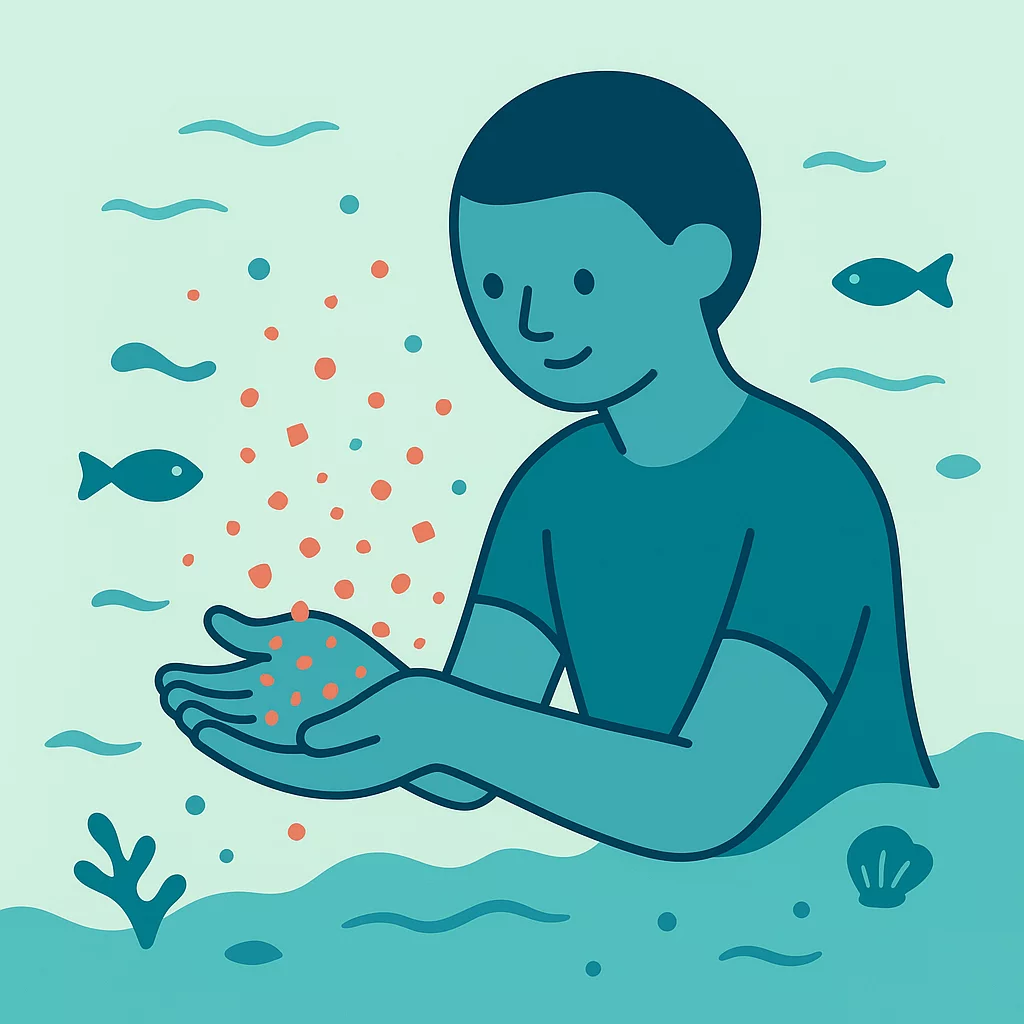
However, researchers repeatedly emphasise that the health effects on humans are still not fully understood. At this stage, scientists can confirm the presence of microplastic in the environment and in some marine organisms, and they are concerned about the possible consequences, but they stress that more detailed, long-term studies are needed before clear conclusions can be drawn about the impact on human health.
The Ruđer Bošković Institute and other Croatian institutions have been drawing attention to this issue, especially around international events such as World Environment Day. Under global campaigns like #BeatPlasticPollution, IRB scientists have highlighted wider data showing that more than 11 million tonnes of plastic reach the world’s waters every year, while around 13 million tonnes accumulate in soils. They warn that these trends pose serious challenges for ecosystems and potentially for human well-being worldwide, not only in Croatia.
Research on microplastic is not limited to the Adriatic coast. In Zagreb, at the Institute for Marine and Environmental Research, scientists are examining the problem in Croatian rivers as well. One project, called PlastOrgAnoTox, focuses on the Krka River, a well-known waterway in Dalmatia. There, experts are investigating how microplastic affects fish and mussels and whether plastic particles can move from one part of an organism’s body to another. This helps them understand how plastic might be distributed inside living creatures.
Other Croatian teams are using advanced computer models to estimate the ecological costs of plastic pollution. These models try to predict how microplastic could influence the growth, metabolism and reproduction of different species over time. Such simulations, combined with field measurements from places like Rovinj and the Krka River, aim to build a clearer picture of how plastic is affecting the Adriatic Sea and the wider environment.
While Croatian scientists agree that microplastic pollution is widespread and increasing, they also stress that scientific research is essential for understanding the scale of the problem and for designing effective responses. Their findings from the Adriatic are part of a broader global discussion about how to reduce plastic use, manage waste more effectively and protect marine ecosystems that are important both for local communities and for international tourism.
Info: ‘Croatian Learner News’ is a service from ‘Let’s Learn Croatian’, a language school for Croatian that offers various types of online courses as well as information on language holidays in Croatia.
Advanced: Reports from Croatia
- Scientist Warns of Alarming Adriatic Discovery: “Every Sample I Analyzed Contained It – and the Number Is Growing” (Dnevnik.hr)
- Scientist from Rovinj: Every Adriatic Sample I Analyzed Contained Microplastics (Index.hr)
- Dramatic Surge in Microplastics in the Adriatic: “There Isn’t a Single Sample Without at Least One” (24sata)
- Rovinj Scientist Warns: “There’s Not a Single Sample of the Adriatic Without Microplastics” (Glas Istre)
Croatian Learner News
Discover news from Croatia to stay informed and practise your skills.
-

Learner News | 08.09.2026
Endangered Istrorumanian Language Celebrated in Šušnjevica Festival
-

Learner News | 03.09.2026
Filip Hrgović Knocks Out Itauma to Win World Heavyweight Title
-

Learner News | 25.08.2026
Croatian Designer Wins Second Prize at Tokyo Interior Design Contest