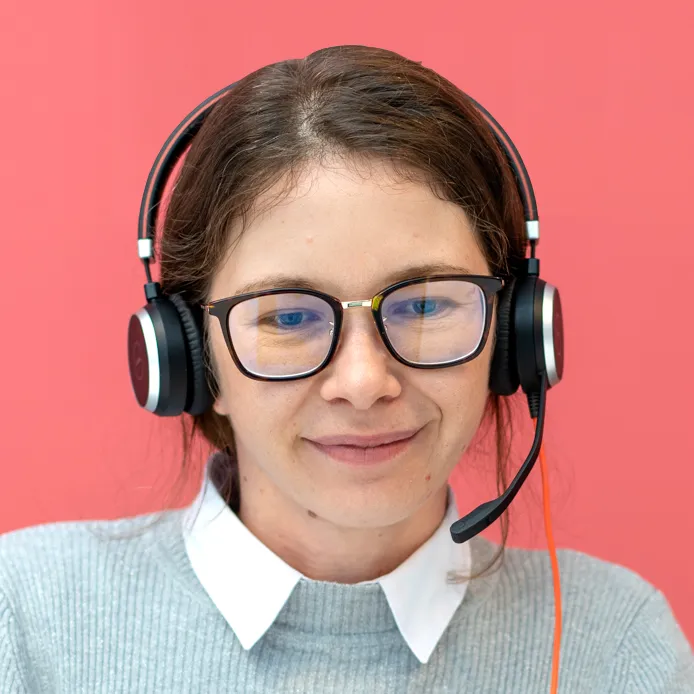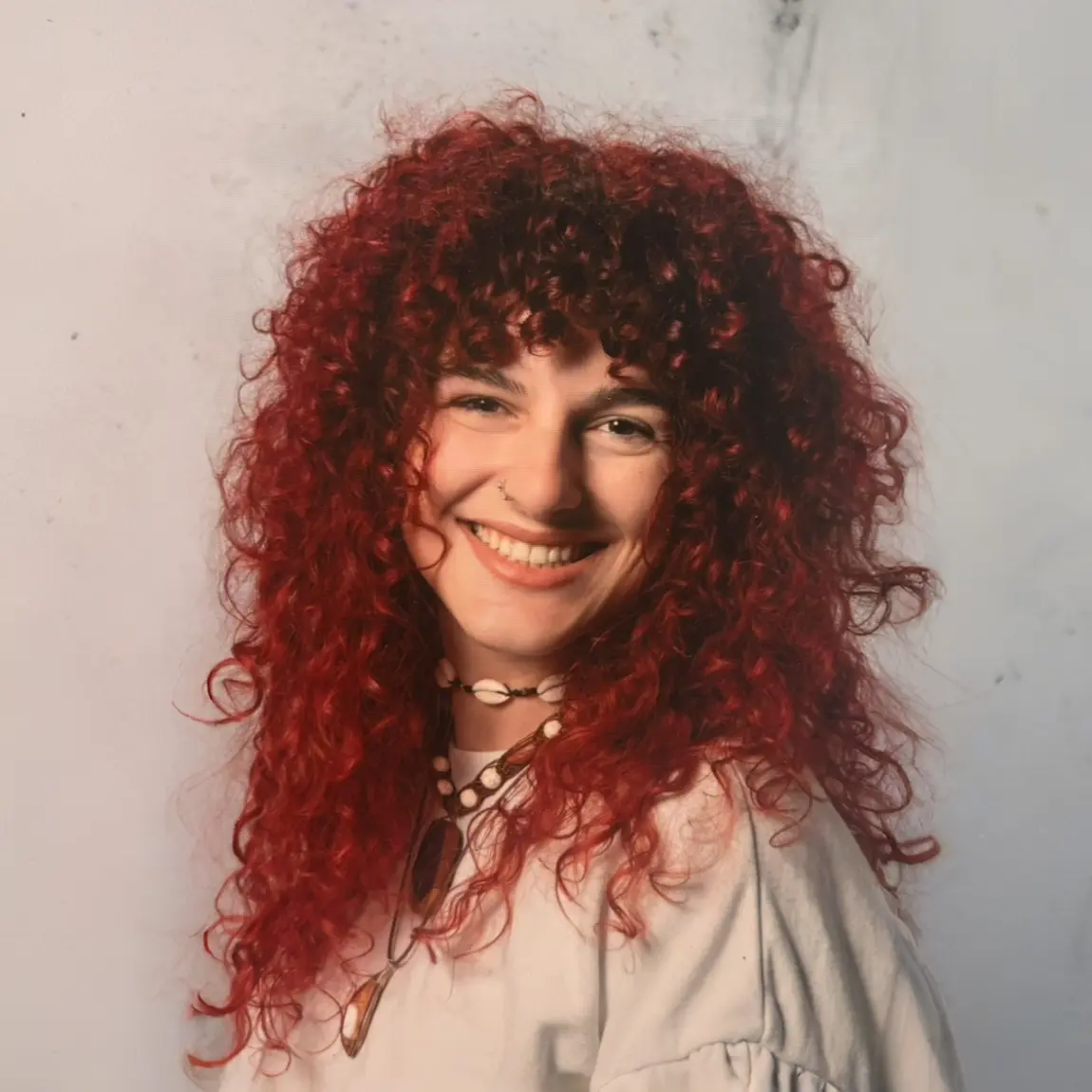
From Crete to Berlin, and back again
When Artemis finished her studies on Crete at twenty-three, she was ready to leave. She had thought vaguely about Spain, but her grandparents lived in southern Germany, which made the decision easier. She arrived with the intention of doing a master’s degree in multilingualism and cultural education – but she never found a programme that felt right. What she found instead was a job offer: a teaching post in a German state school, with her own class. She took it without much hesitation.

“I had my job, my flat, my connections. But then I thought: is this my life now? I was starting to find it a bit boring.”
She ended up staying for nine years, most of them in Berlin. By the time she began thinking about leaving, she had a stable job, a good flat, and a wide circle of friends – everything that a well-settled life was supposed to look like. But she had the feeling that nothing was really changing. Around the same time, her grandmother was diagnosed with dementia. She had also met her partner, who is Greek. The signs were accumulating. After nearly a decade away, Artemis came back.
What learning German taught her about Greek
Learning German had not been straightforward. Artemis describes herself as reasonably language-gifted – she picks things up quickly – but German was one of the hardest languages she had encountered. She heard constantly that it was difficult, and she accepted that. What she had not considered, until she started teaching, was that Greek is equally demanding in its own way. The first time she truly understood how hard Greek could be, she says, was when she began teaching it. There are things you simply cannot explain naturally if the language is not your own.
That experience of struggling into a language shapes her entire approach. She thinks often about the tourists who arrive in Greece in their millions each year, and how few of them can genuinely connect with what they are seeing. Without the language, she argues, you miss the jokes, the everyday warmth, the real texture of life. You walk past inscriptions in ancient Greek and have no sense of the thread connecting those words to the ones spoken in the street today. The same roots, two thousand years apart. Teaching Greek, for Artemis, is about opening that door.
Magic, drums, and a forty-minute children’s show
Outside the classroom, Artemis keeps herself busy in ways that tend to surprise people. She is part of Batala, a global network of drumming groups rooted in Brazilian Afro-Reggae rhythms. She also does theatre. And then there is the magic.
“Women in the magic scene are sadly too few – it’s mostly men. When I met these two women, we thought: what if we made our own show? And so we did.”
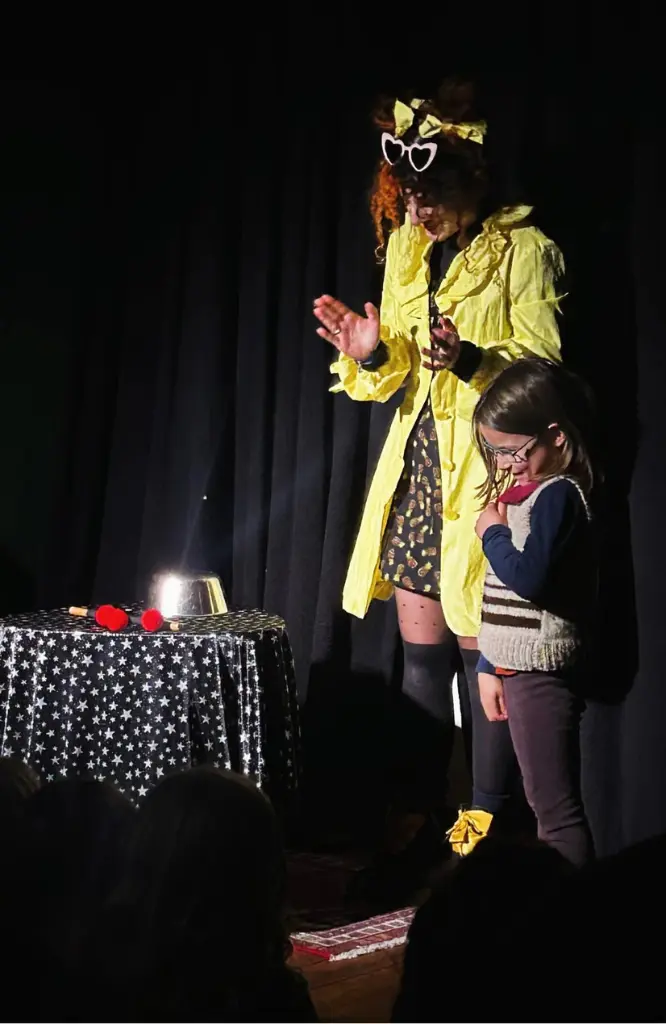
Artemis had been performing magic shows in Berlin for about a year – at venues dedicated to the art, at circus events, occasionally at children’s parties – when she met two other women in the scene. Female magicians, she notes, are still a minority in that world. The three of them connected quickly, and the idea of creating something together followed naturally. They wrote and performed a forty-minute children’s theatre piece built around magic, and took it to a series of shows. It remains, by her account, one of the highlights of her Berlin years.
Flexibility, colloquial Greek, and why online works
Artemis teaches with a lot of humour. She believes that attaching language to a funny moment makes it stick – that the brain forms stronger connections when learning is genuinely enjoyable. She also refuses to teach only formal register. When she first arrived in Germany speaking careful, textbook German, people her own age laughed at her: she sounded as though she were addressing someone much older. She did not want her own students arriving in Athens and making the same impression. So she makes a point of teaching colloquial expressions alongside the grammar, adjusting her approach depending on the learner in front of her and what they actually need.
She appreciates the flexibility that online teaching makes possible. One student got in touch shortly before flying to Greece to ask if they could spend their lesson on practical phrases for ordering food and getting around. Artemis simply changed the plan. That kind of responsiveness feels natural to her rather than an interruption. She values the fact that students can join from anywhere, that they are genuinely active in lessons rather than passive recipients of a fixed curriculum, and that their individual needs are treated as the real starting point – not an afterthought.
Free trial lesson
Curious about live learning? Join a free trial lesson and see what it’s like to learn with us. No commitment, no pressure – just a friendly session to find out if it’s the right fit for you.
Reserve your spot
The island at the edge of Europe
When Artemis needs to step away from city life entirely, she goes to Gavdos. It is a small island between Crete and Africa, sitting at the southernmost point of Europe, and it has the feel of somewhere that has not quite been discovered yet. People go there to camp, to swim, and to watch the stars. She goes every year, and she describes it as the one place where she can genuinely switch off – where she needs nothing but the sea and the night sky. She was briefly hesitant to mention it here, unsure about sending more people in its direction, but she decided that the visitors the island tends to attract are precisely the kind who treat it with care.
“My inspiration is genuinely the interest people have in learning Greek. That curiosity and determination – I find it truly remarkable.”
Her favourite food is papoutsakia – aubergines stuffed with minced meat and topped with béchamel, baked in the oven. The name means “little shoes” in Greek, which she finds pleasing. What keeps her teaching, though, is something simpler: it is the sight of people choosing to learn Greek despite knowing how difficult it is. She had not expected, before she started, that so many would actually want to. The persistence of her students – the fact that they keep coming back, keep trying, keep deciding the language is worth the effort – is what she says gets her up for every lesson.
Teacher and student stories
Discover inspiring language journeys and see how others are learning and teaching Greek.
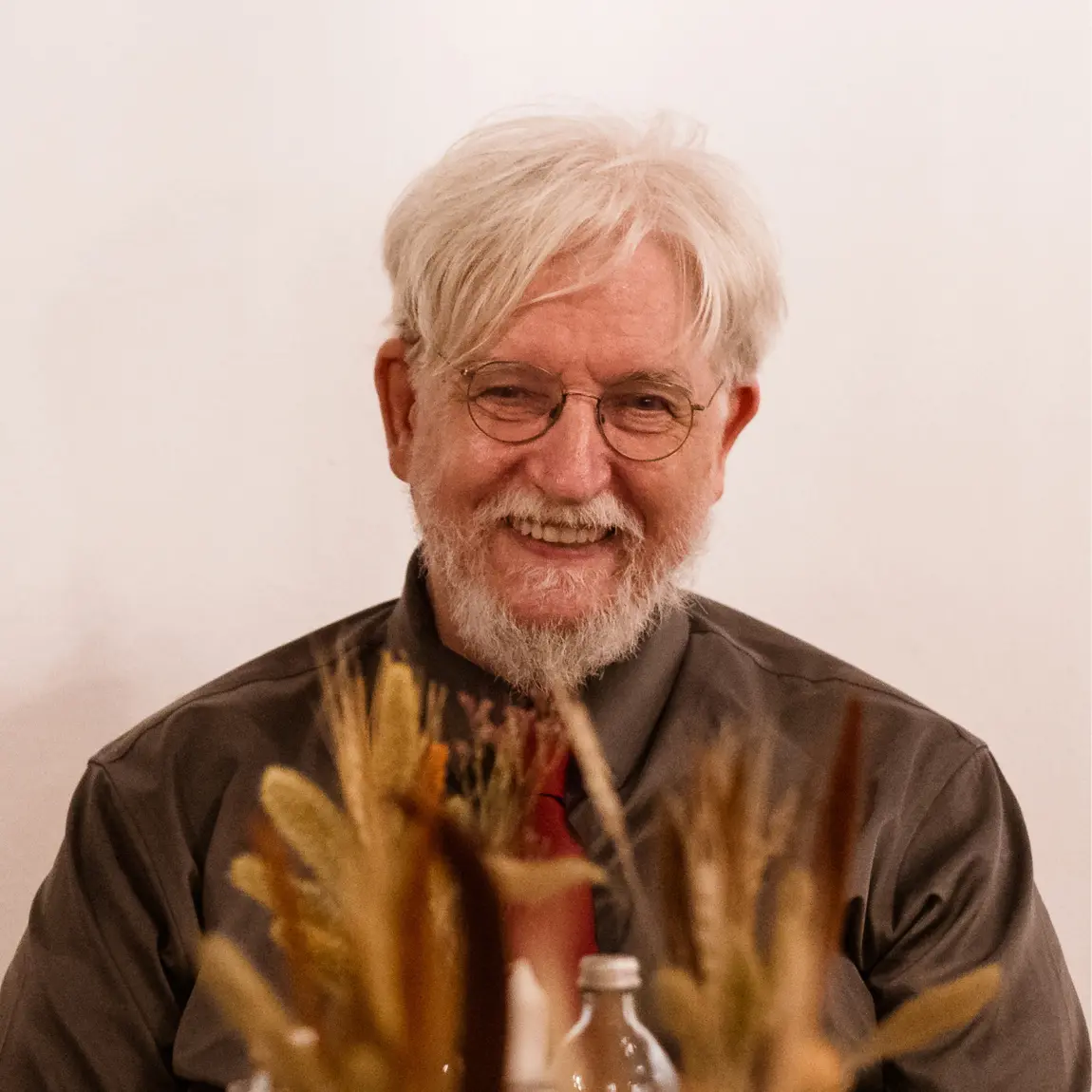
Manfred | Student
When Manfred retired, he started joining his sister on trips to Crete – and found he couldn’t follow a word. So he decided to learn.
Vanessa | Student
Growing up half-Greek in Hamburg, Vanessa always felt the pull of her heritage. Now she’s closing the gap, one lesson at a time.
Susanne | Student
After years of trying different schools and methods, Susanne found that classic vocabulary drills and homework deadlines work best.