A city between three borders
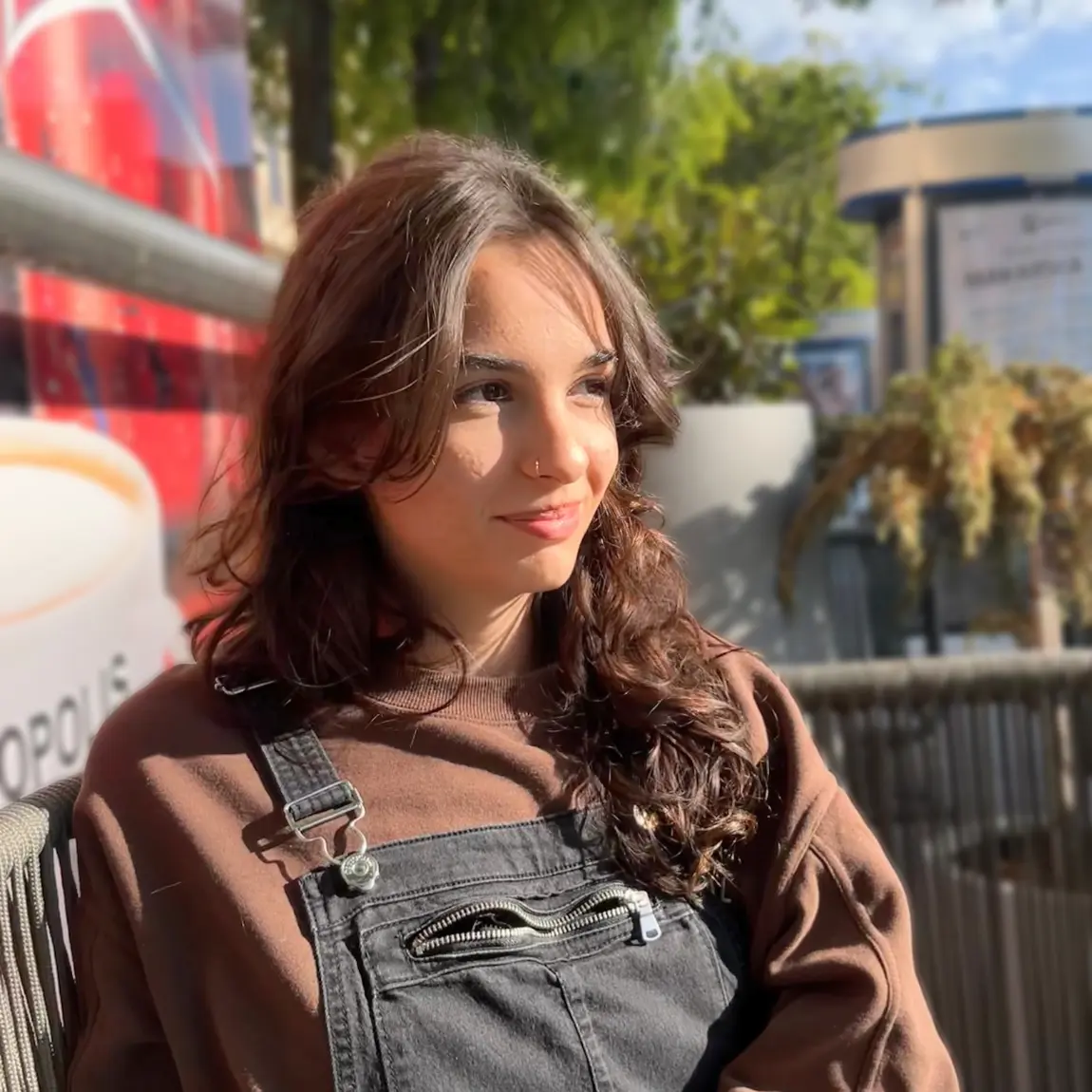
Osijek is the fourth-largest city in Croatia, tucked into the eastern corner of the country at the point where three borders converge. Lorena grew up there and still lives there today, a fact she regularly mentions to new students as a way of orienting them – geographically and culturally. Living in a region that borders three countries has given her an unusually clear view of how the legacy of the Balkan wars is felt differently depending on where in Croatia you are, and that perspective has shaped both her studies and the projects she chooses to pursue.
“I’m right in the middle of all the capitals – which I really like.”
That curiosity runs through her academic life as well. Lorena is in her second year of a degree in culture and media sciences at her local university, with a focus on cultural management – a field that suits someone who describes her primary pastime as consuming and analysing media. She reads widely, watches films, follows her local music scene and plays video games, but what ties it all together is the same underlying impulse: a drive to understand how things are made and what they mean.
The Facebook post that started it all
Lorena was already teaching before she found Let’s Learn Croatian. Twice a week she works with a group of children in Osijek, and more recently she has taken on English lessons at a local kindergarten. Teaching, in other words, had been woven into her life for a while. But Croatian as a foreign language came about somewhat by chance – her boyfriend spotted a recruitment post on Facebook and suggested she apply. She already knew, somewhere in the back of her mind, that the answer would be yes.
Croatian had always been the subject that lit her up at school. While other students worked through the tasks the teacher set, Lorena did all of them – and looked forward to the glossary. That love for the language deepened alongside her passion for literature, the two interests reinforcing each other over the years. When the opportunity came to teach Croatian to adults, it felt less like a career decision than a natural extension of who she had always been. “I love my language,” she says simply, “and I have no problem conversing with anyone on any subject.”
Making space for everyone in the room
Ask Lorena about her teaching style and she comes back to one word: openness. She prefers conversation to instruction and context to direct translation. When a student asks what a word means, she rarely offers a German or English equivalent on the spot. Instead, she puts the word into a real situation – shows them when and how it is actually used – because she believes that is how language properly takes hold. It is an approach she arrived at intuitively, shaped by how she herself thinks and learns.
“I hate when people ask what a word means and just want a translation. I’d give them the word in a real context instead – that’s a far better way to learn.”
The same principle shapes how she handles the different paces within a group. When one student is moving faster than another, she tries to pair them together – not to slow anyone down, but so the learner who is finding things harder has someone to work things through with, ideally in their own language. And when students get discouraged, she is quick to remind them of what they have already done. “You’re in this group for a reason,” she tells them. “You have this long journey behind you.” It is a small thing to say, but she means it, and she notices that it helps.
Čvarci, Slavonian soil and a band from Đakovo
Travel is something Lorena reaches for when she talks about what matters to her outside work – though she is quick to qualify what she means by it. It is not simply about the destination. Some of her most meaningful experiences have been on Erasmus projects focused on peacemaking and the legacy of the Balkan wars, several of them close to home, in Osijek or across the Serbian border in Sremski Karlovci. The people she met and the conversations those programmes made possible mattered far more than the geography. That said, she has also just returned from Tenerife, and she is not pretending she did not enjoy it.
At home in Slavonia, her pleasures are firmly rooted. She loves the food of the region – kulen, čvarci, her father’s čvarnice – the kind of hearty, spiced, unhurried cooking that is specific to Eastern Croatia. She listens to some Croatian music, particularly the bands that came out of the YU rock era in the 1980s, but her current favourite is Svemirko, a group from Đakovo about half an hour down the road. They do not play many shows, she says, but she rates them highly – and there is a quiet pride in championing a local act that most people outside the region have never heard of.
Curious about Croatian lessons?
Thinking about learning Croatian, but not sure where to start? Book a friendly video chat with our learning coordinator and get personal guidance on teachers, groups, and next steps.
Book a coordinator chat
The moments that make it worthwhile
Teaching children and teaching adults call for completely different things, and Lorena does both. With children, she says, you can redirect their energy – nudge them sideways into learning something without them quite noticing. Adults require a different kind of openness. Lorena had only been at the kindergarten for two weeks when, at the end of a session, a five-year-old boy hugged her leg and asked whether she was coming back. The question was not casual – the group had already seen four teachers leave. When she said she would be there the following week, he looked genuinely unsure. She came back. He was surprised. “You’re actually back,” he told her. It is a small exchange, but she describes it with the kind of warmth that makes clear she will carry it with her.
“Seeing the click in their minds – I wouldn’t trade it for the world.”
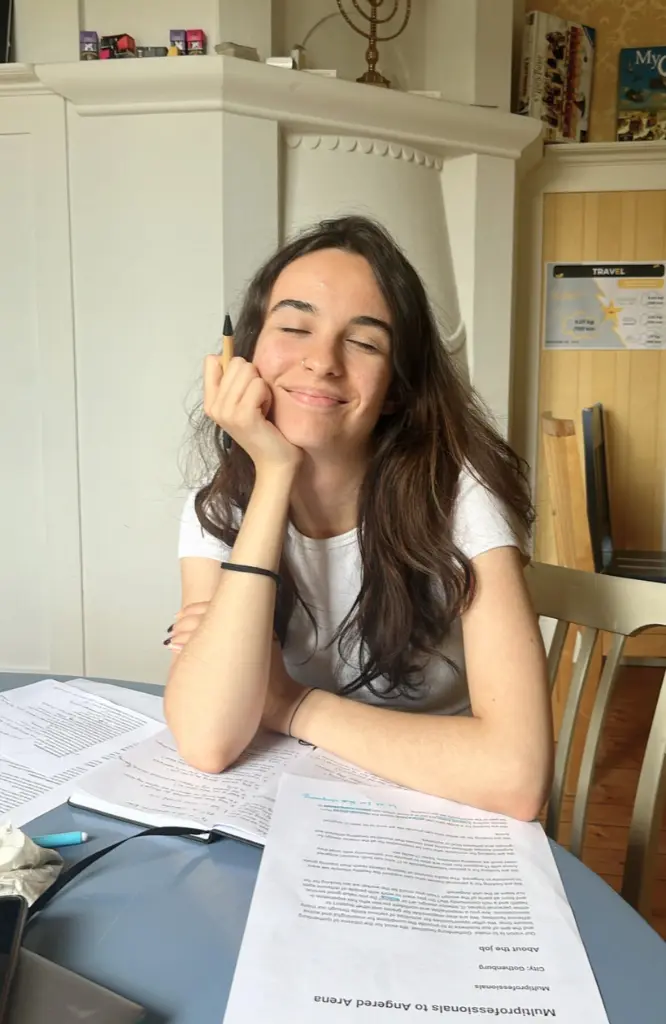
With adult learners, the feedback arrives differently. One of her first experiences substituting at Let’s Learn Croatian was a two-session stint in a colleague’s class. The level was A1, the content was straightforward, and she went in uncertain of herself. Afterwards, a student sent her an email. He said she had kept him motivated and that she had no reason to worry about how she was teaching. She says she will hold onto that message. The same feeling returns whenever she watches a student make real progress – like the woman she has been teaching one-to-one, who arrived knowing almost no Croatian and is now, eleven lessons in, reading without hesitation and handling grammatical gender with ease. That kind of shift is what keeps Lorena at her laptop at seven in the morning, ready to talk to people. It pays off, she says, and that is more than enough.
Teacher and student stories
Discover inspiring language journeys and see how others are learning and teaching Croatian.
Andrea | Student
Vienna sports coach Andrea started learning Croatian when she built a house in Istria – and found that speaking the language changed everything.
Tanja | Student
A journalist who films the world for a living, Tanja has spent a decade learning the language that her family never quite passed on.
Stan | Student
After 25 years of visits and a repertoire limited to Croatian curse words, this New York journalist finally tackled the language properly.