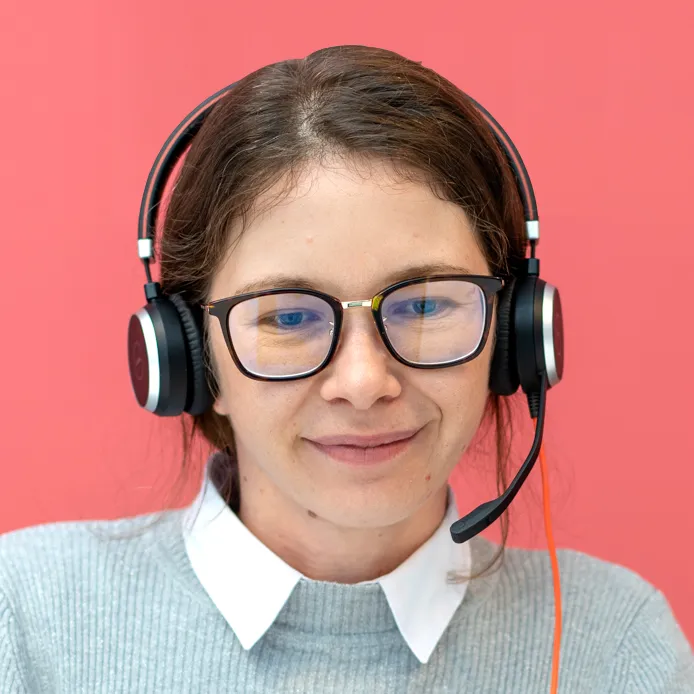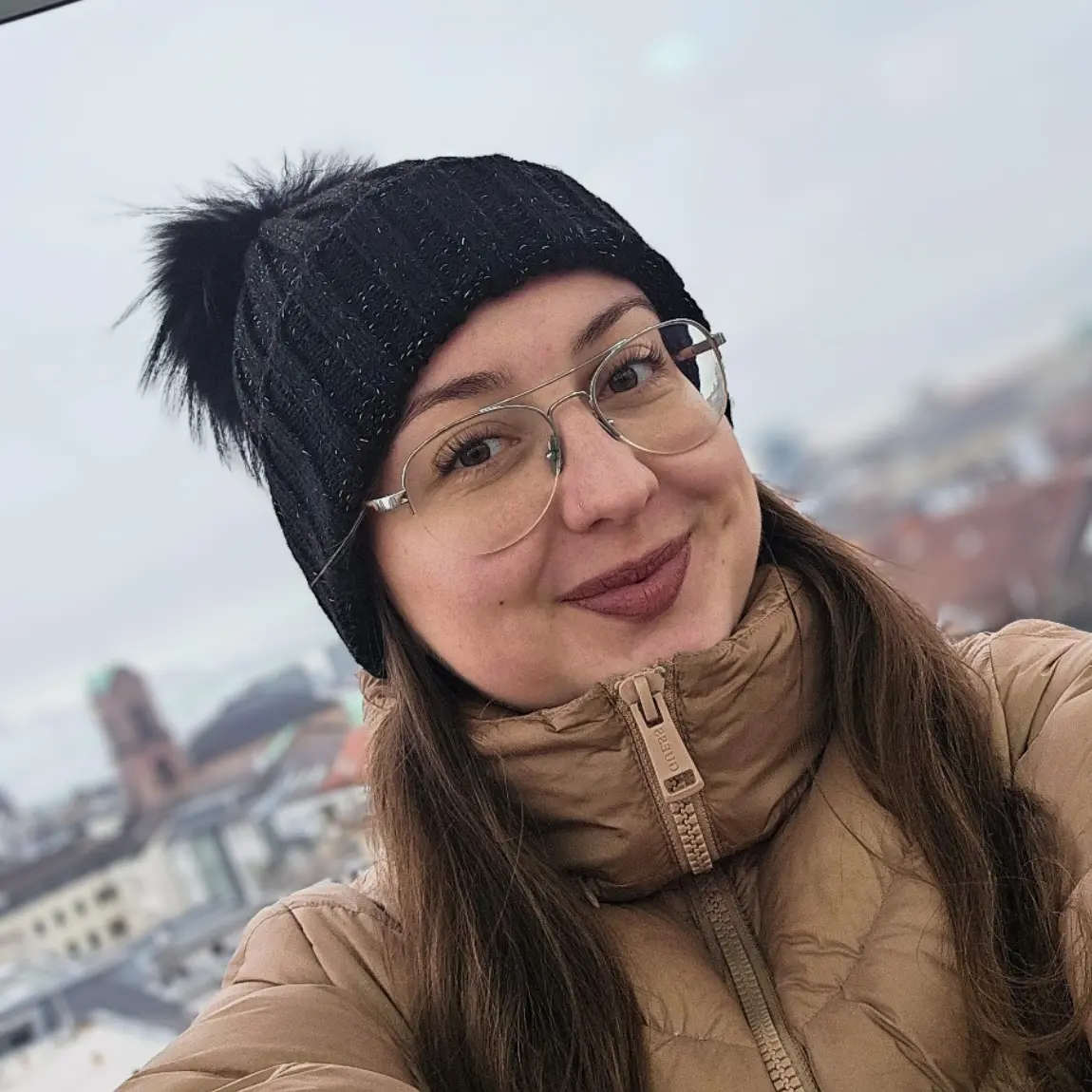
When “dobar dan” became a love letter
Melisa’s Croatian didn’t begin with a textbook. It began with a single word typed into a chat window. When she came across her future husband’s profile online and saw he was Croatian, she didn’t reply with “Hallo” – she wrote “Dobar dan”. The phrase had come from her father, who had worked alongside many Croatian guest workers over the years and passed a few words on to his children. It was, as she says, a small thing. But it landed.
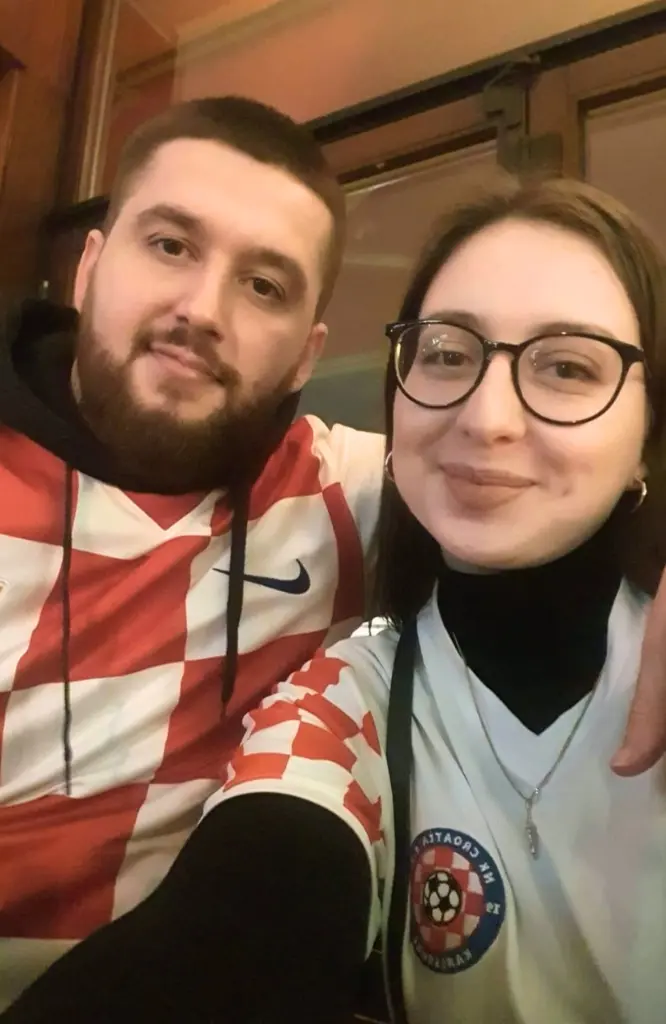
“He never told me I had to learn it. I just wanted to, for myself.”
Her husband, a Croat from Bosnia who had moved to Germany eleven years ago, had his entire family still living there. Once they were together, Melisa knew she wanted to be part of that world. Not because anyone expected it of her – he never pushed her – but because she had always been drawn to languages, and this one now had a reason attached to it. The decision, when it came, was entirely her own.
A life already lived in several languages
Melisa grew up bilingual, moving between German and Russian at home, which gave her an early feel for Slavic sounds and grammar long before Croatian entered the picture. She studied French at school – though she admits it was never really her language – and absorbed English so thoroughly over the years that she describes it as something close to a third mother tongue. She later picked up Spanish, and then Portuguese, partly because she has family in Portugal.
When she first encountered Croatian, the similarities with Russian felt like a gentle head start. The cases worked on much the same logic, just with different endings, and some vocabulary overlapped. But the relationship between the two languages has grown more complicated with time. Living and communicating with her husband in Croatian every day has quietly eroded her Russian, and the interference runs in both directions – particularly a certain consonant, a Russian “t”, that keeps working its way into her Croatian pronunciation. “I’m working on it,” she says, “but I just can’t seem to get rid of it.”
Romantic novels and a very deliberate reading strategy
Reading is one of Melisa’s main pleasures outside of work. She goes through romance novels, fantasy, and thrillers with equal enthusiasm – and it was perhaps inevitable that books would become part of her Croatian practice. Her approach, though, is carefully considered. She reads only romantic novels in Croatian, and she chooses titles where she already has some feel for the story: usually books originally written in English, whose plots she knows well enough to follow even when the language gets difficult.
“I only read romantic novels in Croatian, because those are easiest for me. I choose books where I already know the plot a little – that way I can follow along even when the language gets difficult.”
Croatian audiobooks, she has found, are simply not widely available yet – not something she had expected going in. Films are handled differently: she and her husband watch in English with Croatian subtitles, a habit that has become so normal she barely registers it as a strategy anymore. The language is simply there, running quietly in the background.
From a few words at Christmas to thinking in Croatian
Melisa started teaching herself Croatian before she ever enrolled in a course. Her husband gave her a Croatian dictionary early on as a quiet gesture of encouragement. By the time she visited his family in Bosnia for Christmas 2022, she had a handful of words, a few short sentences, and a willingness to try. When the men went outside to tend to a roasting pig – as tradition apparently demands – she stayed indoors with her mother-in-law and sister-in-law. Communication that first afternoon was mostly gestures and goodwill. But she stayed, and they noticed.
She joined Let’s Learn Croatian in January 2023, starting at A2.3. What the course gave her, above all, were explanations. Her husband speaks Croatian natively but cannot easily account for why the grammar works as it does – just as Melisa could not explain the logic of German to him. The structured lessons filled that gap. So did the exercises: the writing tasks, the verb conjugations, the drills she freely admits she would never set herself at home. “I’m just too lazy to sit down and do that on my own,” she says. “But that’s exactly where I still have gaps, so I need it.”
The real test came that summer. For the first time, she spent an entire holiday without using a word of German or English – she talked to her husband’s friends entirely in Croatian and came home knowing something had shifted. She is now at B2.3. More tellingly, she thinks in Croatian. She also has a circle of Croatian-speaking friends in Germany, including one who arrived from Croatia just this past January – a friendship conducted entirely in the language, with no German between them.
Already know some Croatian?
Take our free placement test and find your current level in just a few minutes. It’s fun, fast, and helps you understand exactly where you are – and what the next step in your learning journey might be.
Take the free test
Just start talking, even if it’s only one word
When Melisa’s sister-in-law remarked at Christmas 2024 that she could hear how much her accent had changed, Melisa recognised it as the kind of moment she had been building towards. It was not the only one she holds onto. There was also an afternoon at work when a citizen came in with very little German, and Melisa was able to step in. “I was quite proud of myself that day,” she says simply.
“Just try speaking. Even if you only know a few words – that’s how I started.”
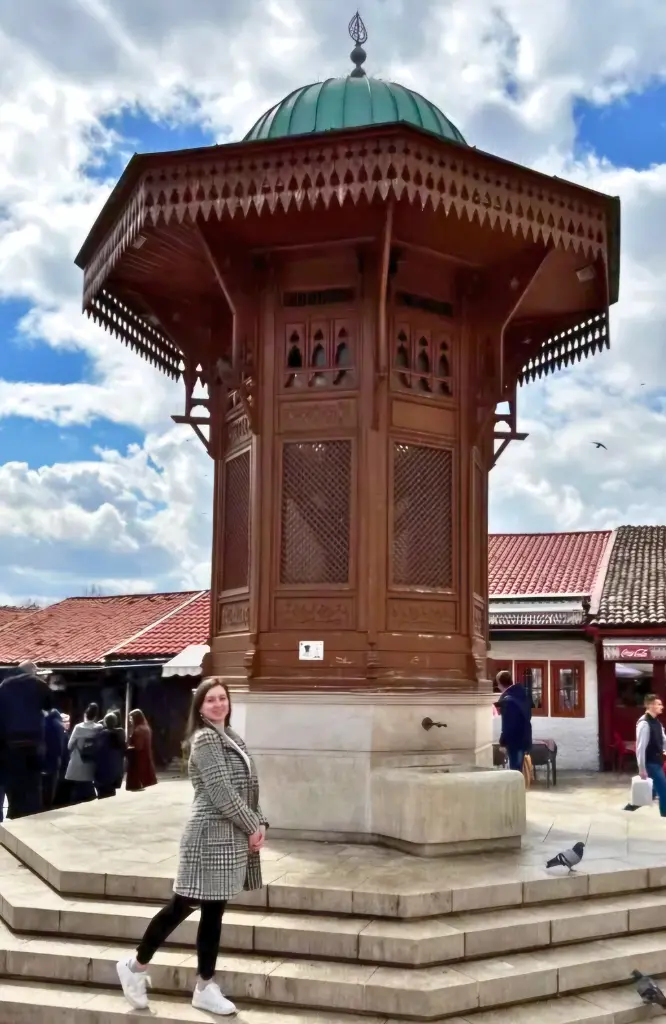
Her advice to anyone beginning Croatian is immediate and practical: speak. Even a single word counts. She remembers sitting in group lessons, catching a word she recognised, and simply saying it out loud. One word became a sentence. A sentence became a habit. Alongside that, she recommends building the language into daily life – through books, music, or a series easy enough to enjoy. Surround yourself with it, she says, and it starts to come on its own. For Melisa, Croatian has long since stopped being something she is learning for someone else. It has become, as she puts it, a normal language – one she thinks in, reads in, and lives in, alongside the five or so others she carries with her everywhere.
Teacher and student stories
Discover inspiring language journeys and see how others are learning and teaching Croatian.
Lorena | Teacher
From the borderlands of Osijek to the online classroom, Lorena teaches Croatian with warmth, humour and a belief that everyone belongs.
Andrea | Student
Vienna sports coach Andrea started learning Croatian when she built a house in Istria – and found that speaking the language changed everything.
Tanja | Student
A journalist who films the world for a living, Tanja has spent a decade learning the language that her family never quite passed on.