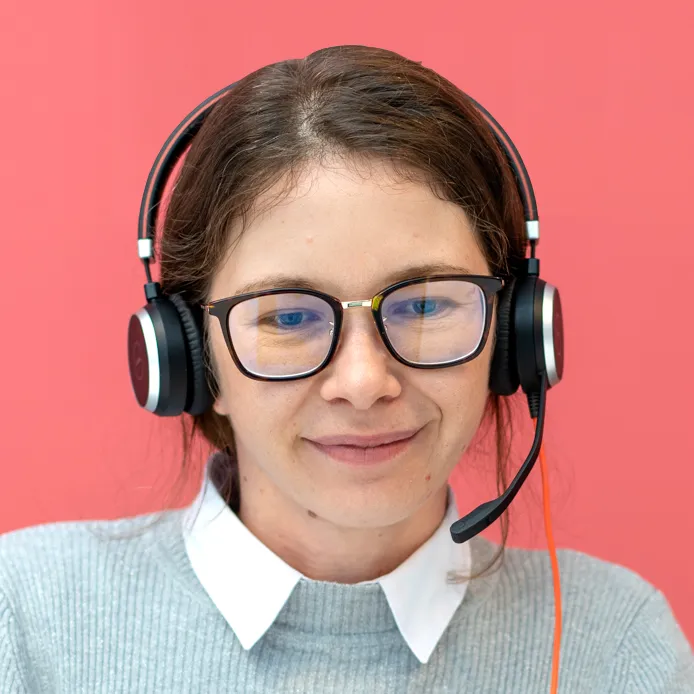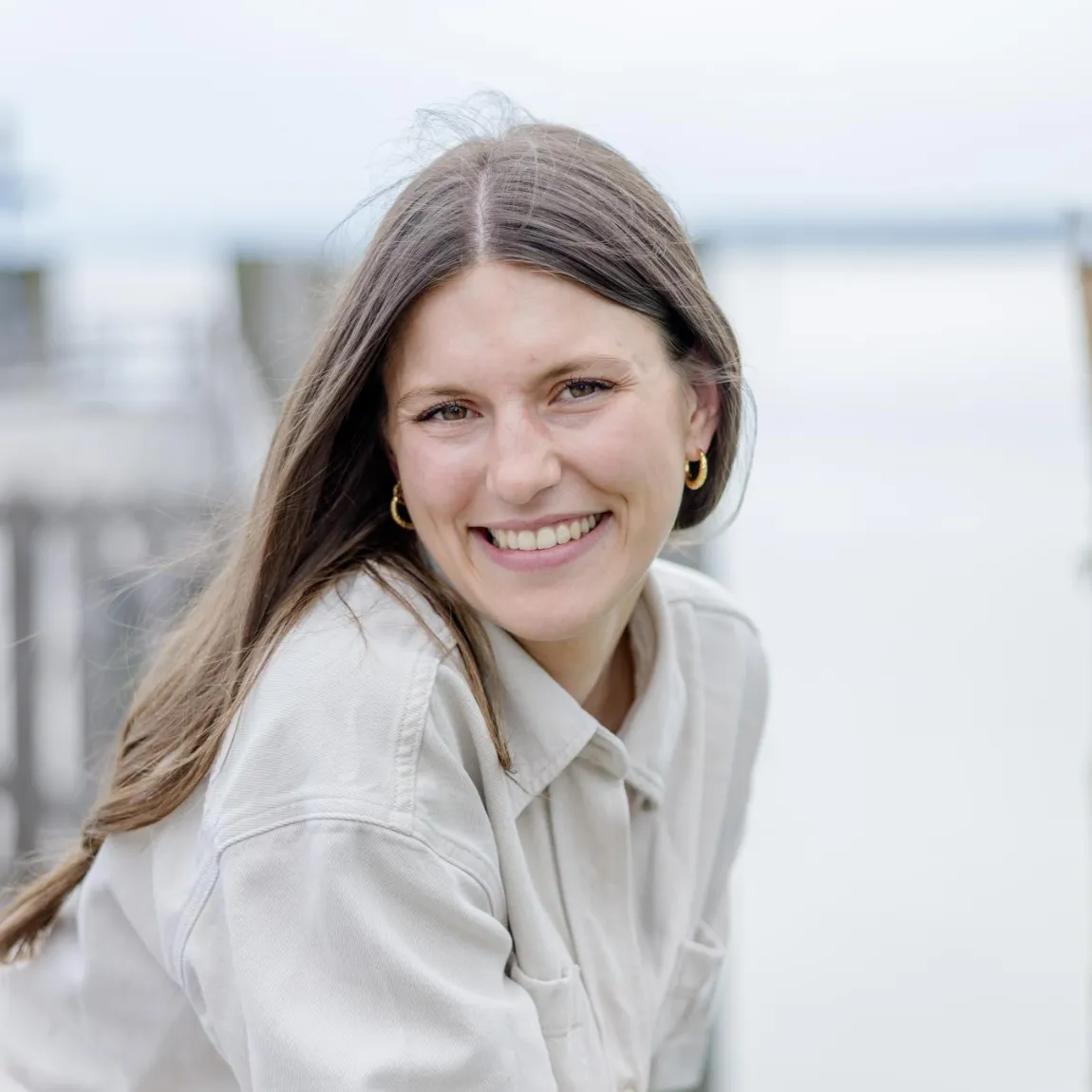
Love sparked the journey to learn Croatian
Caroline’s path to Croatian began fourteen years ago in a German classroom, though she didn’t know it then. Her future husband, born in Germany to Croatian parents from Zagreb and the Croatian mountains, sat beside her during their school days. It wasn’t until much later, when family visits to Croatia became a regular part of their relationship, that Caroline realised how much she was missing by not speaking the language.
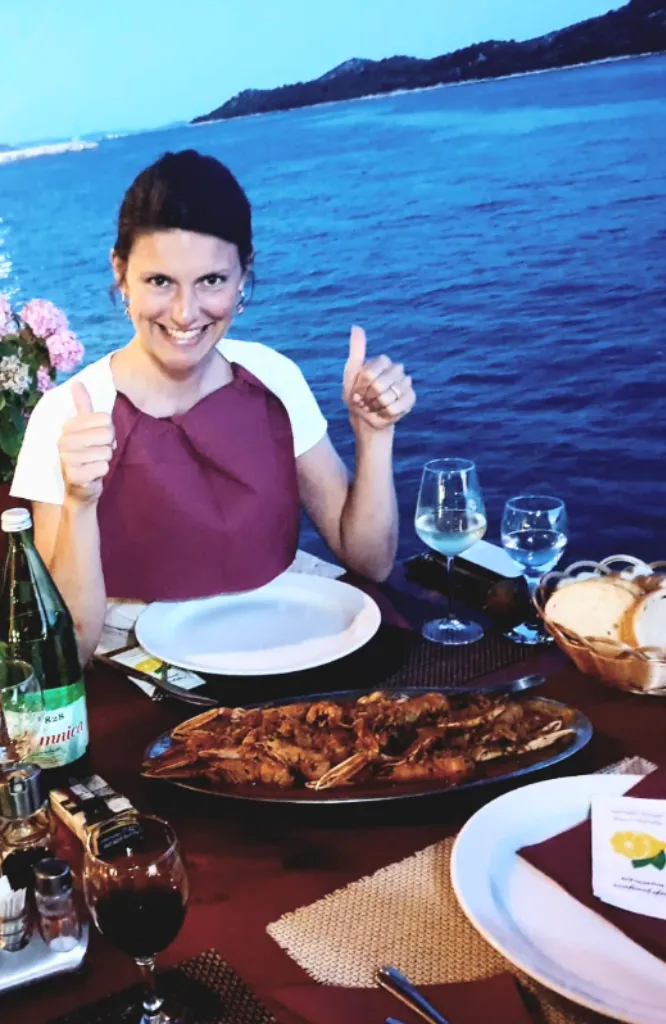
“It was always so with hands and feet”
The turning point came at a family celebration where Caroline found herself surrounded by warmth and hospitality she couldn’t fully understand. “I was so overwhelmed by this heartiness,” she recalls. “I knew exactly that they wanted to do something good for me, but I didn’t know what.” The older generation spoke some German and English from their school days, but the real conversations – the jokes, the stories, the deeper connections – were happening in Croatian, leaving Caroline gesturing helplessly with her hands and feet.
Creative hobbies balance structured language learning
When Caroline isn’t puzzling over Croatian cases, she’s usually found renovating furniture in her Munich flat or planning cycling adventures with friends. Her approach to both hobbies mirrors her learning style – methodical but enjoyable. She scouts second-hand shops for old chests of drawers, which she then strips, sands, and transforms with bold, modern colours and textures. The process requires patience and attention to detail, qualities that have served her well in language learning too.
Her weekend cycling trips around the Munich countryside always include strategic coffee stops – she’s more interested in the social aspect and beautiful scenery than breaking speed records. “For me, it’s mainly about fun,” she explains. “We cycle to a beautiful landscape or to a lake, then have a drink or something to eat there.” These relaxed, social outings provide a welcome contrast to the concentrated effort required for mastering Croatian grammar.
Early struggles gave way to gradual confidence
Caroline’s initial attempts at self-study using children’s materials taught her an important lesson about language learning. While she could memorise vocabulary easily enough, grammar remained frustratingly elusive. Her husband, despite being a native speaker, couldn’t explain why certain constructions worked the way they did. “He just learned to speak and not the rules,” Caroline discovered. “When I’d ask why it’s like this here and like that there, he’d say, ‘I don’t know, that’s just how it is, that’s just how you say it.’”
“Many didn’t think I was German. I was really proud. That’s really such a compliment.”
The transition from A1 to A2 levels proved particularly challenging, with the complexity of cases creating what felt like an insurmountable barrier. But Caroline noticed something shifting around the B1 level – suddenly, she was forming sentences without consciously thinking about grammar rules. The breakthrough moment came at her own wedding, where many people assumed she was Croatian rather than German. “That was really such a compliment,” she beams, describing how the combination of celebration and confidence allowed her to chat freely with relatives who had previously remained largely mysterious to her.
Weekly lessons provide essential structure and community
Caroline credits her consistent progress to the regular rhythm of online classes, which began during the pandemic and continue today. The weekly ninety-minute sessions provide something she couldn’t achieve alone – accountability and community. “Simply having to speak once a week for an hour and a half, and also having homework, dealing with it yourself, working through it – that’s the be-all and end-all,” she explains.
The group dynamic creates what Caroline describes as a “closed, safe space” where everyone makes mistakes together and learns from each other. This supportive environment helped her overcome her initial fear of speaking incorrectly. Rather than stopping mid-sentence when she didn’t know a word, she learned to push through and communicate her meaning, even if imperfectly. The structure works so well that Caroline has no plans to stop attending classes, viewing them as essential maintenance for her hard-won skills.
Free trial lesson
Curious about live learning? Join a free trial lesson and see what it’s like to learn with us. No commitment, no pressure – just a friendly session to find out if it’s the right fit for you.
Reserve your spot
Family connections make every effort worthwhile
These days, Caroline and her husband have established “Croatian Tuesdays” at home, communicating only in Croatian and writing WhatsApp messages in the language. While her husband sometimes suggests switching to German when her sentence construction takes longer than usual, Caroline insists they persevere. The effort pays off during visits to Zagreb, where she can now read greeting cards at celebrations and understand the warm wishes being offered to her.
“In the end, the breakthrough comes at some point, and then you’re incredibly glad you invested so much time.”

The family’s reaction to her progress provides constant motivation. “When I’m with the family and say something, I simply notice they’re so happy that I’m learning their language just to be able to talk to them,” Caroline reflects. “They let me feel that too, and that’s also great motivation.” As she prepares for another September trip to the family house in Tribunj, Caroline knows that each conversation will be easier than the last, each joke more accessible, each family gathering more meaningful because she chose to bridge the language gap with patience, structure, and love.
Teacher and student stories
Discover inspiring language journeys and see how others are learning and teaching Croatian.

Nikolina | Teacher
From tennis courts to dog training to Zagreb classrooms, Nikolina’s winding path led her to discover her true passion for teaching Croatian.
Sarah | Student
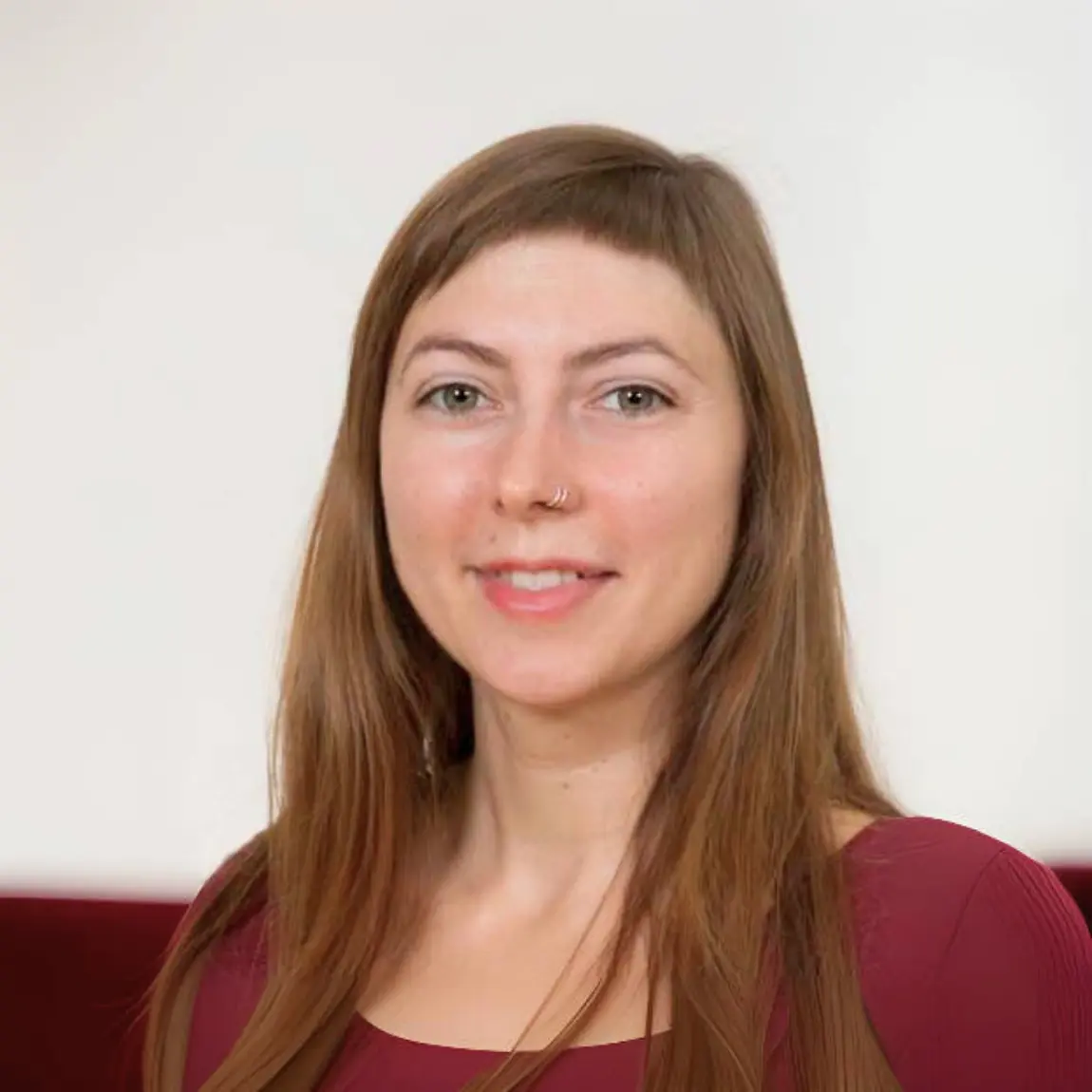
Sarah is reclaiming the Croatian she spoke as a child, transforming fragmented memories into structured fluency for her young son.

Josh | Student
When Josh realised he could claim Croatian citizenship, he knew he couldn’t do it without speaking the language. What started as practicality became cultural rediscovery.