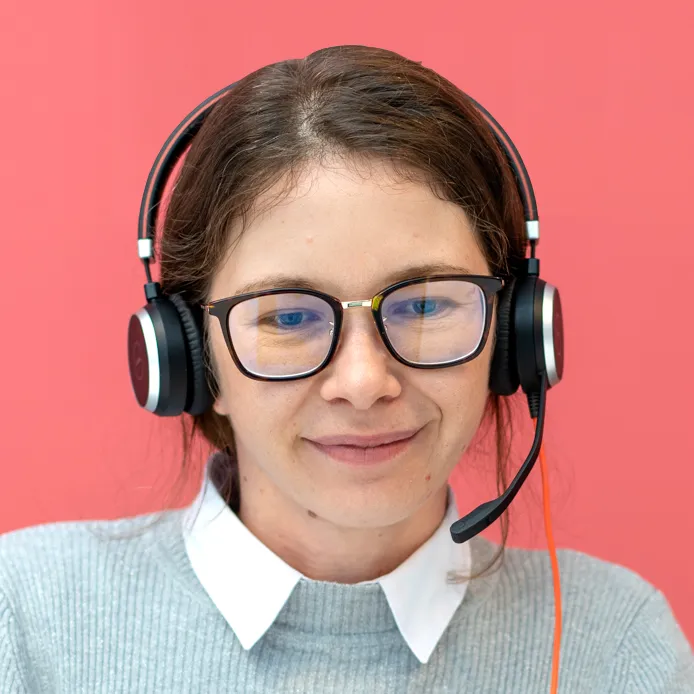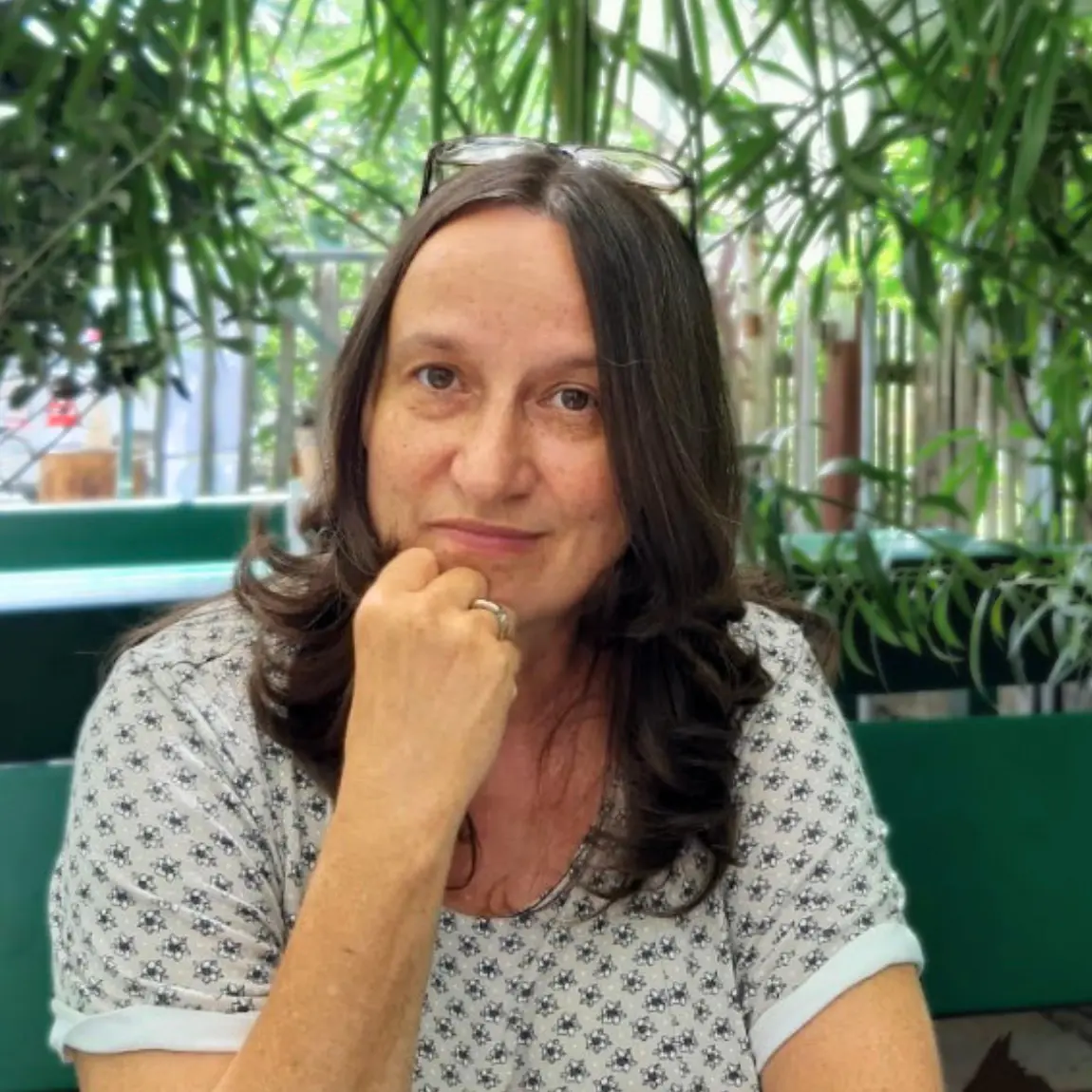
The moment a question became a plan
Susanne has been visiting Greece since she was a young adult – it was, in fact, her very first holiday without her parents. Over the years she has made it to the Peloponnese and Crete, but for some time now she keeps returning to Rhodes. Greece, she says without hesitation, is her hobby.
“I thought: well, you could try that the other way around too.”
The decision to actually learn the language grew out of a conversation in a taverna on Rhodes. She got talking to the owner – a woman named Vicky – who spoke excellent German. Curious, Susanne asked how she had learned it. At the local adult education centre, Vicky told her, because she wanted to be able to talk properly with her guests. Susanne found that striking. If a local was willing to put in that kind of effort for her visitors, perhaps a guest could try the same in return – at least enough to order a drink or exchange a few friendly words.
A life lived between pages, plates, and a particular zoo
Susanne lives in Lehrensteinsfeld, a small town near Heilbronn in southwest Germany, and works as an administrative employee for the trade union Verdi. But another city holds a particular place for her: Leipzig, where she spent time as a child and later studied. She is a supporting member of Leipzig Zoo and returns there when she can.
At home, she reads widely. The Inspector Lynley crime novels by Elizabeth George are a long-running favourite – George is now on her 25th in the series – alongside English classics such as Dickens. She is also drawn to travel writing, not so much guidebooks as the more personal kind: accounts of a journey written from one person’s own perspective. Closer to home, she has been known to cook from her travels too. On one holiday she attended a cooking class and wrote down a tzatziki recipe she still uses today. The shop-bought version, she notes drily, is no comparison.
The island and the people who keep calling her back
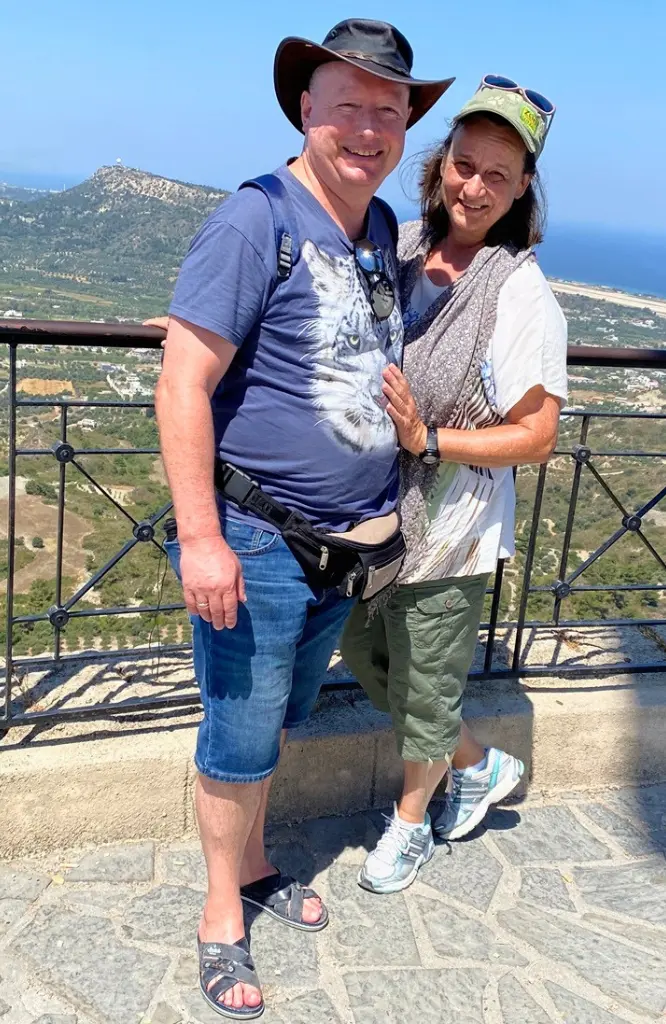
Rhodes has become something of a fixed point. Susanne and her partner return to the same hotel year after year, partly for the comfort of the familiar – but mainly because of the couple who run the supermarket directly across the road. Over the years, what began as a neighbourly acquaintance has become a genuine friendship, and that friendship has quietly become one of the main reasons to go back.
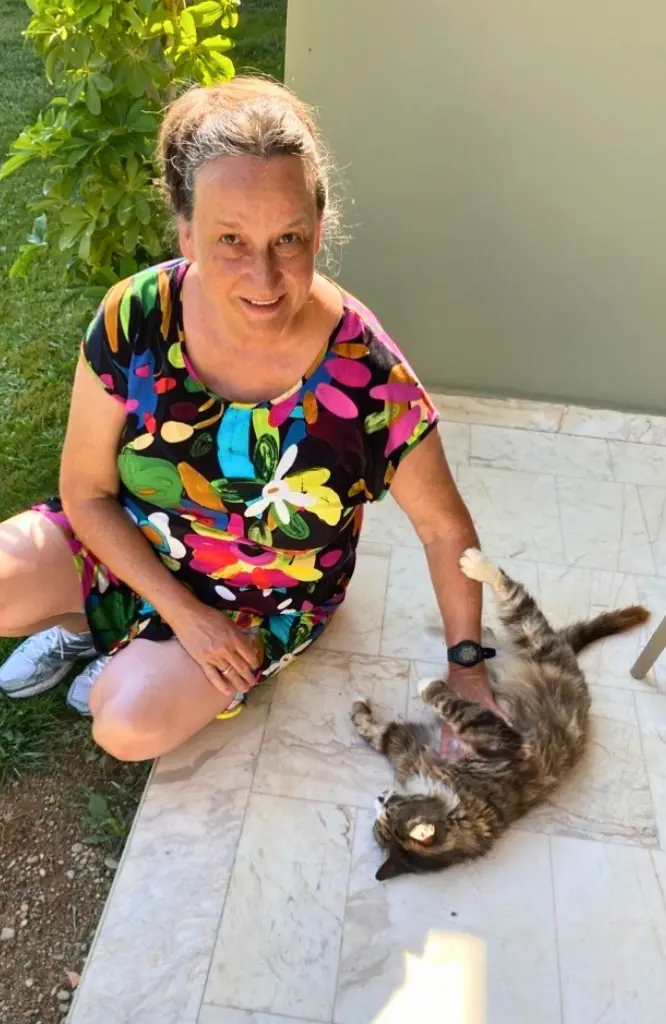
“We always book the same hotel. Partly for familiarity – but mainly because of the couple across the road who look after the stray cats year-round. They’ve become real friends to us.”
The welfare of stray animals on the Greek islands matters to Susanne. She has watched things improve over the years: hotels on Crete arranging neutering programmes, setting up proper feeding stations so cats do not have to scavenge. There is still hardship, she acknowledges, but something is shifting – and she is glad to have seen it.
On learning to see the system
The path to signing up for lessons was not a sudden decision. Susanne had long wanted, at minimum, to be able to read street signs and manage a polite exchange – not, as she puts it, to just stand there looking lost. An unexpected hospital stay earlier this year – nothing serious, she is quick to add – finally gave her the time and quiet to act on it. She has now completed seven lessons.
She started with the alphabet and realised quickly that there was no shortcut. She had studied Russian at school, and while some letters look familiar, they can carry entirely different sounds in Greek – which meant the alphabet had to be learned from scratch. She buckled down and drilled the letters until they stuck. After that, things became easier. Grammar arrived and briefly looked alarming, but the longer she worked at it, the more she began to see how the pieces fit together. “You start to see a system in it,” she says – and that recognition, she found, gave her real momentum.
Curious about Greek lessons?
Thinking about learning Greek, but not sure where to start? Book a friendly video chat with our learning coordinator and get personal guidance on teachers, groups, and next steps.
Book a coordinator chat
Her own pace, on her own terms
Susanne has settled into a rhythm that suits her. She takes double lessons but leaves a gap of around two weeks between them – long enough to review what she has covered in her own time, without another session already bearing down on her. Individual lessons mean the content can be shaped around her needs, and she would not give up that flexibility. Her immediate goals are practical: to order food and drinks in Greek, to read a sign, to say something friendly rather than simply defaulting to English.
“You have to really want it – and approach it with joy right from the very beginning.”
Her teacher, Maria, receives consistent and heartfelt praise. It is Maria’s patience above all – her ability to keep smiling even when things are not going well, and to find exactly the right words when a student is struggling – that makes the real difference. Susanne is regularly surprised to find how much she has actually retained: ask her something in conversation and the answer surfaces, even when she was convinced it wasn’t there. Her advice to anyone starting out is simple: know why you want to do it, approach it with genuine enthusiasm, and if something doesn’t click on a given day, put it down and come back tomorrow.
Teacher and student stories
Discover inspiring language journeys and see how others are learning and teaching Greek.
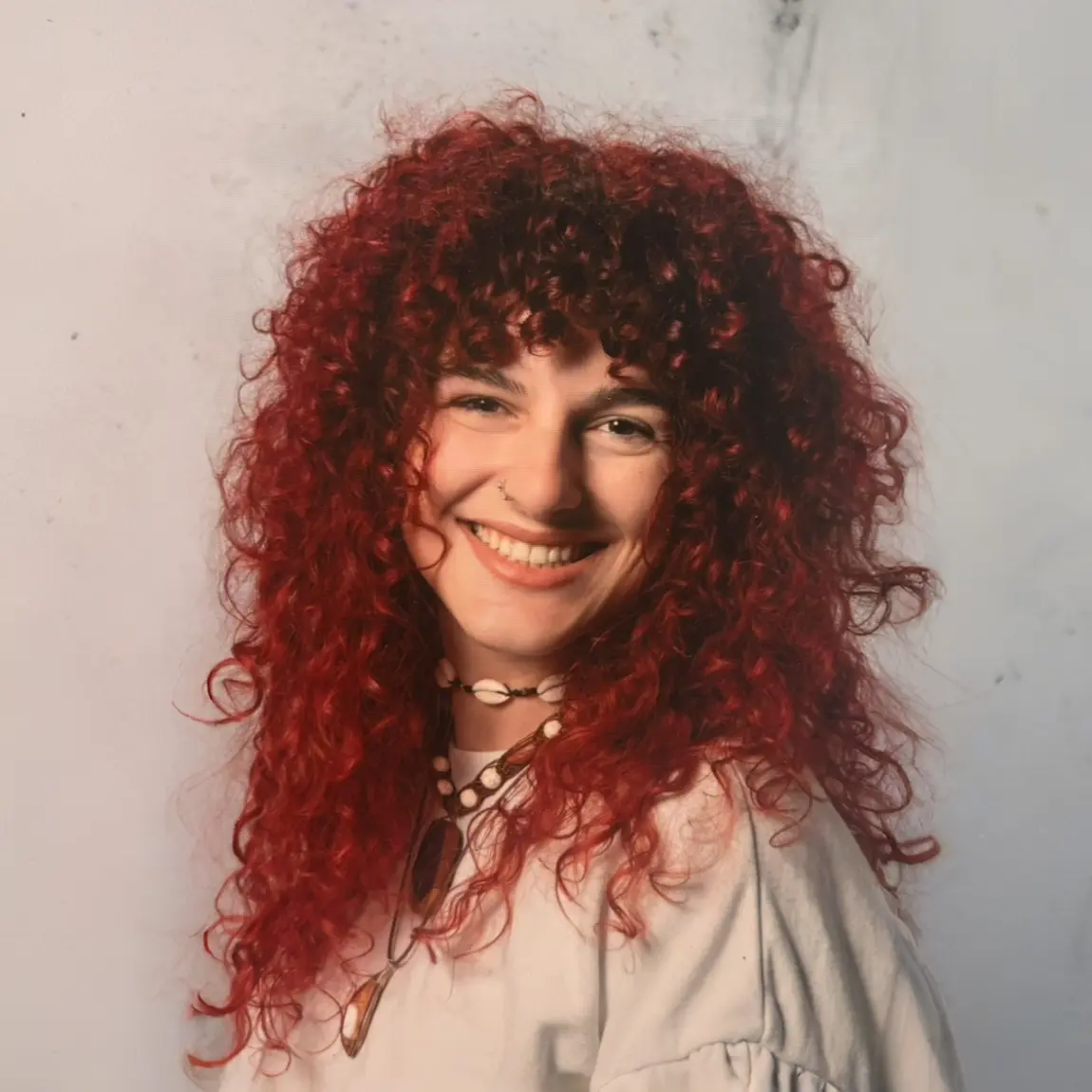
Artemis | Teacher
Nine years teaching in Berlin gave Artemis a first-hand sense of how hard it is to learn a new language – and why it matters so much.
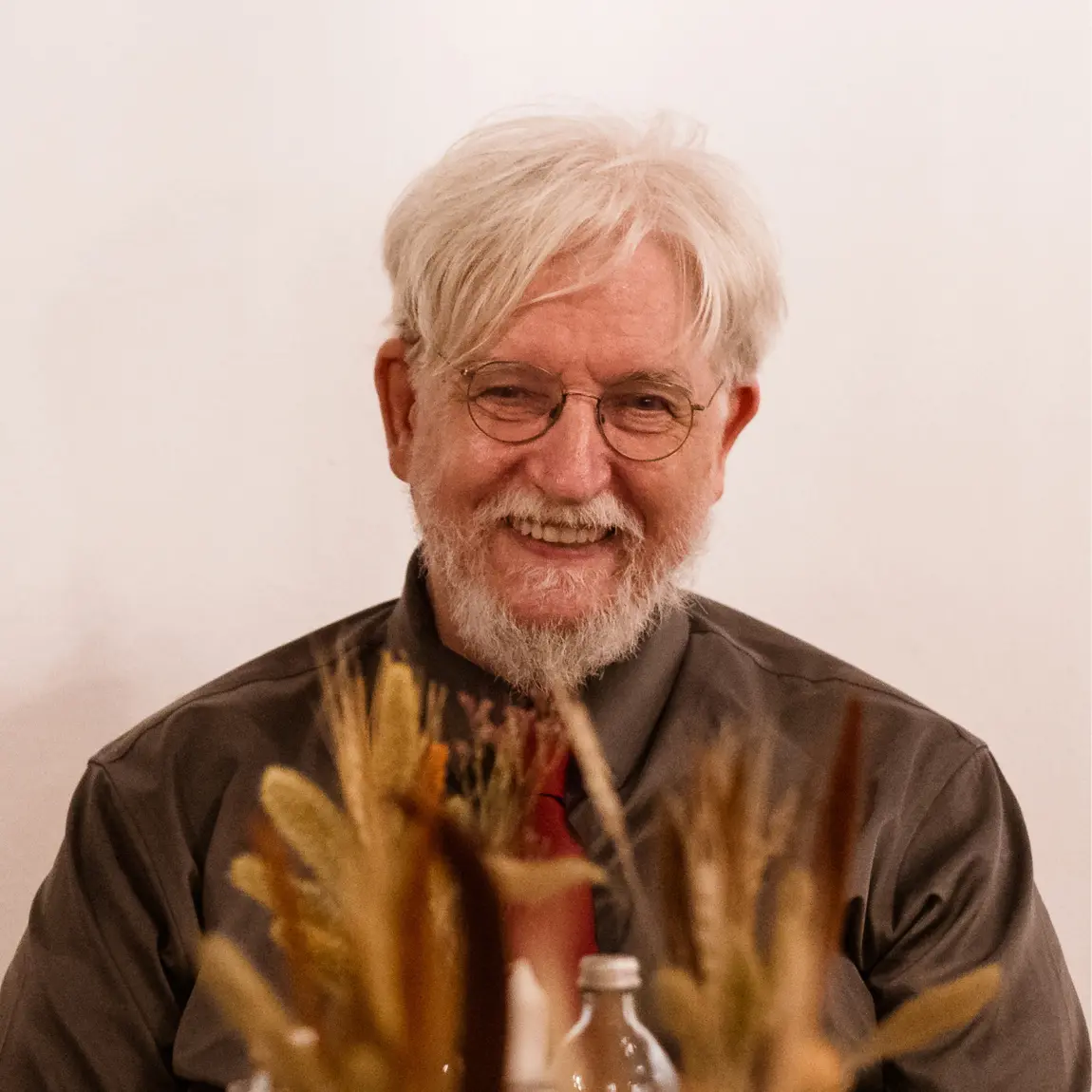
Manfred | Student
When Manfred retired, he started joining his sister on trips to Crete – and found he couldn’t follow a word. So he decided to learn.
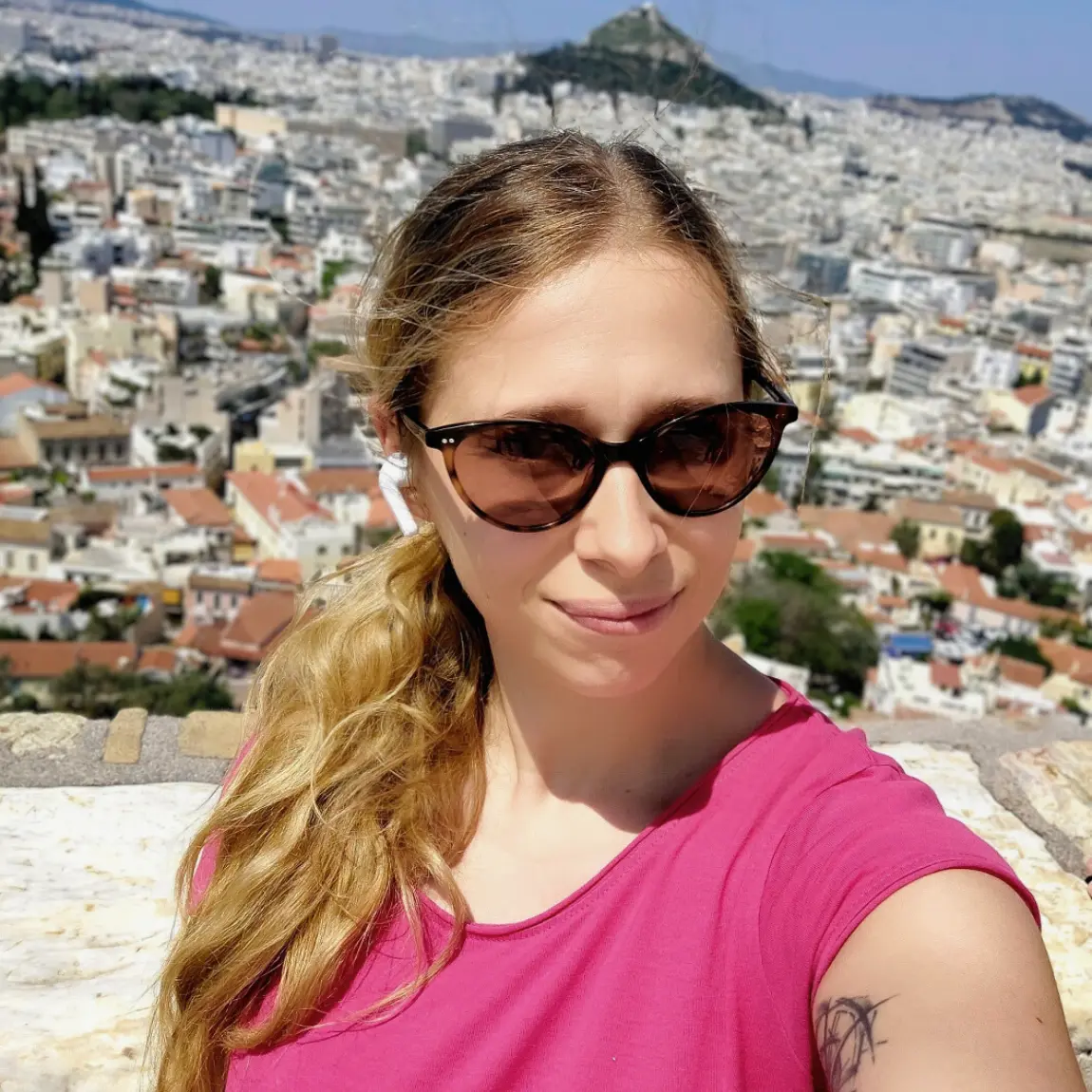
Vanessa | Student
Growing up half-Greek in Hamburg, Vanessa always felt the pull of her heritage. Now she’s closing the gap, one lesson at a time.