The news in Greek
- αρχή (f.)
οργανωμένο σύνολο ανθρώπων που έχει την ευθύνη να διοικεί ή να ελέγχει κάτι σε μια περιοχή ↩︎ - έλεγχος (m.)
η πράξη με την οποία εξετάζουμε κάτι προσεκτικά για να δούμε αν είναι σωστό, ασφαλές ή όπως πρέπει ↩︎ - αλλαγή (f.)
το γεγονός ότι κάτι γίνεται διαφορετικό από πριν ↩︎ - τροχαίο (n.)
ατύχημα που γίνεται στον δρόμο με αυτοκίνητο, μηχανή κτλ. ↩︎ - συσκευή (f.)
μηχάνημα ή εργαλείο που κάνει μια συγκεκριμένη δουλειά ↩︎ - σάλιο (n.)
υγρό που υπάρχει μέσα στο στόμα και βοηθά στο μάσημα και στην κατάποση της τροφής ↩︎
Translation
Text comprehension
Question 1: What kind of sample will the police use to test drivers for drugs?
Question 2: Why did the Greek authorities decide to start drug tests for drivers?
Vocabulary
| Greek | English |
|---|---|
| αρχή (f.) | |
| έλεγχος (m.) | |
| αλλαγή (f.) | |
| τροχαίο (n.) | |
| συσκευή (f.) | |
| σάλιο (n.) | |
Practise Greek for free
Use our interactive study tool to improve your Greek with vocabulary quizzes, grammar exercises, and progress tracking. Pick a topic, start a quiz, and see how your skills grow over time.
Try the study tool
Read the full story
The Greek authorities are preparing to introduce roadside drug tests for drivers, alongside the alcohol breath tests that are already widely used. The move follows continuing concern about road safety in the Attica region, where serious accidents linked to alcohol and possibly drugs still occur despite tougher fines and recent changes to the Highway Code.
According to Greek media reports, the latest debate was prompted by a fatal crash in the area of Loutsa. In that incident, a 29‑year‑old driver lost control of his vehicle and hit a family. A 24‑year‑old man died instantly, and three other people were seriously injured. Initial test results reported by the television station MEGA indicated that the driver had consumed alcohol. Official toxicology tests are still awaited to determine whether he had also taken illegal drugs.
In response, the Ministry for Citizen Protection and the Greek Police (EL.AS.) are examining the introduction of special drug‑detection devices for use by the traffic police. Up to now, officers could only carry out alcohol tests at the roadside, meaning that drivers under the influence of drugs might not be detected unless further medical checks were ordered.
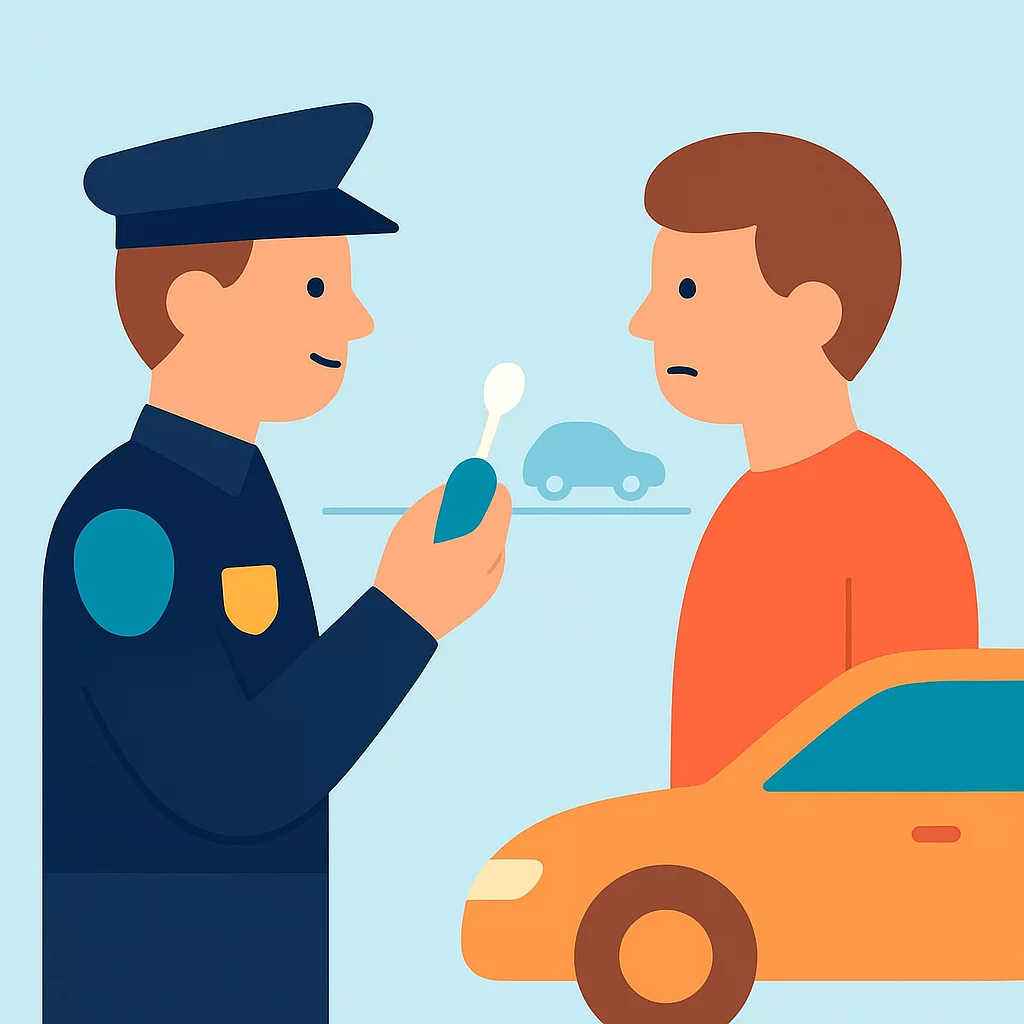
Under the emerging plan, traffic police will be able to carry out the new tests at roadside checkpoints. The tests will be used on drivers who are stopped during routine controls and who, according to the reports, raise suspicions for the officers. The procedure will involve a saliva sample, taken with a swab similar to a cotton bud. The devices are designed to identify substances such as cocaine, heroin and cannabis (hashish).
If the roadside screening test shows a positive result, the driver will then be required to undergo a blood test to confirm the finding. This second stage aims to provide legally reliable evidence if a case goes to court. The authorities have not yet announced detailed timelines, but Greek media note that the decision to adopt these tests was taken some time ago and that the country now appears to be moving closer to practical implementation.
Officials and commentators presenting the measure describe it as part of a broader effort to reduce traffic accidents linked to alcohol and drugs and to improve safety on Greek roads. While there is public discussion about how strictly and fairly the new system will be enforced, the current reports from different news outlets agree that the main goal is to strengthen roadside controls and close the gap that previously allowed drug‑impaired driving to go largely undetected.
Info: “Greek Learner News” is a service from “Let’s Learn Greek”, a language school offering online courses in Greek, including Greek for beginners, as well as classes for more advanced learners.
Advanced: Reports from Greece
- After the breathalyzer comes the drug test (Zougla.gr)
- Drug Tests for Drivers Are Coming (Newsit.gr)
Greek Learner News
Discover news from Greece to stay informed and practise your skills.
-

Learner News | 06.10.2026
Mount Olympus Joins UNESCO World Heritage List as Mixed Site
-

Learner News | 06.10.2026
Athens Museum Wins European Art Museum Award 2026
-

Learner News | 22.09.2026
Greece Wins Double EU Recognition for Quantum Communication Projects