A heritage half-spoken
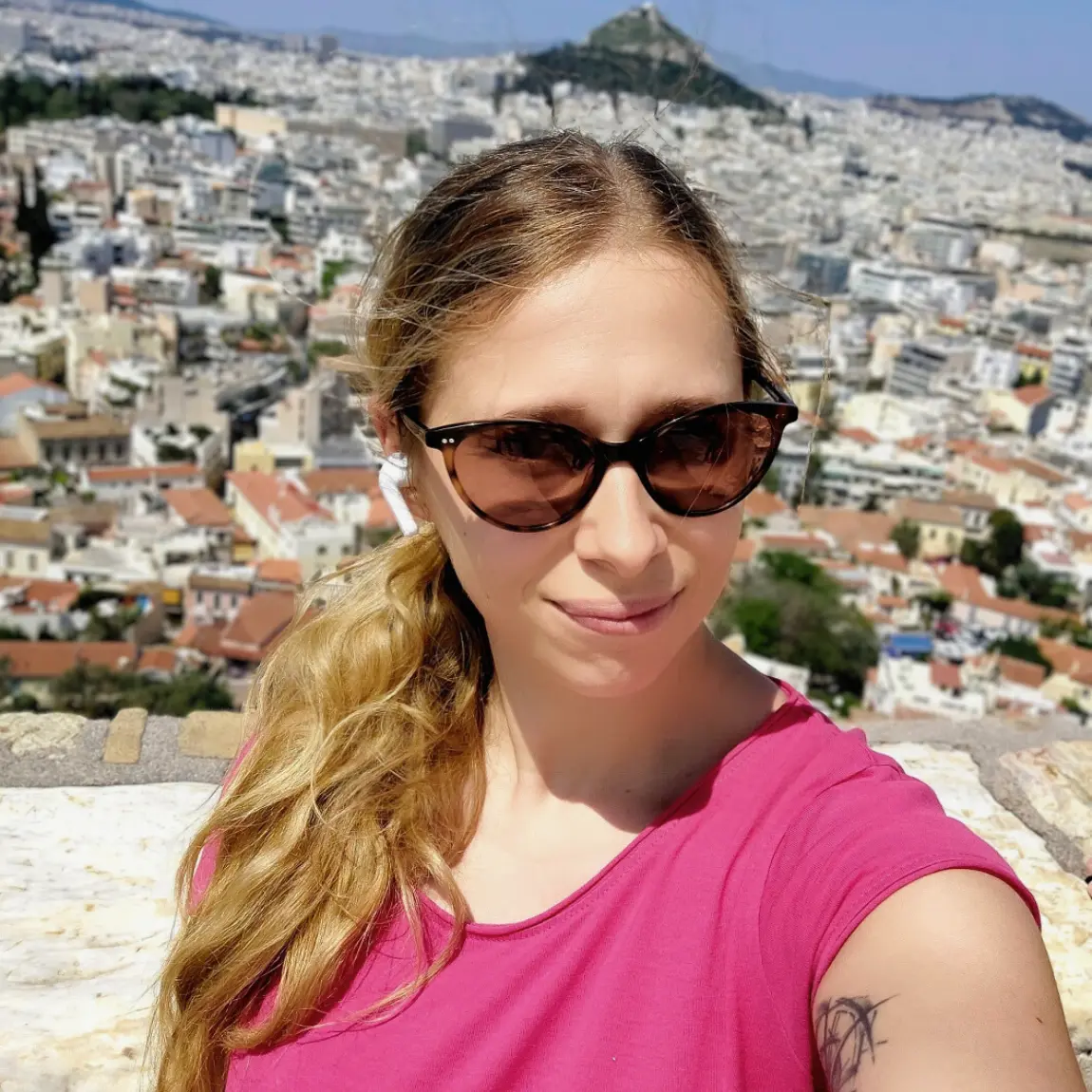
Vanessa’s mother is Greek, born in Germany to parents who arrived from Greece at the beginning of the 1960s. Growing up, the household was German-speaking – a deliberate choice her mother made, wanting to give Vanessa a solid footing in the country they called home. “She thought it was better to get the German right first,” Vanessa explains, with no trace of blame. “Those are the kinds of uncertainties you have as a parent.” The result was a childhood full of Greek sounds, Greek relatives, and Greek summers – but no real command of the language itself.
“The sound of the language has always felt like home to me.”
Her grandparents eventually learnt German too, which softened any urgency she might have felt as a child. And as a teenager, she had other things on her mind. It was only as she moved into her thirties that the absence began to feel like something worth addressing. She had cousins and aunts in Greece whose English was limited – conversations that stayed at the surface, when she wanted so much more.
Hamburg, logistics, and twice-weekly tennis
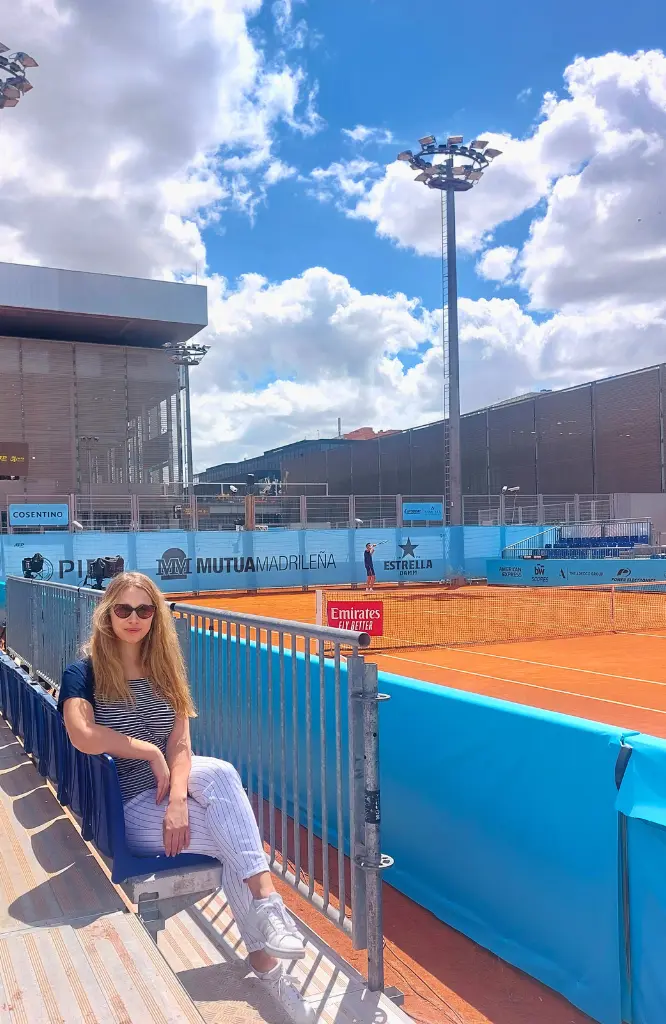
Vanessa works in freight forwarding in Hamburg, managing process logistics across Europe for a global sea freight company. It is a role that demands precision, coordination across multiple markets, and a clear head for complexity – qualities that, as it turns out, also serve her well as a language learner. Outside work, she is an active tennis player, fitting in two or three sessions a week and competing in team matches at amateur level.
It is a full schedule, and she is candid about the challenge of finding consistent time for language study alongside it. But she has found her rhythm. A tablet with a stylus has become something of a study companion – she downloads each week’s course PDFs, organises them into folders, and works back through them systematically, noting vocabulary and annotating grammar points by hand. It is an approach born of trial and error, and one she shares readily with anyone who asks.
Starting from scratch, on purpose
When Vanessa enrolled, she already knew the Greek alphabet – her grandfather had taught her the numbers as a child, rewarding her with pocket money for each milestone. She could read reasonably well and had a handful of basics. She could have joined at a higher level. Instead, she chose to start from A1.1.
“If you have the basics really solid, everything else builds so much faster. I would always do it this way again – even knowing how slow the first few weeks feel when you already know some things.”
The early sessions felt slow, she admits. But the decision paid off. As the course progressed into texts, grammar, and translation, she could engage more fully and advance more quickly precisely because the foundations were solid. “If you have gaps at the beginning, you end up patching them later,” she says. It is advice she now passes on to anyone starting out: resist the impatience, take the time at the beginning.
The moment it started to feel real
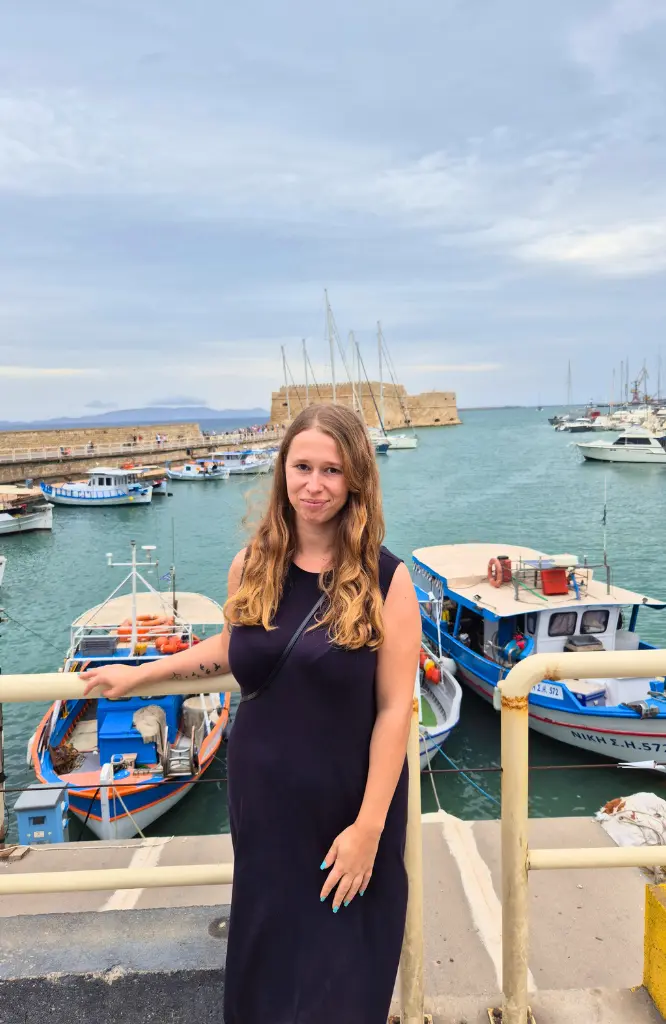
Vanessa spent a week in Crete last autumn. It was not her first trip to Greece – she has been going every year since childhood – but it was the first one where she noticed a real difference. She could follow more of what was said around her. She could ask questions without freezing. When a word escaped her, she could look it up quickly and keep the conversation going. It was not a single breakthrough, she says, more a gradual accumulation that she was suddenly able to see.
She describes a similar feeling in class: looking back at what she could now read and understand compared to a few weeks earlier and realising the distance covered. “You sometimes think you haven’t made much progress,” she says, “and then you reflect and think, actually, I can do all of this now.” Her teacher Maria gets particular credit for making that progress feel personal – encouraging the group to explore grammar through the texts they read together, rather than as a separate, abstract exercise. It is an approach that has surprised her in the best way.
Interested in learning Greek?
Have a question before you start? Send us a message and we’ll help you figure out the next step – whether you’re just exploring your options or already thinking about lessons.
Contact us about learning
Getting closer to where she belongs
For Vanessa, learning Greek has never been purely practical. It is about belonging – about being able to say, credibly, that she is half-Greek, and to have the language to back it up. She has already started writing short messages to cousins in Greece, testing what she knows. The responses have been warm. She has begun switching into Greek with her mother occasionally too, which requires, she notes with a laugh, overcoming thirty years of conversational habit.
“The more Greek I learn, the more I feel I actually belong to that part of my family.”
Her grandparents are no longer alive. She cannot go back and have the conversations she might have had with them. But she frames this not as loss, so much as motivation – a way of honouring something that still matters. Every summer in Greece, every message to a relative, every sentence she manages to put together is a step towards a version of herself that feels more whole. She is not in a hurry. She has learnt, if nothing else, to be patient with beginnings.
Teacher and student stories
Discover inspiring language journeys and see how others are learning and teaching Greek.
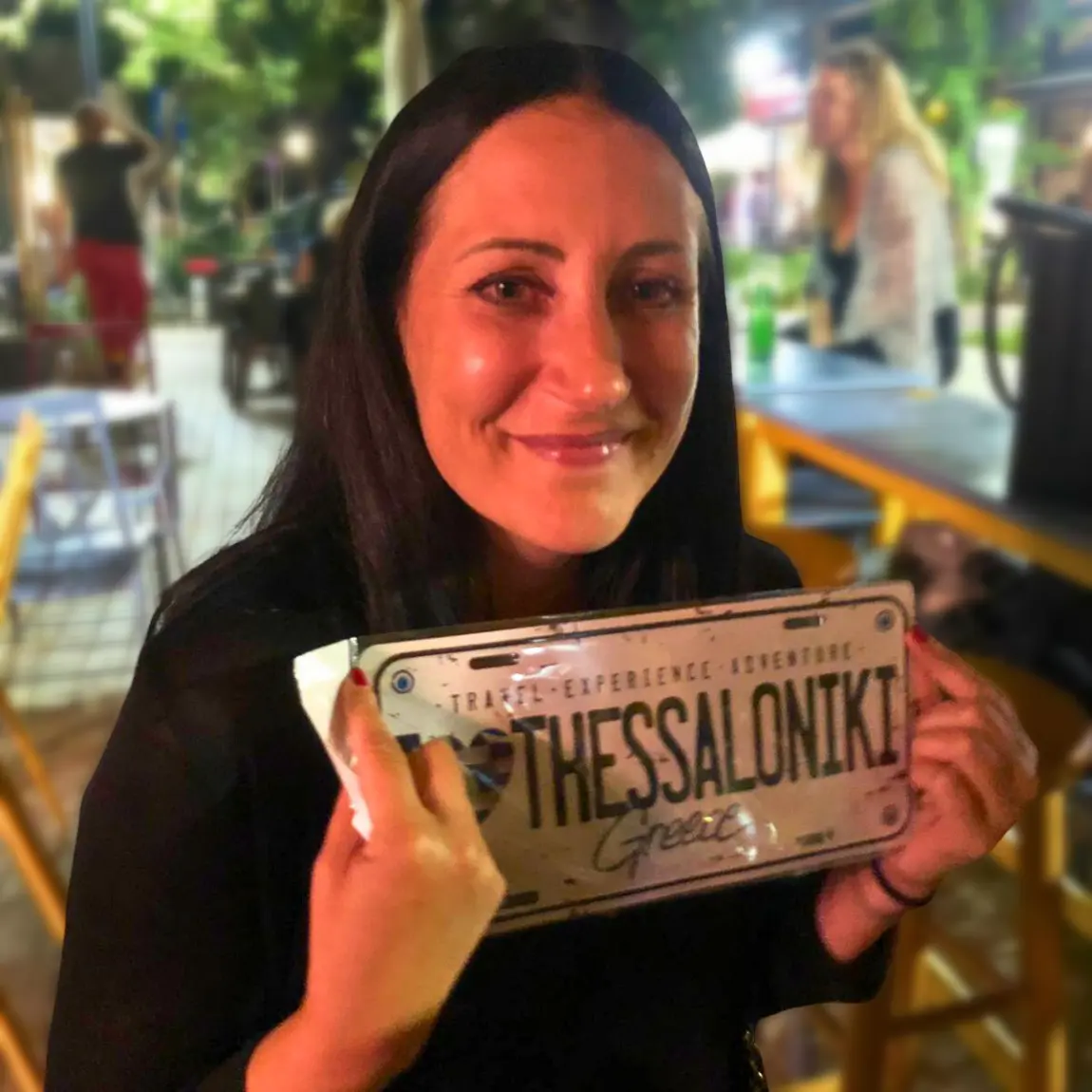
Susanne | Student
After years of trying different schools and methods, Susanne found that classic vocabulary drills and homework deadlines work best.
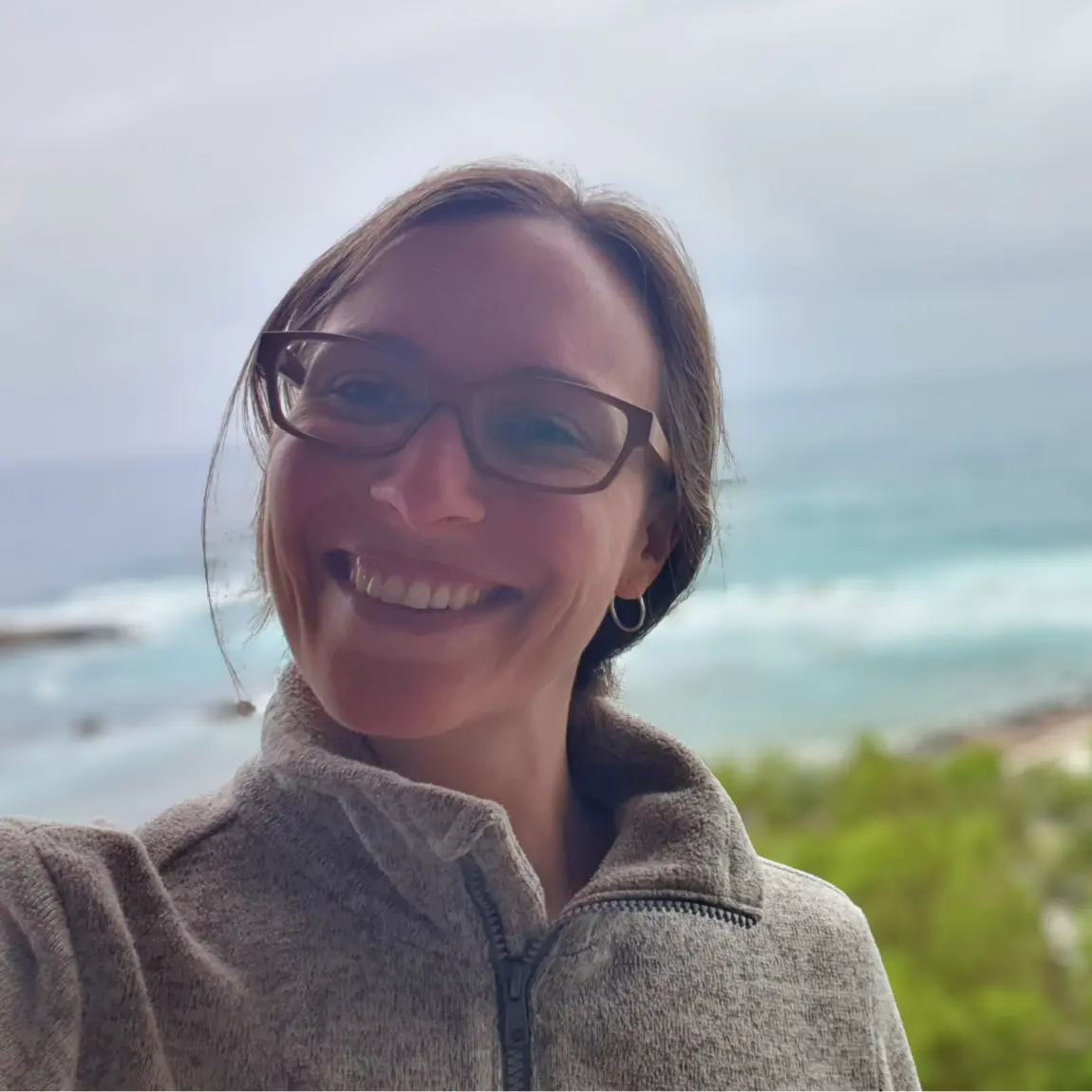
Antonia | Student
From understanding nothing in Greek supplier meetings to building genuine connections through language learning.
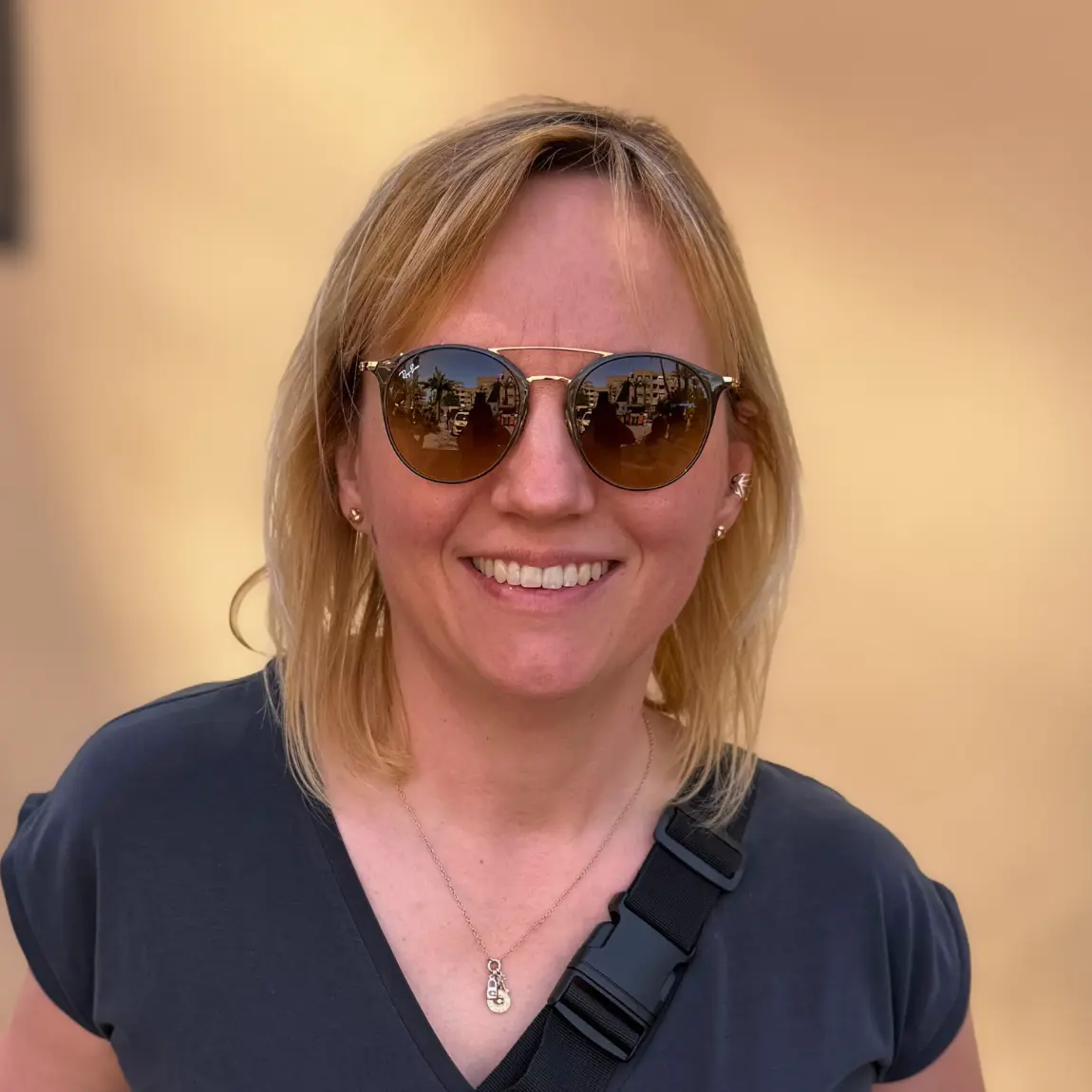
Mirjam | Student
Mirjam balances a demanding career and family life whilst learning Greek – motivated by love, driven by curiosity about linguistic connections.