Finding common ground in unexpected places
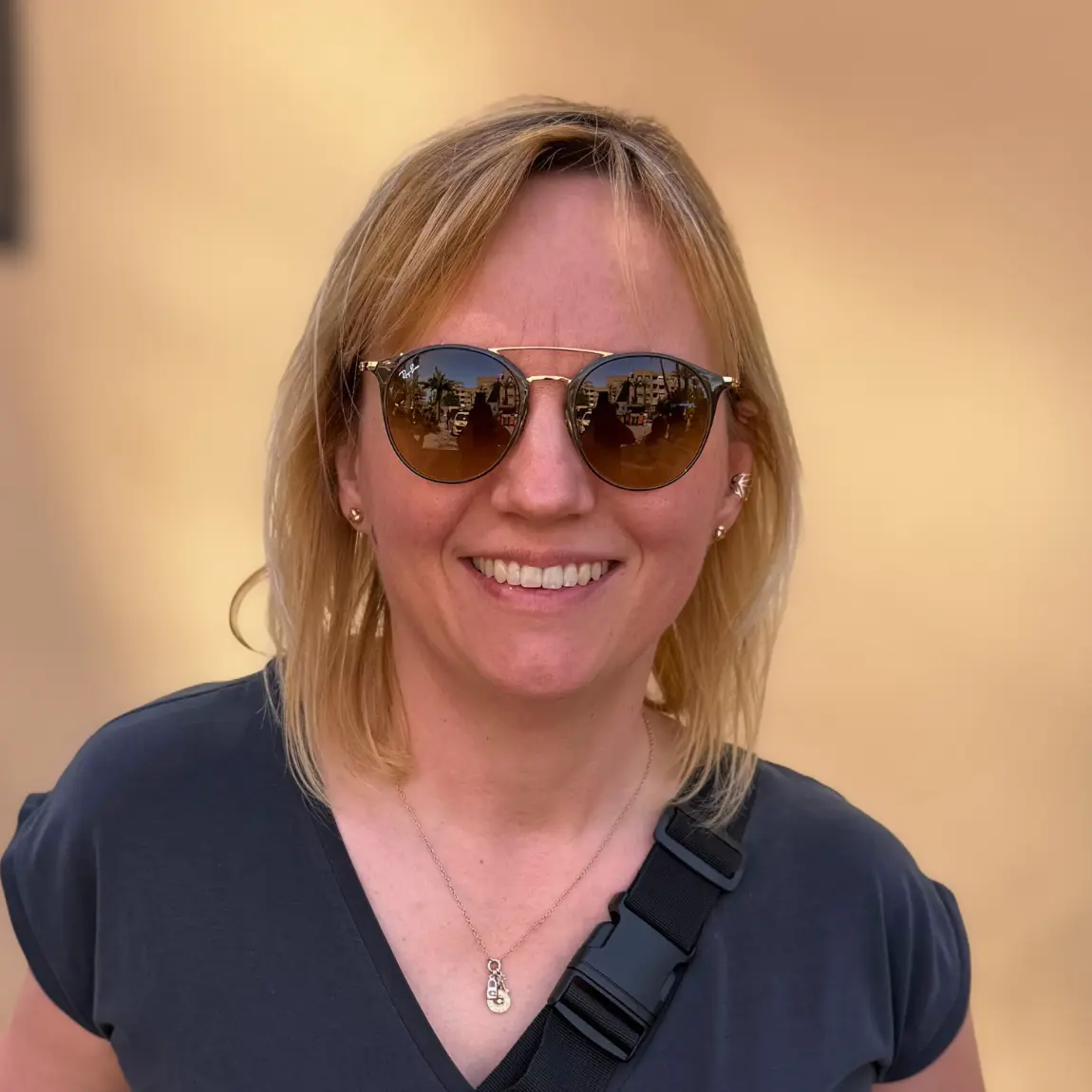
Mirjam has always been drawn to the patterns that emerge when you study multiple languages. Growing up in the Düsseldorf region with French and Finnish-Swedish roots, she developed an early fascination with how words travel across borders and centuries. Her career in recruiting and employer branding for a major German company took her across Europe, where English and French became her daily working languages. But it was her personal life that would introduce her to an entirely new linguistic challenge.
“I want you to learn this language so I can speak with you in Greek and others won’t understand.”
When Mirjam’s partner – a Greek woman born and raised in Germany – suggested she learn Greek, it wasn’t just about communication. It was about creating a private space for connection, a language that would be theirs to share. Mirjam, who had previously attempted to learn Moroccan Arabic but abandoned it for lack of practice partners, recognised this as the perfect opportunity. With someone to speak with regularly, she finally had the accountability and motivation to tackle a language with a completely different alphabet.
Overcoming the alphabet barrier
The Greek alphabet initially filled Mirjam with apprehension. Apart from her brief encounter with Arabic, she had never learned a language that required complete re-alphabetisation. Her approach was characteristically practical: she started watching Greek television, comparing the written characters with their phonetic sounds. She would read something on screen, then ask her partner for pronunciation confirmation, gradually building her confidence with each small victory.
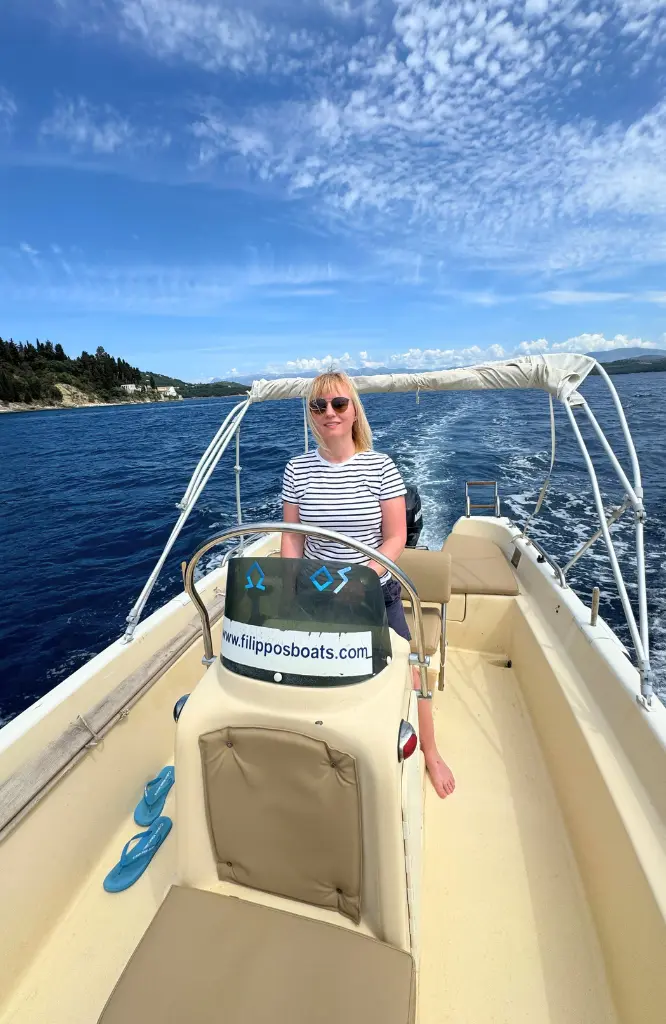
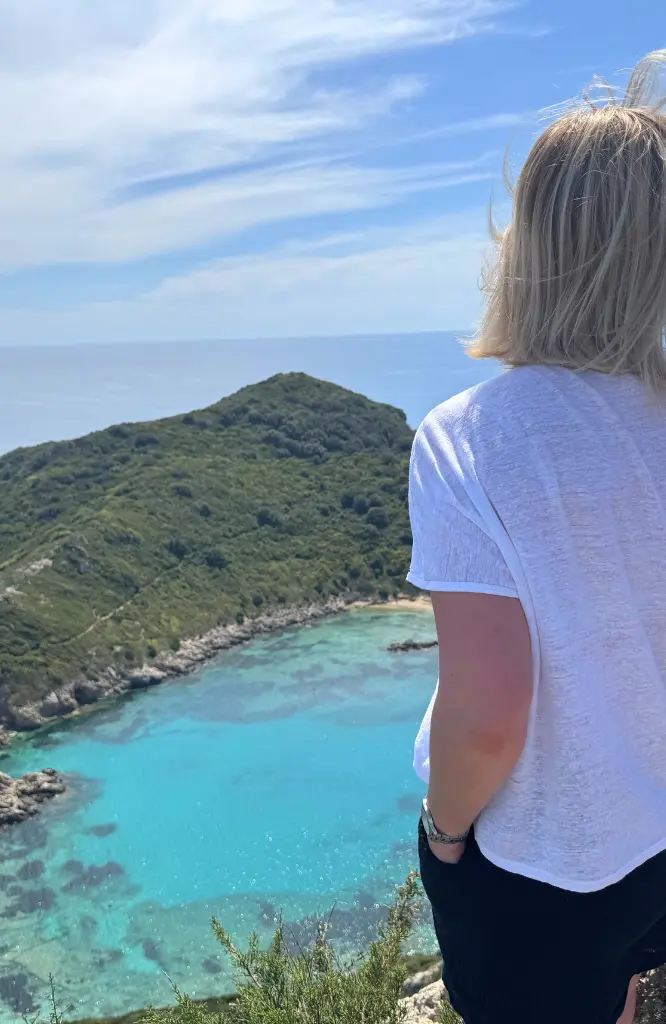
Last year’s week-long holiday to Corfu proved to be a turning point. Without having taken formal lessons yet, Mirjam found herself understanding the alphabet relatively quickly when immersed in the environment. By the time she and her partner visited Athens for a long weekend two weeks ago, reading Greek felt natural. The breakthrough came at the airport after their late-night arrival. Mirjam ordered drinks and snacks entirely in Greek, without reaching for her phone to translate anything. It was a small moment that marked significant progress – proof that persistence pays off.
The rhythm of learning with limited time
Balancing language learning with a demanding career and parenting isn’t straightforward. Mirjam has an eleven-year-old daughter, and family life requires intense focus and energy. After long workdays, finding energy for homework and revision takes real discipline. She admits the pace of her A1 to A2 level courses is challenging, and she wishes she had more time to dedicate to independent study alongside the lessons.
“With a full-time job and a child, getting everything done is definitely a challenge. But I try to make time because I genuinely enjoy learning.”
What makes the difference is the course recording feature, which allows Mirjam to catch up when life gets hectic. Whether she’s been away on holiday or simply missed a session due to work commitments, she can revisit lessons and feel present in the class. When she accidentally missed three sessions last year – thinking the course had already finished when she was in France for two weeks – she managed to catch up with help from her partner. It’s this combination of flexibility and support that keeps her progressing, even when the schedule feels impossible.
Beyond vocabulary: exploring linguistic connections
What fascinates Mirjam most about learning Greek extends beyond the language itself into the realm of linguistics. She notices French loanwords in Greek that have fallen out of use in modern France, preserved like linguistic fossils. Having studied Latin at school and previously learned some Polish, she enjoys identifying the common roots and patterns that connect seemingly disparate languages. These discoveries add depth to her learning, transforming vocabulary acquisition into cultural archaeology.
This intellectual curiosity shapes how Mirjam approaches language learning. She’s not simply memorising words and grammar – she’s investigating how cultures move and influence each other across time and geography. The English influences now appearing in every language, the Romantic elements in Polish, the historical layers in Greek – each observation reinforces her belief that every additional language is an asset, professionally and personally. In her international recruiting work, which once covered Western Europe, the Middle East, and Africa, speaking the local language always proved invaluable.
Already know some Greek?
Take our free placement test and find your current level in just a few minutes. It’s fun, fast, and helps you understand exactly where you are – and what the next step in your learning journey might be.
Take the free test
Speaking up and moving forward
The most valuable lesson Mirjam has learned is to speak without fear of mistakes. Initially, she held back during classes, worried about getting things wrong. Now she simply goes for it, accepting that errors are part of the process. Being put on the spot during lessons – asked to respond immediately in Greek – pushes her out of her comfort zone in exactly the way she needs. These aren’t tests she can fail, just opportunities to improve.
“I’d really say: dare to speak. Keep going, even when it gets difficult. It’s totally worth it.”
Her recent Athens trip confirmed this approach. Walking past the university’s social sciences faculty during an evening celebration, Mirjam found herself singing along to Greek songs she’d learned – something she never expected to do. The reactions from locals when she speaks Greek have been universally warm and encouraging. People appreciate the effort of engaging with their language rather than defaulting to English everywhere. For Mirjam, who still has her sights set on travelling to La Réunion and perhaps New York over Christmas, adding Greek to her linguistic repertoire means more than just communication. It’s about connection, curiosity, and continuing to grow – one conversation at a time.
Teacher and student stories
Discover inspiring language journeys and see how others are learning and teaching Greek.

Nikos | Teacher
From online markets to ancient texts, Nikos shows how 4,000 years of Greek culture still shape modern-day conversations.

Birgit | Student
Birgit finds joy in Greek grammar, weaving love, family, and self-confidence into one heartfelt language-learning journey.

Maria | Teacher
Maria’s lively method proves Greek is about connection, not perfection – with a little cat-dog peace thrown in for good measure.