
The news in Greek
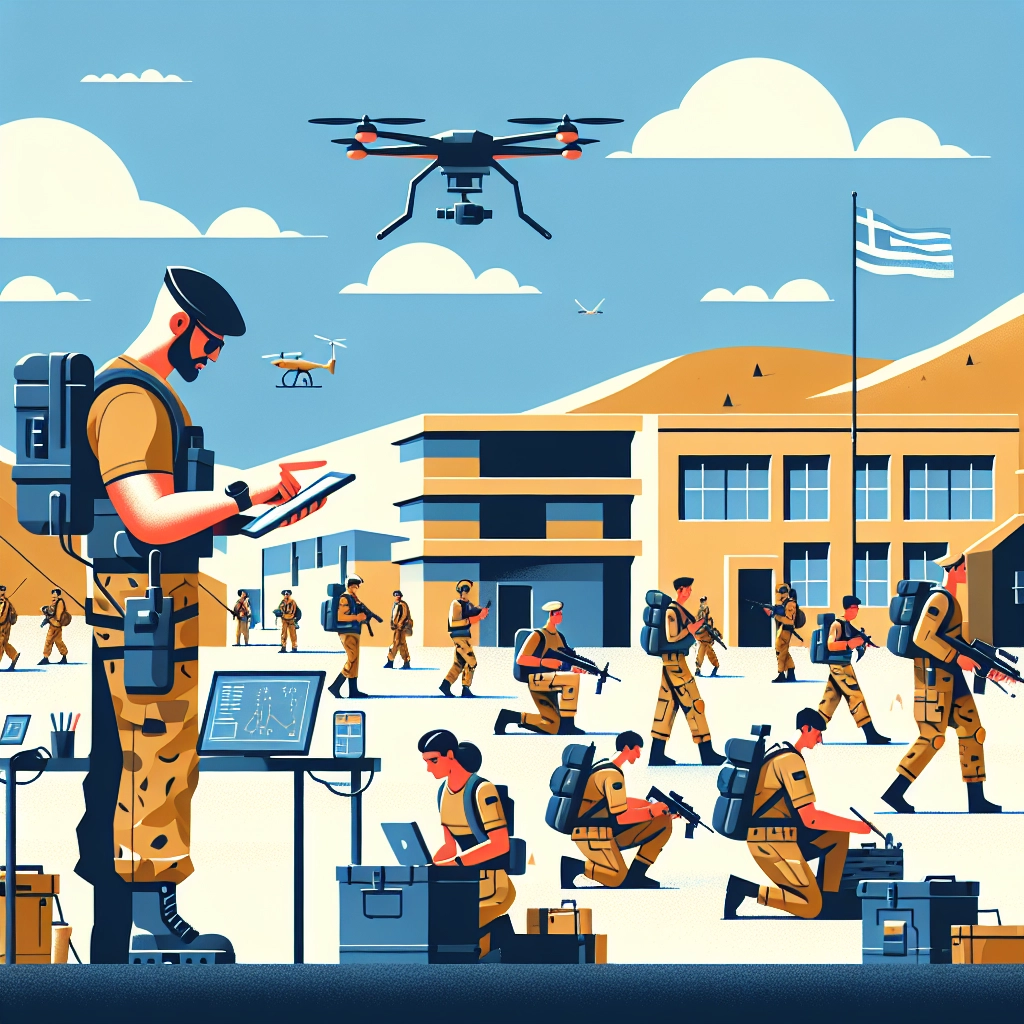
Η Ελλάδα αλλάζει τη στρατιωτική1 θητεία2. Από το 2026 υπάρχει νέο σύστημα. Η βασική εκπαίδευση3 είναι δέκα εβδομάδες και έχει νέα μαθήματα, όπως drones και πρώτες βοήθειες. Υπάρχουν τρία στάδια4 εκπαίδευσης και λιγότερες ειδικότητες5. Οι στρατιώτες6 θα παίρνουν περισσότερα χρήματα και θα έχουν καλύτερο φαγητό.
- στρατιωτικός
που έχει σχέση με τον στρατό ή τον πόλεμο ↩︎ - θητεία (f.)
χρόνος που κάποιος υπηρετεί σε έναν θεσμό, π.χ. στον στρατό ή σε μια θέση εργασίας ↩︎ - εκπαίδευση (f.)
η διαδικασία στην οποία κάποιος μαθαίνει γνώσεις ή δεξιότητες ↩︎ - στάδιο (n.)
κάθε μέρος ή φάση μιας διαδικασίας που γίνεται βήμα-βήμα ↩︎ - ειδικότητα (f.)
συγκεκριμένος τομέας ή τύπος δουλειάς μέσα σε ένα επάγγελμα ή υπηρεσία ↩︎ - στρατιώτης (m.)
άτομο που υπηρετεί στον στρατό ↩︎
Translation
Text comprehension
Question 1: When will the new military service system in Greece start?
Question 2: Name one new subject that soldiers will learn during basic training.
Vocabulary
| Greek | English |
|---|---|
| στρατιωτικός | |
| θητεία (f.) | |
| εκπαίδευση (f.) | |
| στάδιο (n.) | |
| ειδικότητα (f.) | |
| στρατιώτης (m.) | |
Curious about Greek lessons?
Thinking about learning Greek, but not sure where to start? Book a friendly video chat with our learning coordinator and get personal guidance on teachers, groups, and next steps.
Book a coordinator chat
Read the full story
Greece has introduced a new model of compulsory military service from 24 February, starting with the intake known as A’ ESSO 2026. Conscripts are reporting to units between 24 and 27 February, marking what the Ministry of National Defence describes as a new phase in how the country organises and trains its armed forces.
According to officials, the reform is a key part of the government’s defence “Agenda 2030”. The Ministry links the changes to the need to adapt to modern security conditions, including shifting geopolitics, rapid technological progress and lessons drawn from recent armed conflicts.
A central element of the reform is a 10‑week basic training period, held only in the Hellenic Army (Army of Land Forces). The aim is to shape what defence sources call the “modern combatant”, through more intensive practice and new training subjects. These range from drone operation and first aid to expanded weapons training, including night firing, pistol use and practice hand‑grenade throwing. There is also a higher number of tactical exercises, long marches and night activities, sometimes combined (for example, night march followed by live firing and sleeping outdoors).
The new structure divides training into three stages. First, conscripts complete basic training at recruitment centres, which covers initial instruction, the swearing‑in ceremony and then full “fighter training”. The second stage is specialist training, carried out either in specialised training units or in the armed forces’ Lifelong Learning Centres. Here, conscripts are trained in specific military roles and additional professional skills. The third stage takes place in the operational units where conscripts will serve the rest of their term, focusing on integrating them into day‑to‑day military operations.
The reform also reshapes military specialities. Older roles judged not to fit the modern operational environment are abolished, and duties are grouped into 19 main training categories, down from 46. At the same time, new programmes are being piloted to give conscripts civil‑use qualifications. At Lifelong Learning Centres, participants in this first intake can train as, for example, machine‑operator, lifeguard–diver, armourer or drone operator. There is also a dedicated cyber‑security programme at the School for Computer Programmers. The Ministry says more specialities and skill programmes are expected in future intakes.
Another innovation is systematic instruction in unmanned aerial systems. Conscripts receive theory, methods for detecting and countering drones, and practice on a simulator with scenarios of increasing difficulty. Those who pass the tests move on to an additional two weeks of training, gain the qualification of UAV operator and wear a special insignia on their uniform.
The way conscripts enter the forces is also changing. The number of annual intakes, known by the Greek initials ESSO, is reduced from six to four (February, May, August and November). All new conscripts are first enlisted in the Army. Only those with specific professional expertise will be transferred internally to the Air Force or Navy. In total, conscripts will join 13 training centres around the country.
The standard length of military service remains 12 months. However, those who either are called up earlier than their class (so‑called “early” or “first‑call” conscripts) or serve in certain regions and units have a 9‑month term. This shorter service applies to those who choose, or are selected, to serve in Thrace, the islands of the eastern Aegean, the Greek force in Cyprus (ELDYK) and the ceremonial Evzones Company of the Presidential Guard.
Once basic and specialist training are complete, conscripts are assigned primarily to high‑readiness operational units. These include manoeuvre units, combat support units and logistics support units. Around 70% of conscripts are expected to be placed in formations in Thrace and the eastern Aegean. After six months from enlistment, conscripts gain the right to apply for a regular transfer for part of the remaining service, with placements decided according to a points system that takes into account skills, qualifications and home region.
A major part of the reform concerns living conditions and financial support. The monthly allowance for conscripts, which had been 8.80 euros, rises sharply. Those serving in border areas such as Thrace and the eastern Aegean islands will receive 100 euros a month, while those in the Greek mainland will receive 50 euros. Increased support is also provided for conscripts from large families, conscripts who are parents and orphans of both parents. For example, children of large families will receive 150 euros, and conscript parents will receive graded amounts starting at 150 euros for one child and 200 euros for two, with an extra 50 euros for each additional child. Orphans of both parents will receive 200 euros.
The armed forces also plan to improve food quality and quantity. A new catering regulation, aligned with current nutritional standards, raises the value of the daily food ration from 4.50 to 6.40 euros. The menu is being expanded to ensure sufficient daily calories and to allow individualised portions where needed. The updated diet is to be implemented at all training centres at the same time.
Greek defence officials say the overarching goal is to move from what some sources describe as a period when conscription was often seen as routine or unproductive to a system that combines operational readiness with practical training and recognised skills. While the long‑term impact on the forces and on young conscripts remains to be seen, the changes introduced with the A’ ESSO 2026 intake represent the most wide‑ranging overhaul of Greek military service in recent years.
Info: ‘Greek Learner News’ is a service from ‘Let’s Learn Greek’, a language school dedicated to teaching Greek, where you can find information about each Greek course we offer online.
Advanced: Reports from Greece
- New Military Service Model Takes Effect Today – Training Reforms and Higher Monthly Allowance (Athens Voice)
- Military Service Overhaul Starts Today – Basic Training Revamped, Monthly Stipend Increased (Newsit.gr)
- From Today, a New Conscription Model for the Armed Forces (Zougla.gr)
- Military Service: A New Era Begins Today – All the Changes (Ethnos)
Greek Learner News
Discover news from Greece to stay informed and practise your skills.
-

Learner News | 11.05.2026
Nationwide public sector strike in Greece 13 May
-

Learner News | 10.05.2026
Metallica electrify Athens’ OAKA Stadium after 16 years
-

Learner News | 25.04.2026
Greece and France Sign New Defence, Energy Pacts